AggieNetwork.com
Account Benefits

"Find an Aggie" Online Directory

HireAggies Career Services

TX.AG

Aggie Ring repairs and resizing via The Association temporarily paused. See full details
Elephant Walk
through the decades

Tomfoolery, somber reflection and change are hallmarks of century-old Texas A&M senior tradition.

By Sue Owen ’94

Video courtesy of Texas A&M University Marketing & Communications

Fittingly, Elephant Walk is a tradition that has wandered through many changes in its century-long history at Texas A&M University.

Usually held in fall before the Thanksgiving football game or the last home game, the walk takes Aggie seniors past campus landmarks, pausing at several stops to listen to speakers and practice yells.

You might know that in the 1970s and 1980s, Elephant Walk was a giant, messy free-for-all, with juniors ambushing the seniors with shaving cream, water balloons, wrestling matches and more. Live elephants were even part of the mix for several decades (though the pachyderms didn’t do the walking; they were just there to take pictures with).

Not once but twice in its history, Aggie students would range far away from the tradition’s simple, reflective beginnings, but then successfully campaign to bring back the “Old Army” Elephant Walk.

Today, Elephant Walk is experiencing a resurgence in growth, combining the best of its history into a tradition that gathers thousands of Aggie seniors for a peaceful trek around campus, reminiscing on their lives as students — something the Class of 1926 might even recognize from the original event.

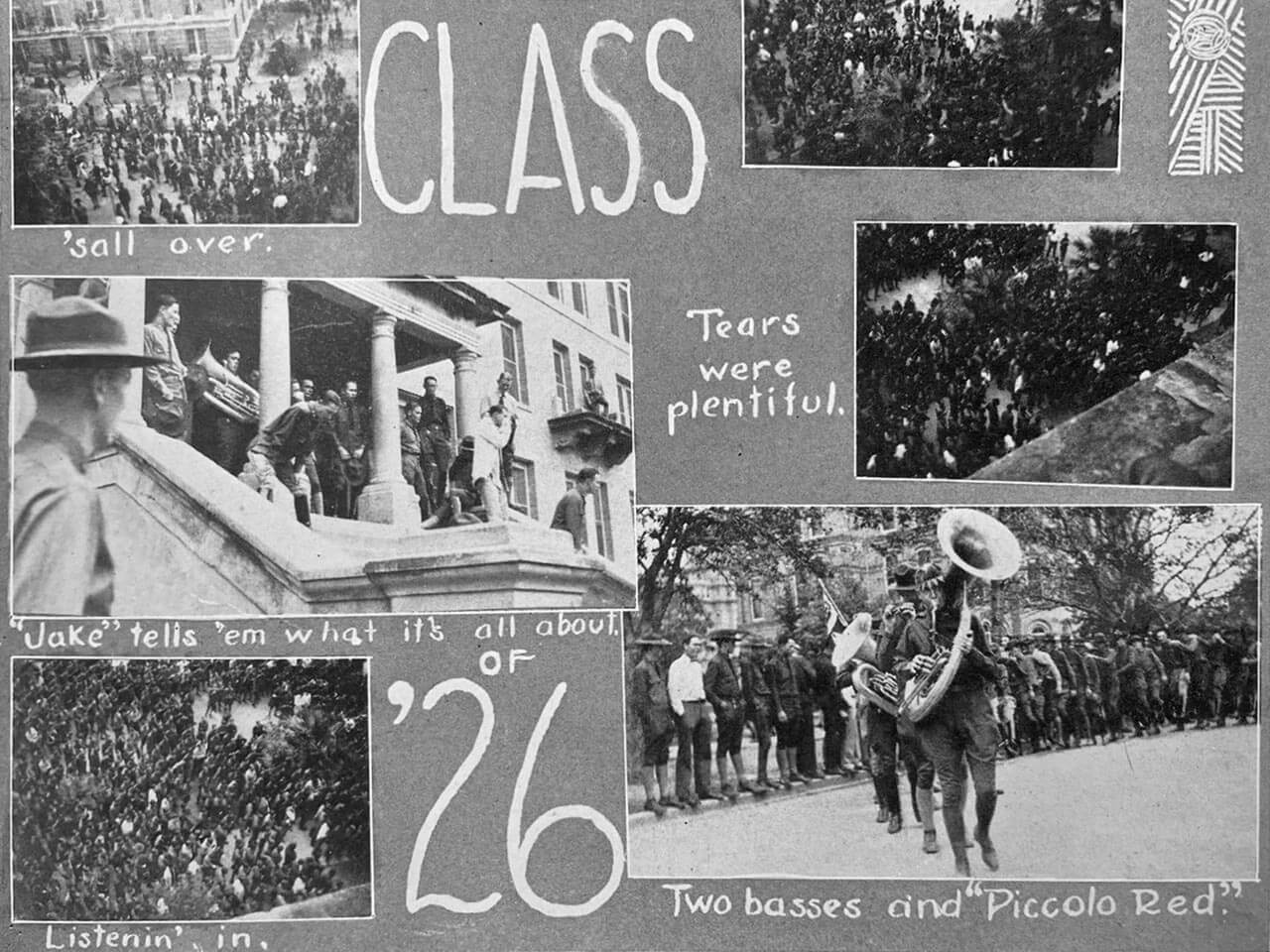
Historic yearbook page with multiple photos of Texas A&M’s 1926 Elephant Walk, showing cadets gathered, a speech on building steps, and a band leading the march.
A page in the 1926 Texas A&M yearbook is dedicated to “The Elephant Walk,” led by “two basses and ‘Piccolo Red.’” There appear to have been plenty of cadets watching the group of seniors forge a new Aggie tradition. Photo courtesy of Texas A&M Cushing Memorial Library and Archives.

1925: Elephants’ first baby steps

In fall 1925, a group of Aggie seniors gathered to walk past campus landmarks in a zig-zagging single file they called an Elephant Walk, led by basses and a piccolo player from the Aggie Band.

As freshmen in fall 1922, they had done similar parades after football games; those events have also been celebrated as the start of Elephant Walk. As seniors, they formed their line for a last time, and “tears flowed like water that day as those cherished memories floated back to us,” according to their senior yearbook.

A Tradition Was Born.

The Battalion wrote in November 1927 that “the Elephant Walk has now become a tradition to the Senior classes, and is held every year just before the Turkey Day game.”

Descriptions said the ceremony drew upon centuries-old legends of elephant graveyards. From the Arabian Nights to The Lion King, stories have recounted the myth that elephants nearing the end of their life will wander away from the herd to die in a specific place.

We had about 10 of our Fightin’ Texas Aggie Band seniors [walking together]; shirt-tails out, jackets inside out. It made us realize we were months away from saying goodbye to some of the best friends we ever had, some of us going to Vietnam.
Bob Haltom ’71
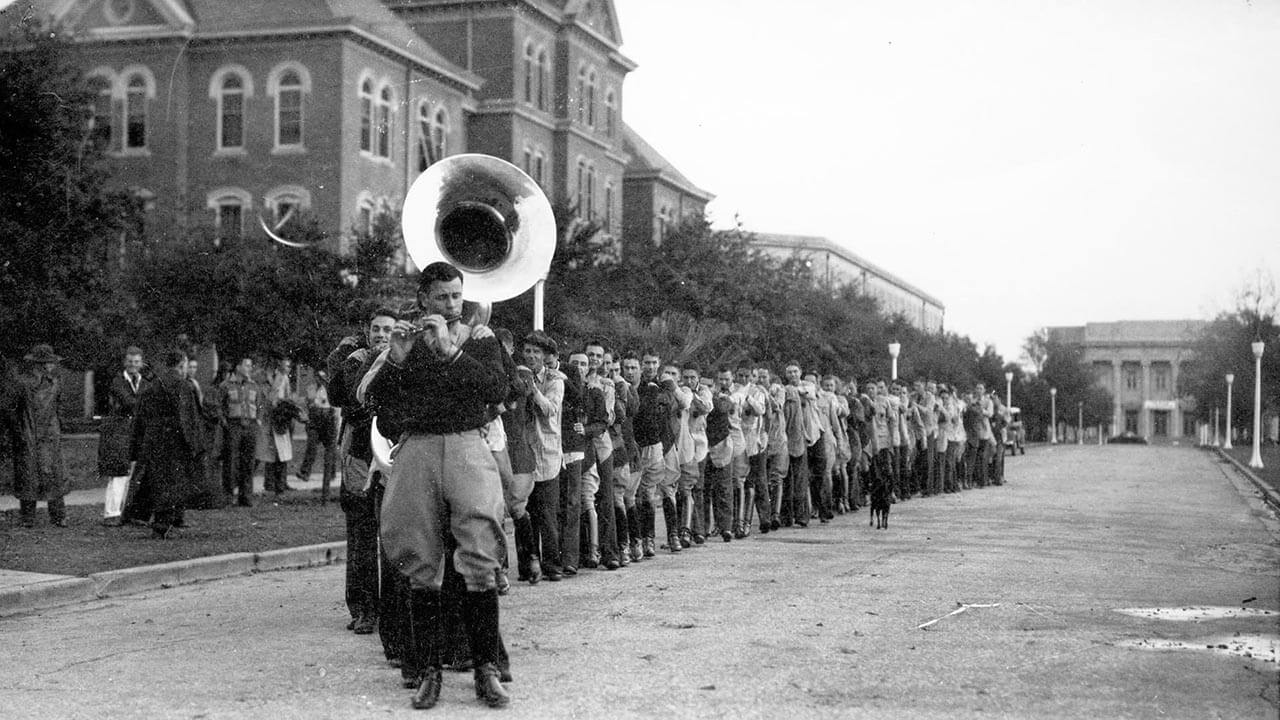
Black-and-white photo of Texas A&M students marching in a line, led by a sousaphone player.
For its first two decades, Elephant Walk looked like this. Here, the Class of ’37 proceeds down Military Walk with their shirttails pulled out. The dog accompanying them could very well be Reveille I. Buildings behind them are, from left, Foster Hall (1899-1951), Hart Hall (1931-present) and Guion Hall (1918-71, standing where the Rudder complex is today). Photo courtesy of Texas A&M Cushing Memorial Library and Archives.

A peek into American pop culture

Here’s a lost piece of trivia: The Aggies’ zig-zag line was also part of an early-20th-century American trend of “snake dances” and “shirt-tail parades.”

College students — including those at Texas A&M — often did these long, single-file lines at football-related events, halftimes and homecomings. Picture a conga line, but without the kick-steps. The name “shirt-tail parades” indicated that the men in the line would untuck their shirttails to let them flap loose.

At Texas A&M, examples included students celebrating a football win with a “snake drill” in 1910; holding shirt-tail parades for a 1914 yell practice and the 1920 Thanksgiving dance; and planning some “yelling and snake-dancing” around the 1929 Bonfire. The Class of 1927 recalled that shirt-tail parades were a feature of their freshman year, 1923-24.

What the Class of 1926 added in was the sentimental idea of seniors reminiscing before the end of their final football season. That emotional tie is likely what forged Elephant Walk into an enduring Aggie tradition.

Most seniors in the Corps wore senior boots to Elephant Walk. Those who did tried like heck not to get them stepped on! It was a sad moment for seniors. The good memory was doing the Walk together with both our Corps buddies and non-reg buddies — a unifying moment for all.
Richard K. Fenoglio ’73
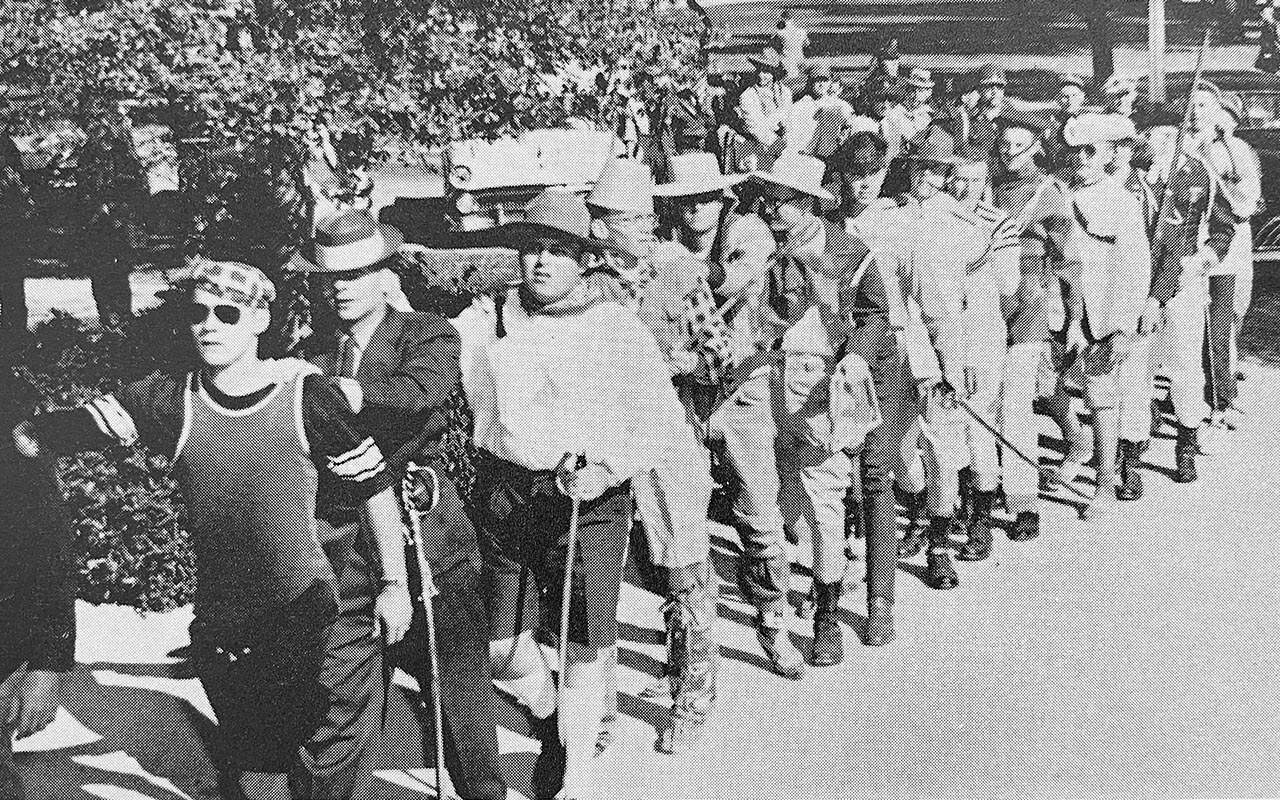
Black-and-white photo of Texas A&M students in costume marching in a line during Elephant Walk.
By the late 1950s, Aggies were mixing up their Elephant Walk attire and having some fun. Calls to return Elephant Walk to its old solemnity would be heeded — for a few years — after this fall 1956 procession. Photo credit 1957 Aggieland.

Rocking around campus in the 1950s

From the 1920s through the 1940s, historical photos show that Texas A&M’s Elephant Walk was typically a fairly tidy line of senior cadets in uniform taking a zig-zag walk together, single file, with their shirttails pulled out.

Traditionally, they were led by basses and a piccolo from the Aggie Band playing “The Hearse Song,” also known to schoolchildren as “The worms crawl in, the worms crawl out.” (Listen at tx.ag/HearseSong)

At first, the path of Elephant Walk was along Military Walk, one of Texas A&M’s oldest streets, which today is a brick walkway between Sbisa Dining Hall and Rudder Tower. As campus grew, more sites were added. In 1956 and other years, the walk ended with a yell practice at the site of the Bonfire stack, which would become a recurring location.

Also in the 1950s, the seniors’ attire became goofier — mismatched hats, shorts and seemingly any odd attire they could find. That brought on some of the first calls for Aggies to cut out the silliness and return to the “Old Army” way. The Class of ’59 voted to wear uniforms again, with shirttails pulled out, and return solemnity to the tradition.

It worked — for a little while.

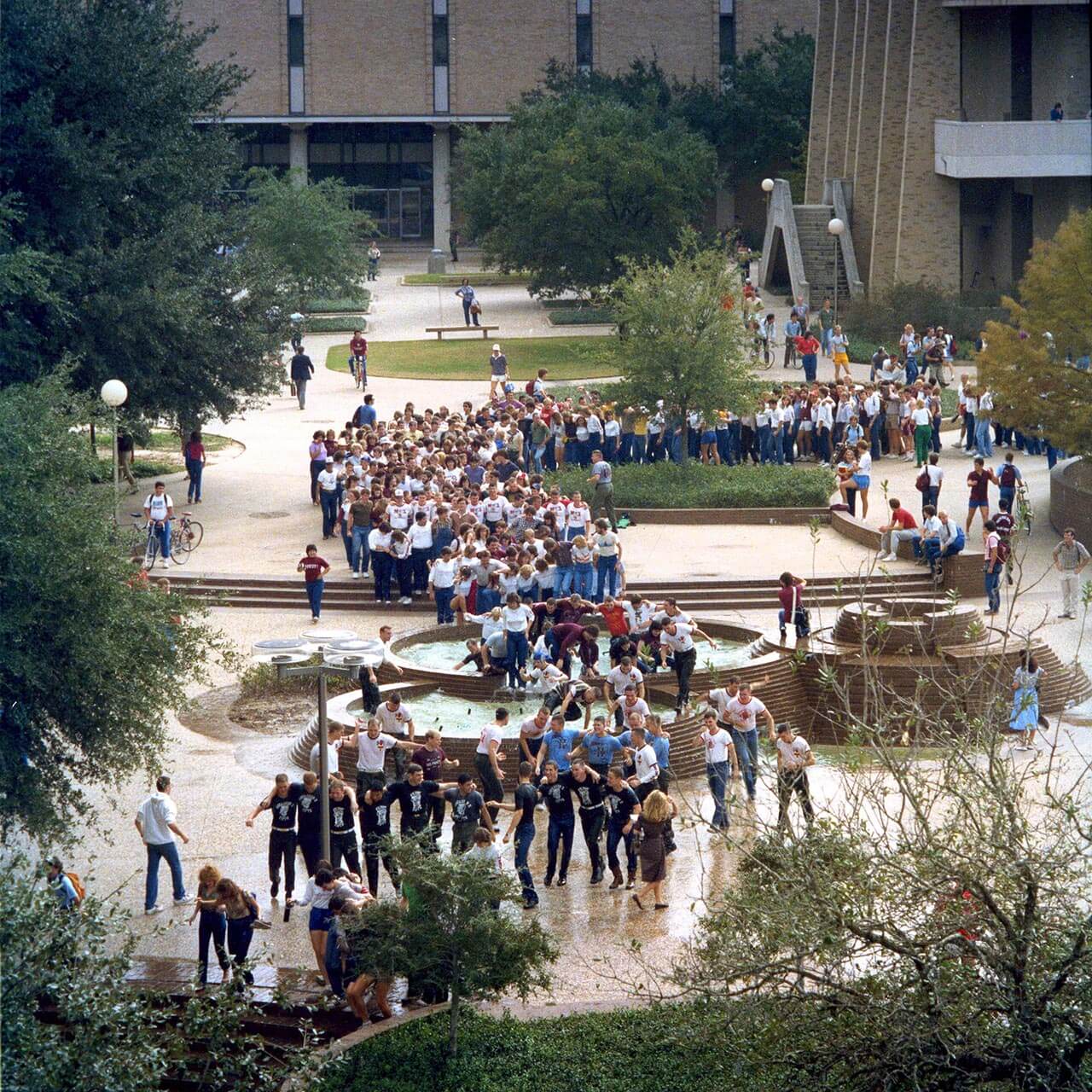
I loved Elephant Walk! Going as a junior and ‘attacking’ the seniors with shaving cream, mustard, ketchup or whatever we had on hand. Same for going as a senior! Playing in the mud, riding elephants and walking arm in arm with my friends.
Brandi Young Taylor ’90
Color photo of Texas A&M students marching through a fountain during Elephant Walk.
The Class of ’84 rambles through the H2O Fountain by the Chemistry Building. 1983 photo by Dean Saito ’82/1984 Aggieland.

The rowdy years:
70s, ’80s, ’90s

Students’ clothing for Elephant Walk was getting irreverent and mismatched again by the mid-1960s and into the 1970s.

Also in the ’70s and early ’80s, juniors began waylaying the seniors — sometimes attacking them with toy guns, eggs and so on — and tackling each other in the mud became part of the event. Not content with letting the seniors wander off to “die,” Aggie juniors leaned into the idea of “hunting” the walking dead to hurry them along their way.

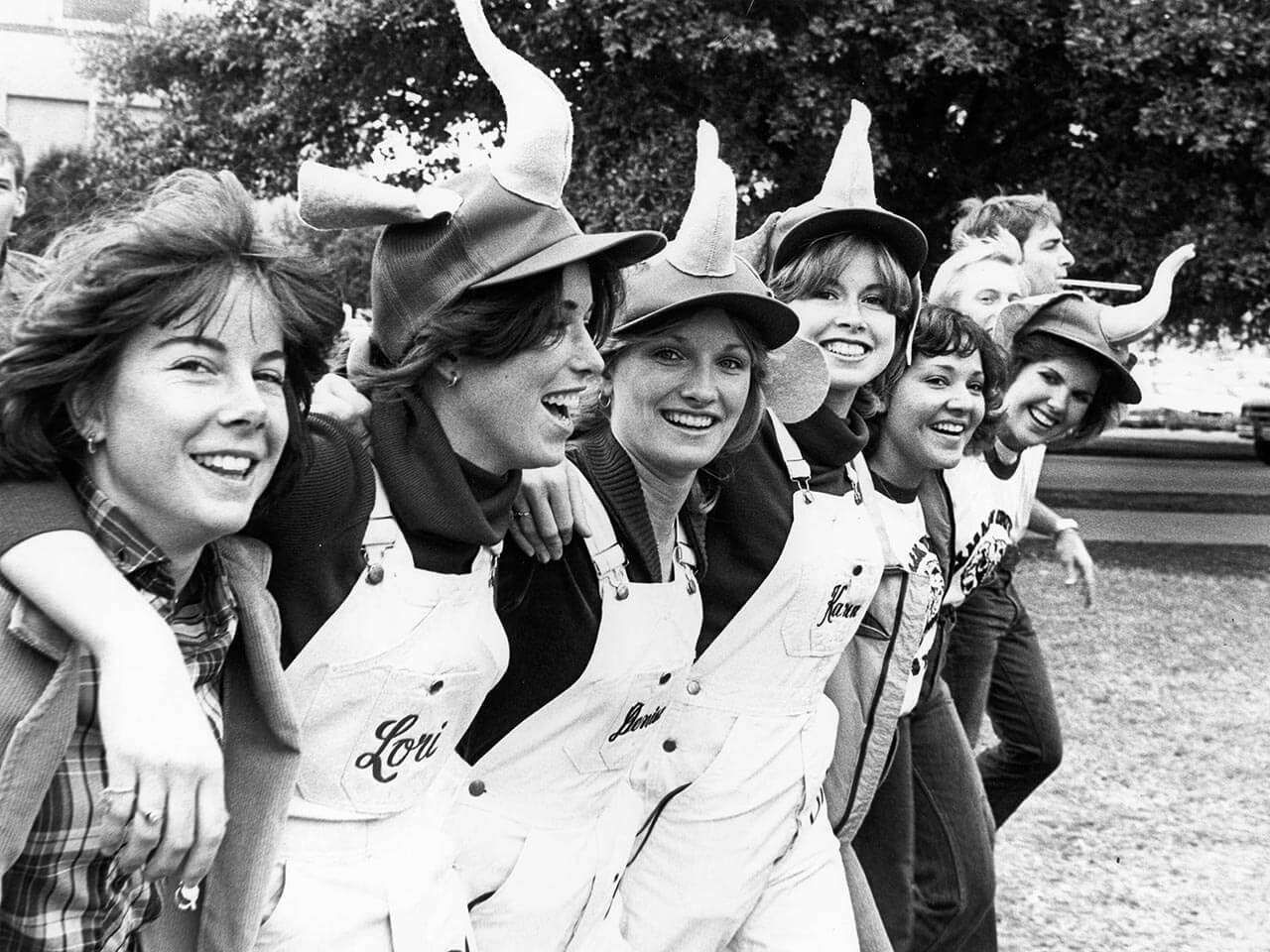
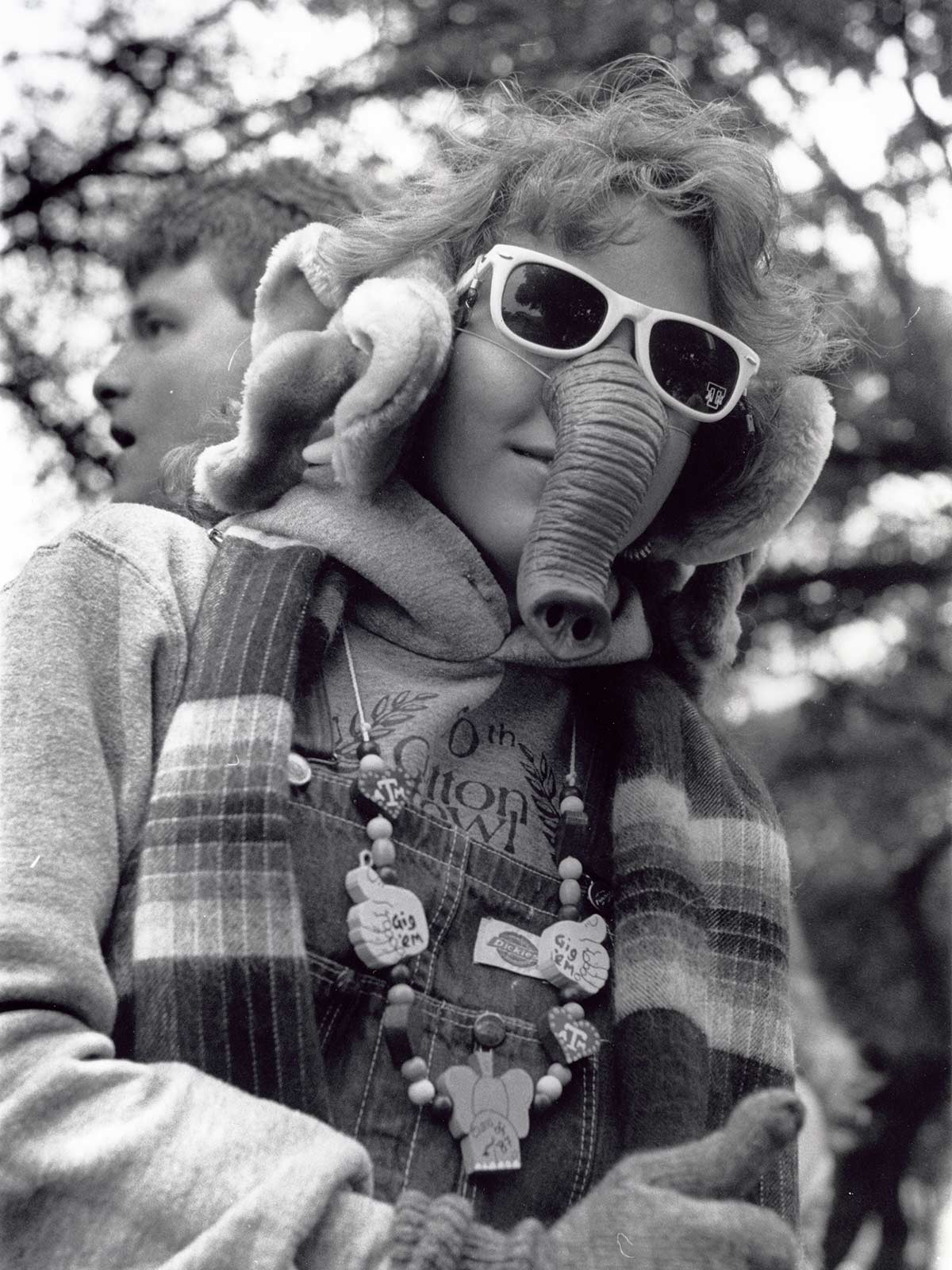
This trend kept going as the 1980s progressed. Texas A&M’s population was rocketing, and at Elephant Walk, thousands of Aggies had a merry time hunting each other with shaving cream, water balloons, sometimes even a fire hose. Crowds were huge, and bands of seniors would march through the campus fountains, sporting elephant-nose masks and elephant hats.

Black-and-white photo of Texas A&M students in elephant hats and T-shirts with arms linked during Elephant Walk.
Elephant-themed garb and some of the earliest Elephant Walk T-shirts made it onto the scene in fall 1980. Photo courtesy of Texas A&M Cushing Memorial Library and Archives.
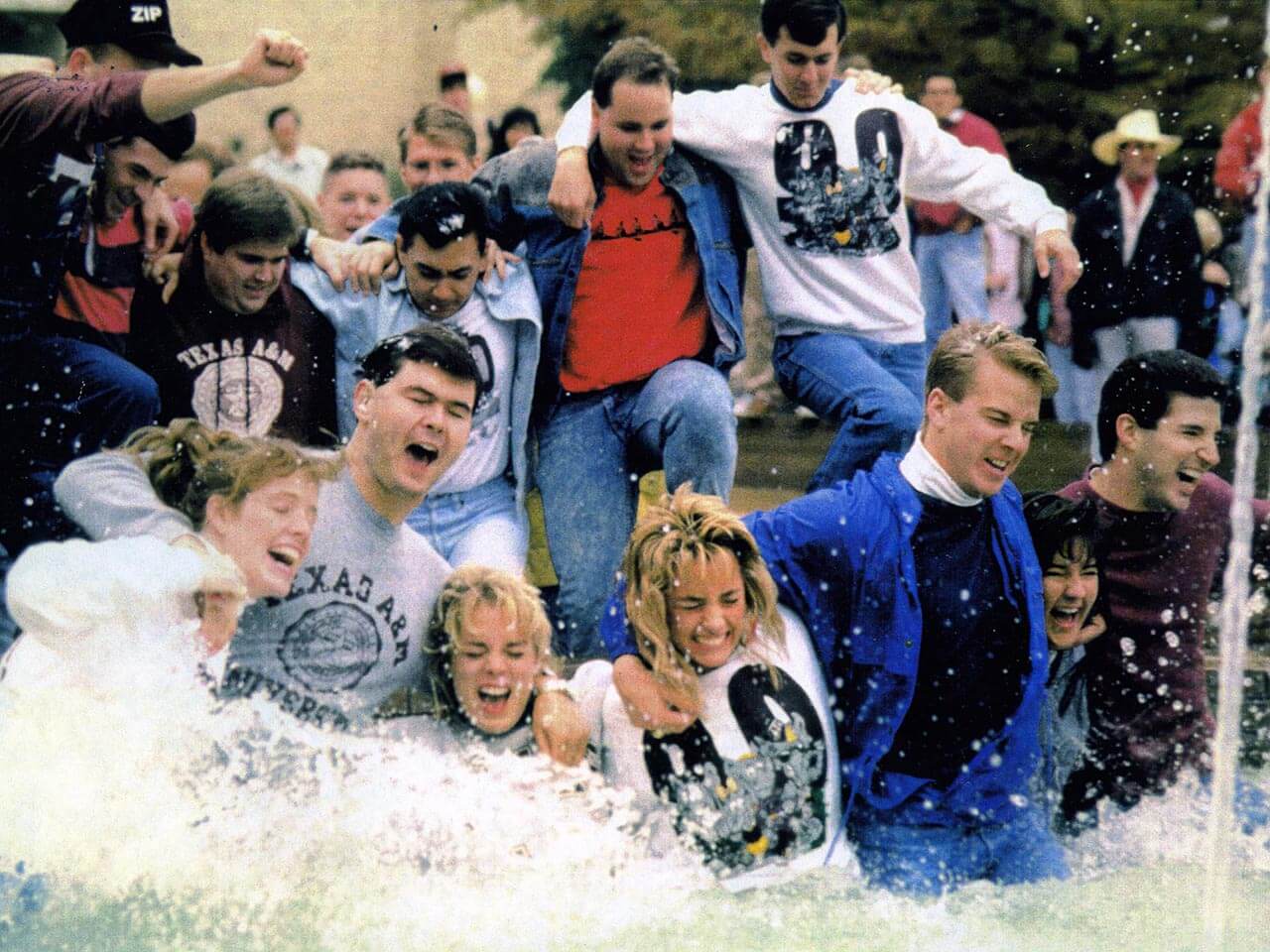
Color photo of Texas A&M students linking arms and splashing in a fountain during Elephant Walk.
That water is cold in November! Calls to clean up Elephant Walk had already begun when the Class of ’90 took their turn in the campus fountains. 1989 photo by Phelan N. Ebenhack ’88/1990 Aggieland.

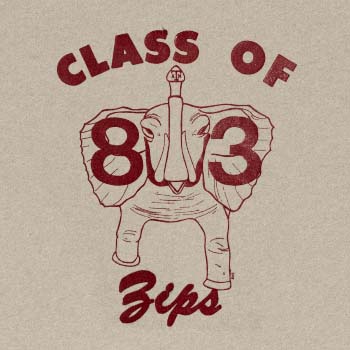
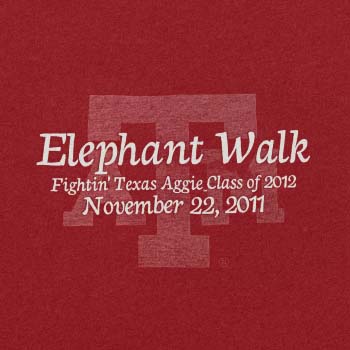
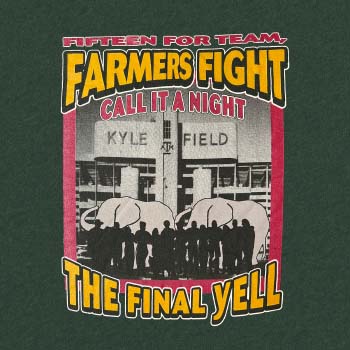
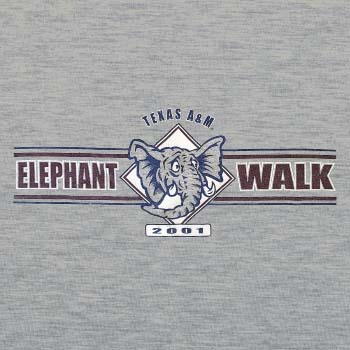
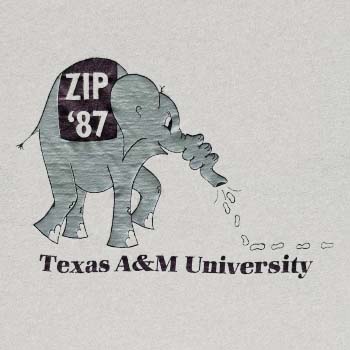
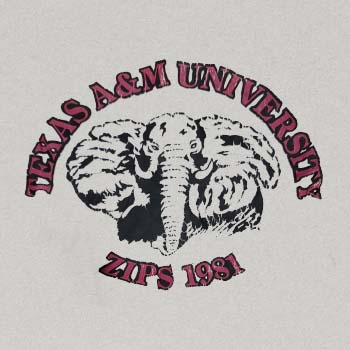
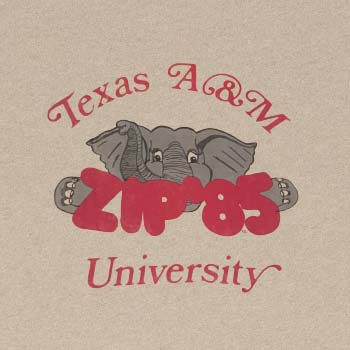
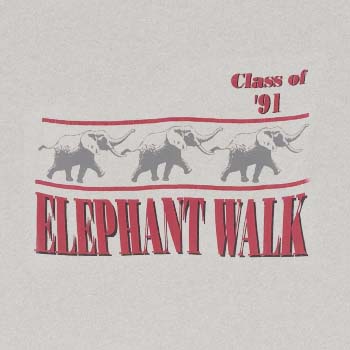
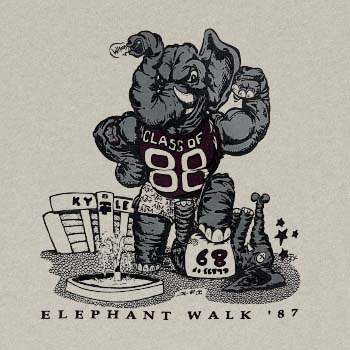
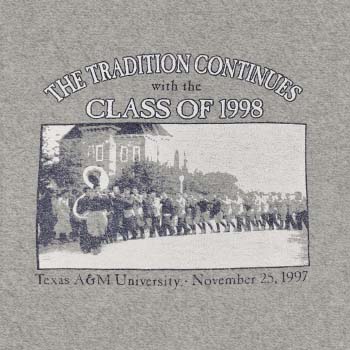
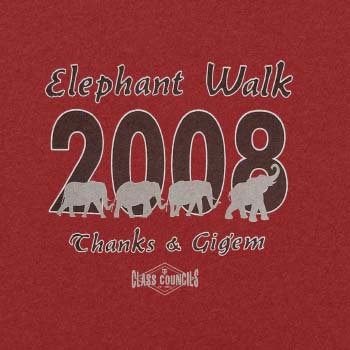
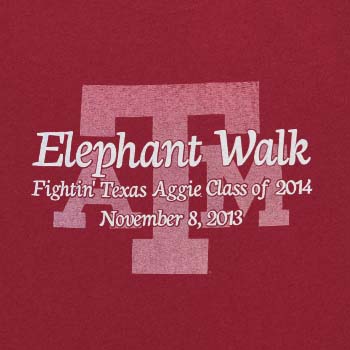
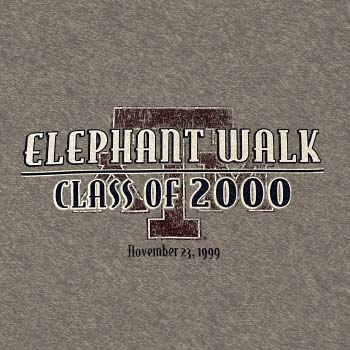
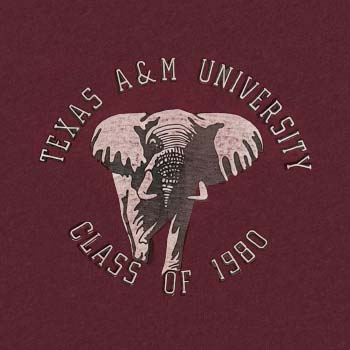
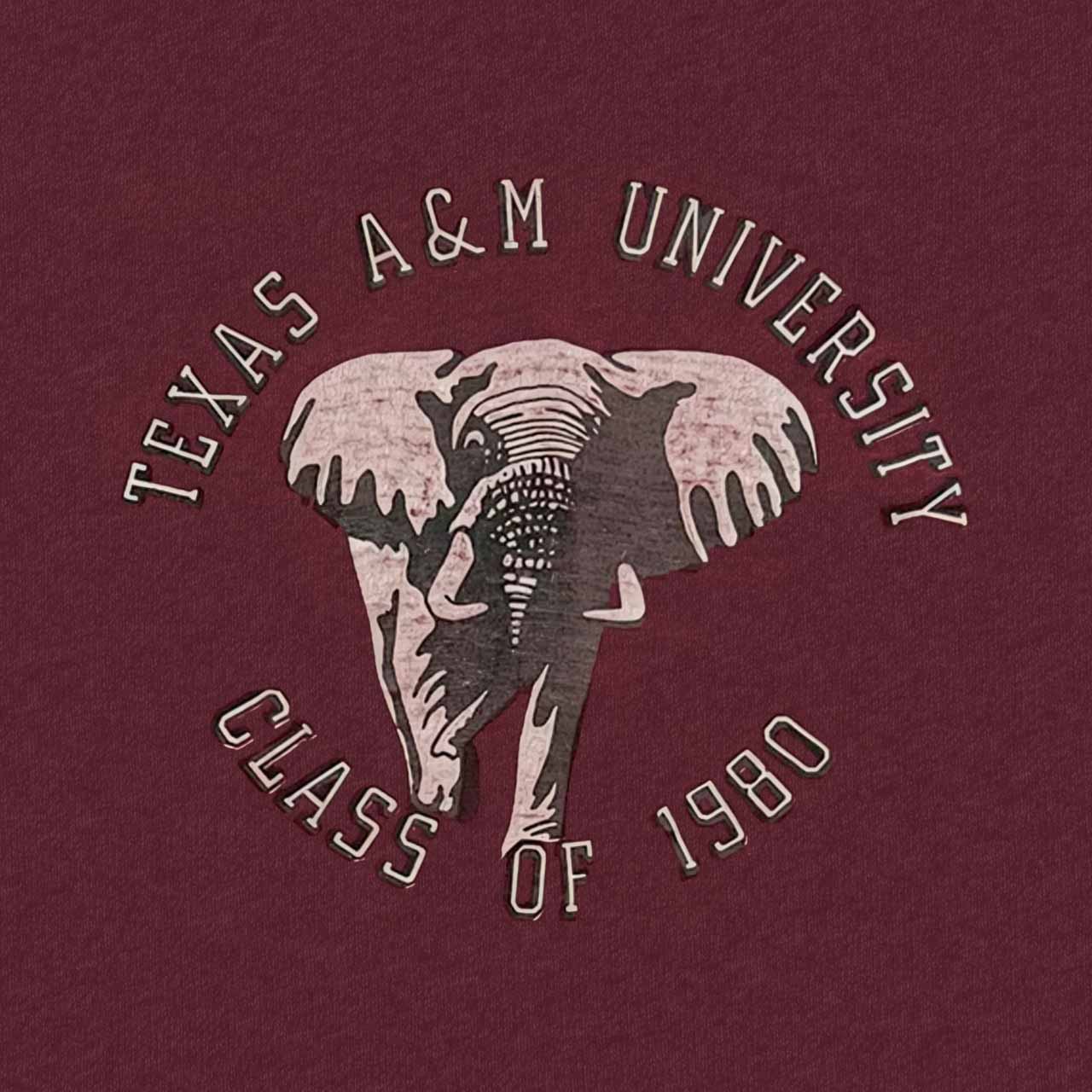
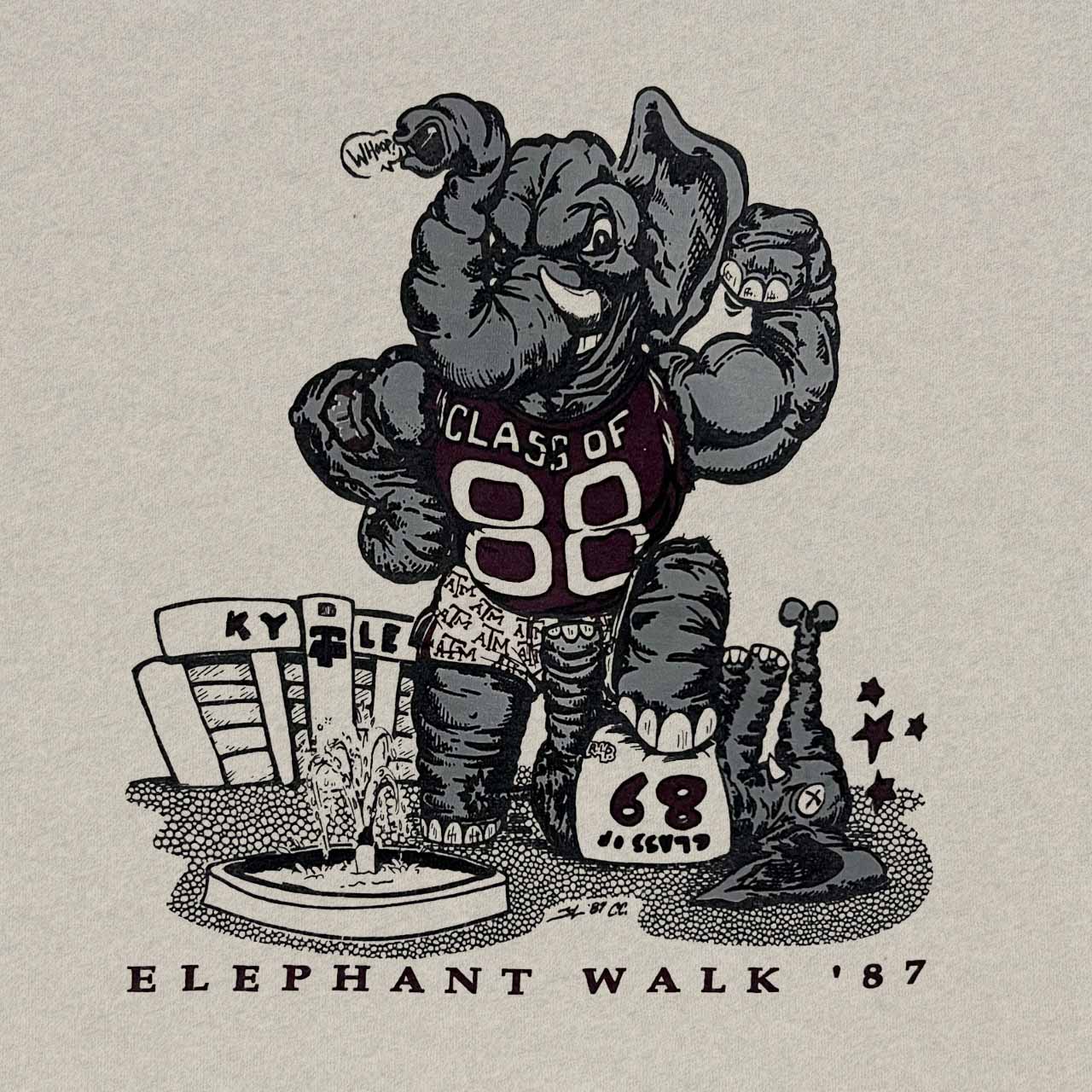
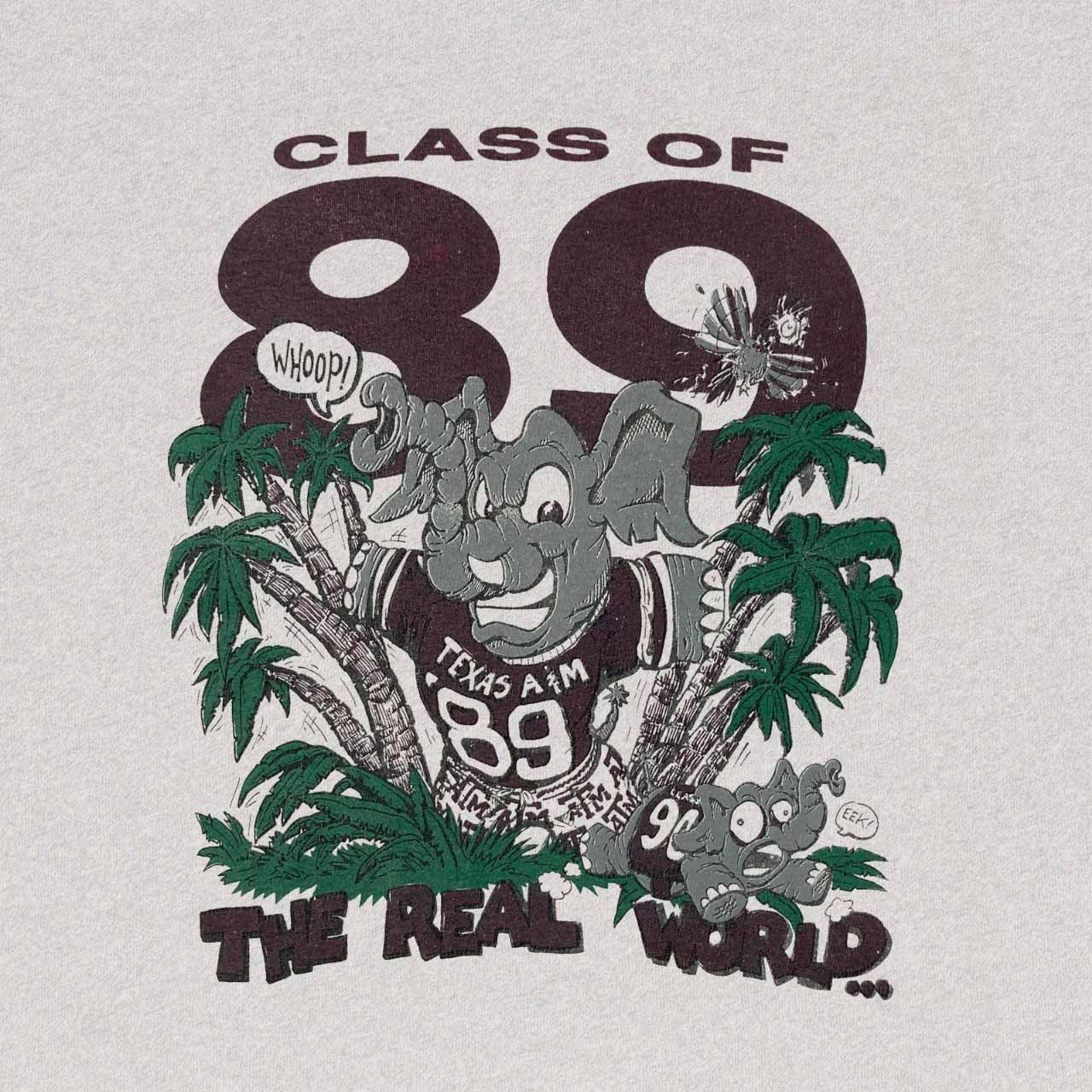
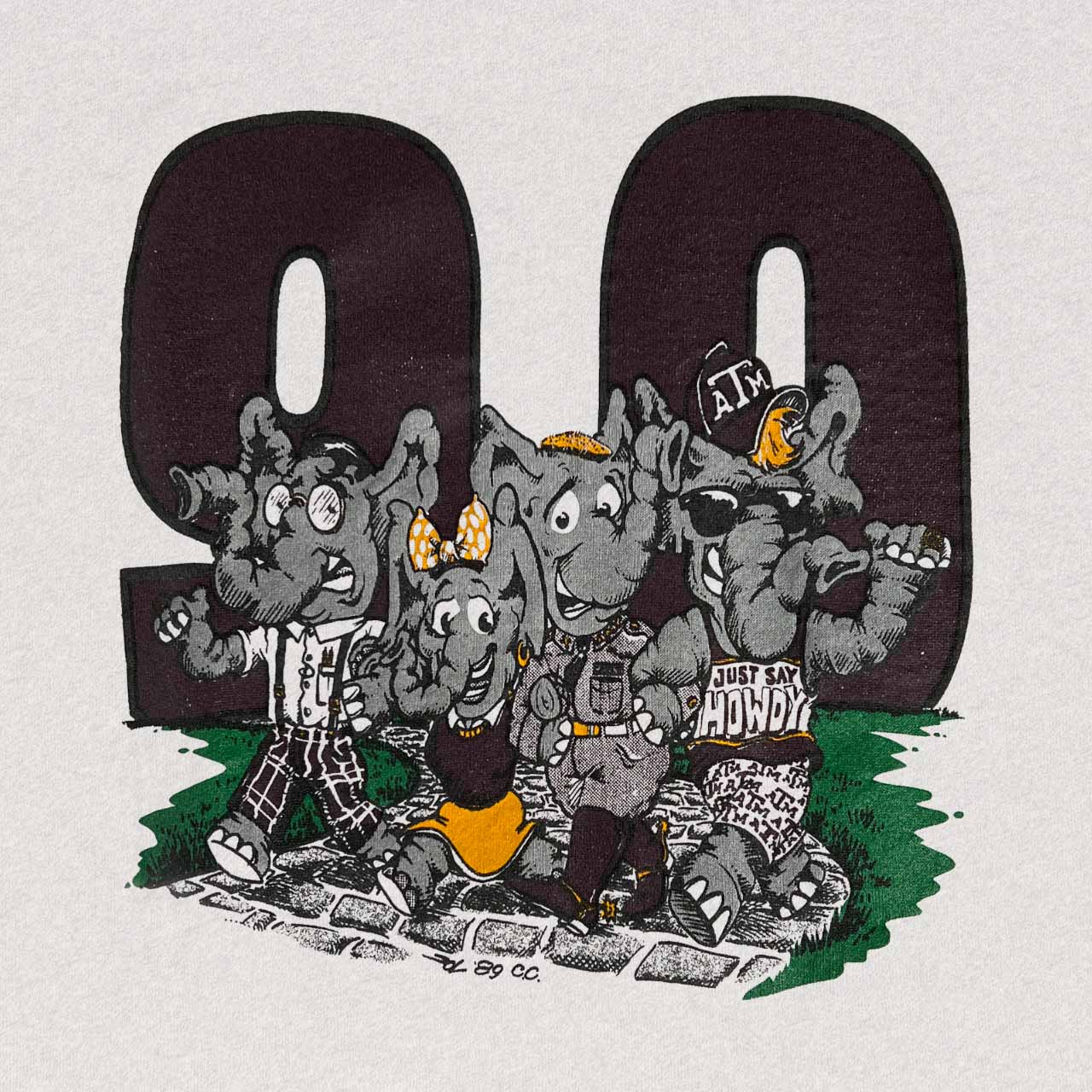
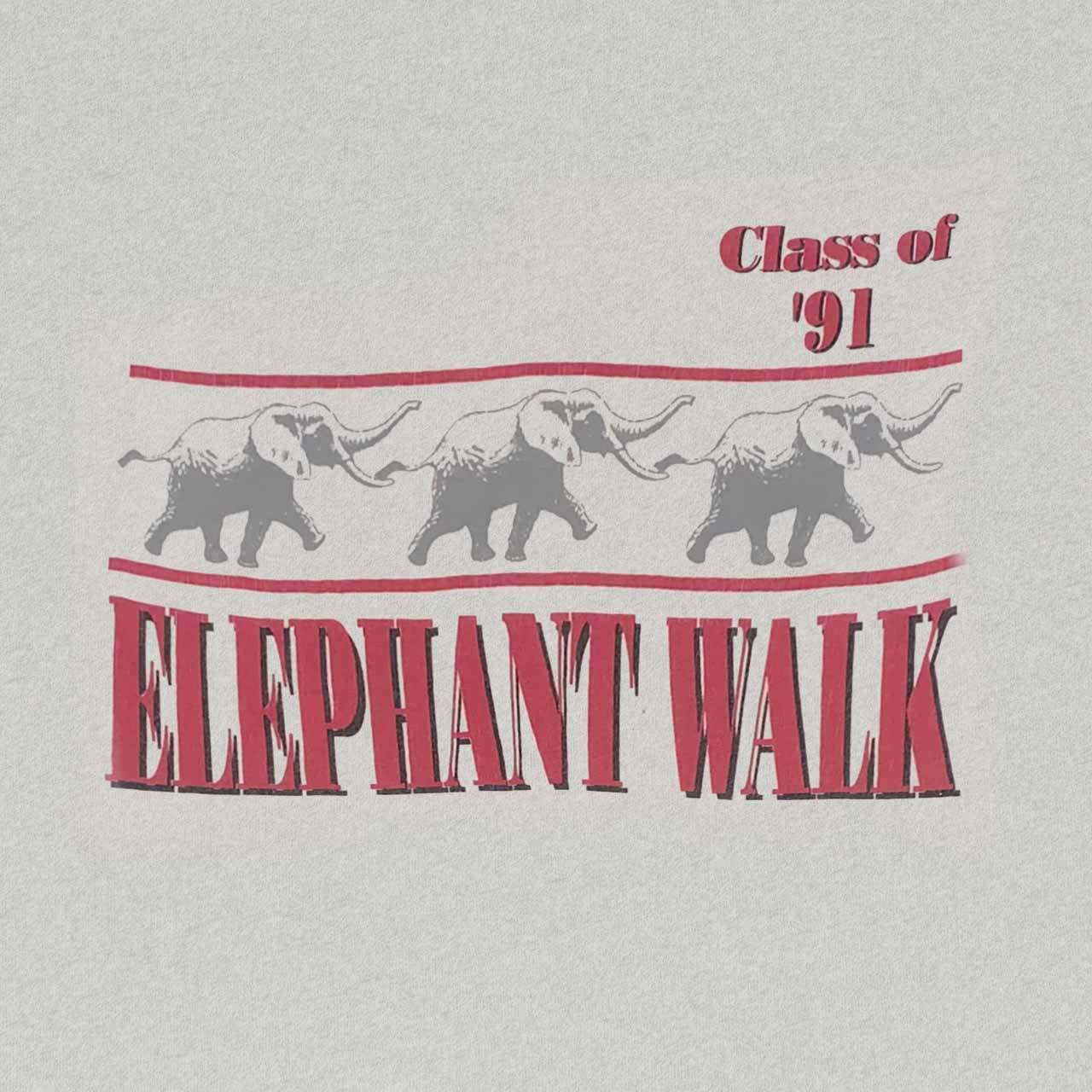
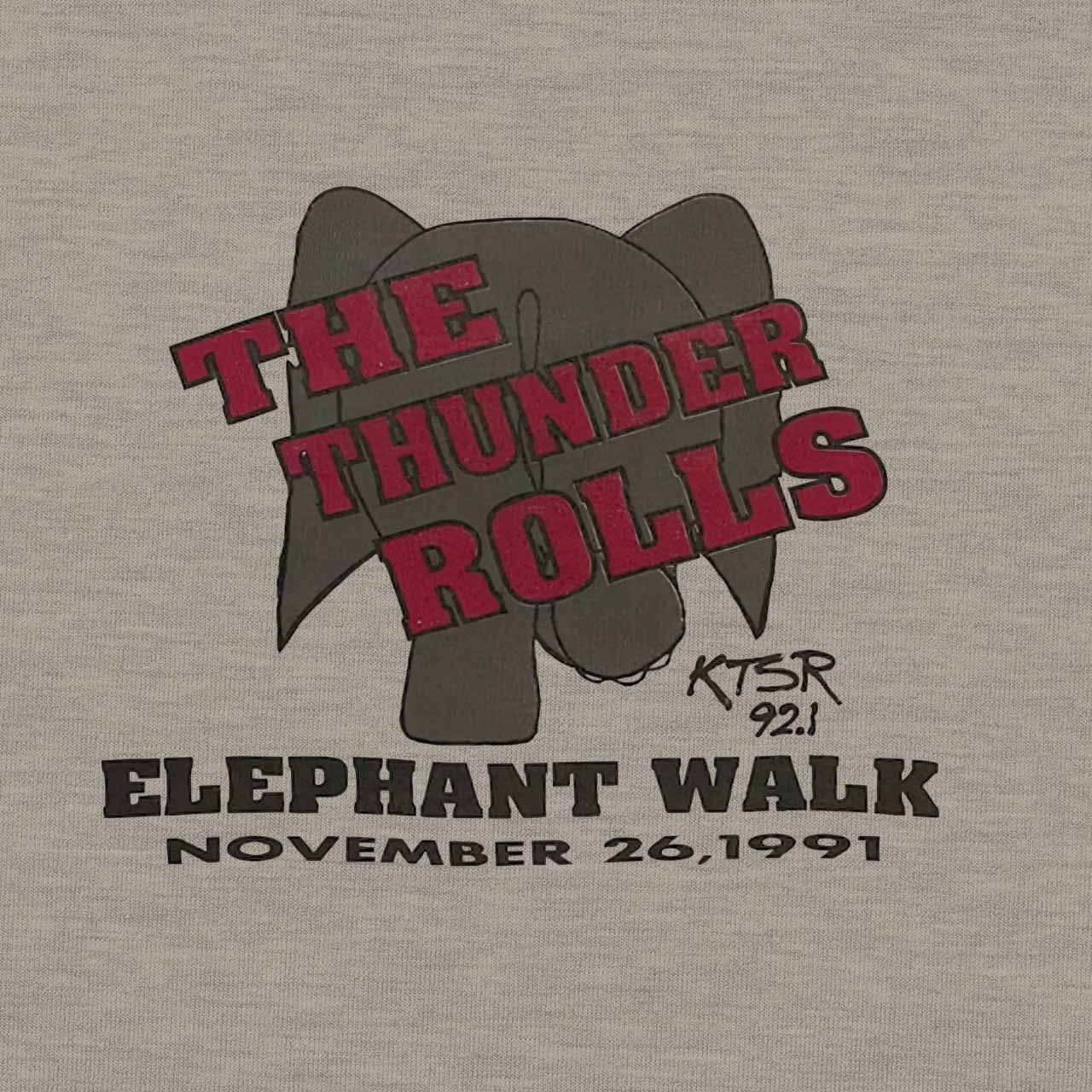
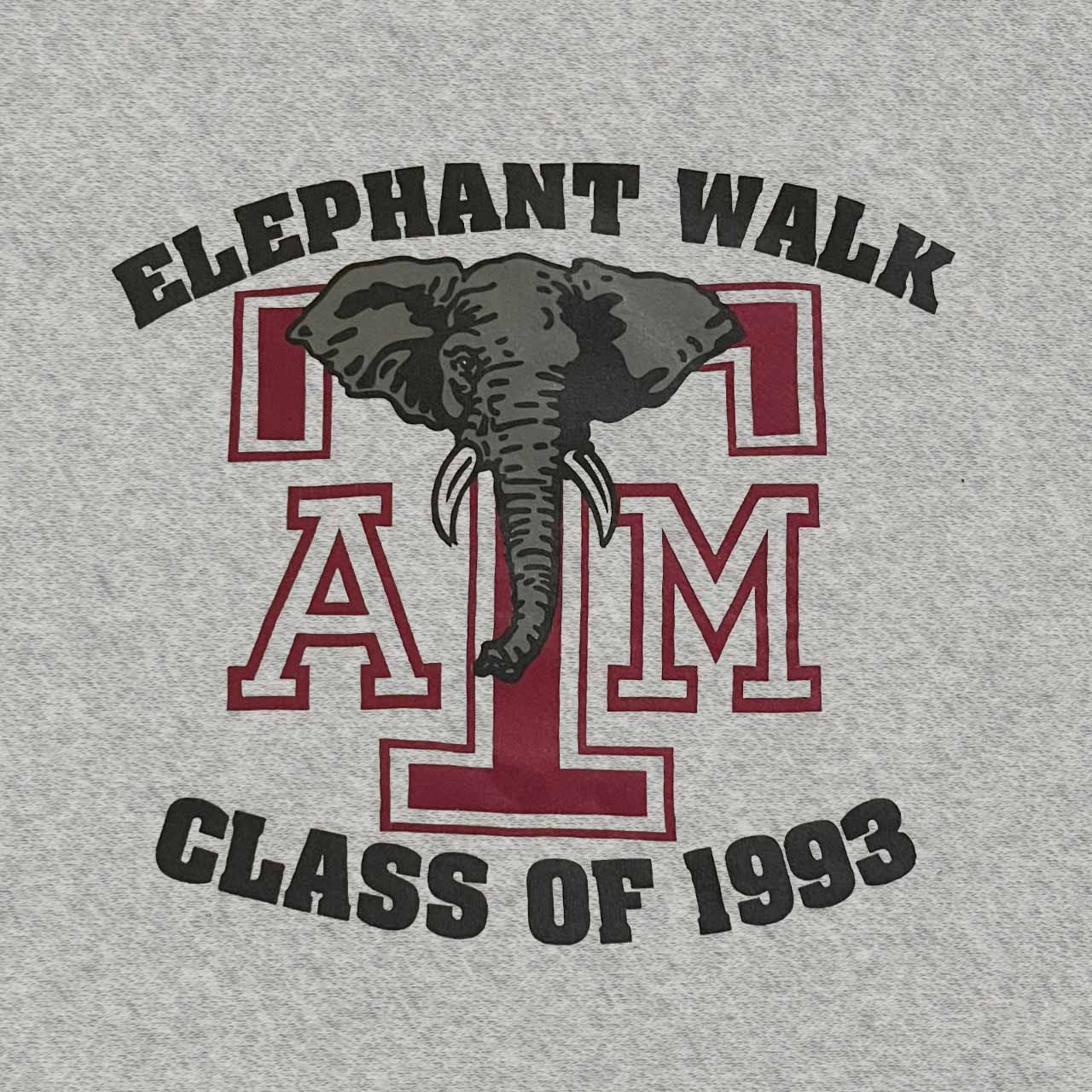
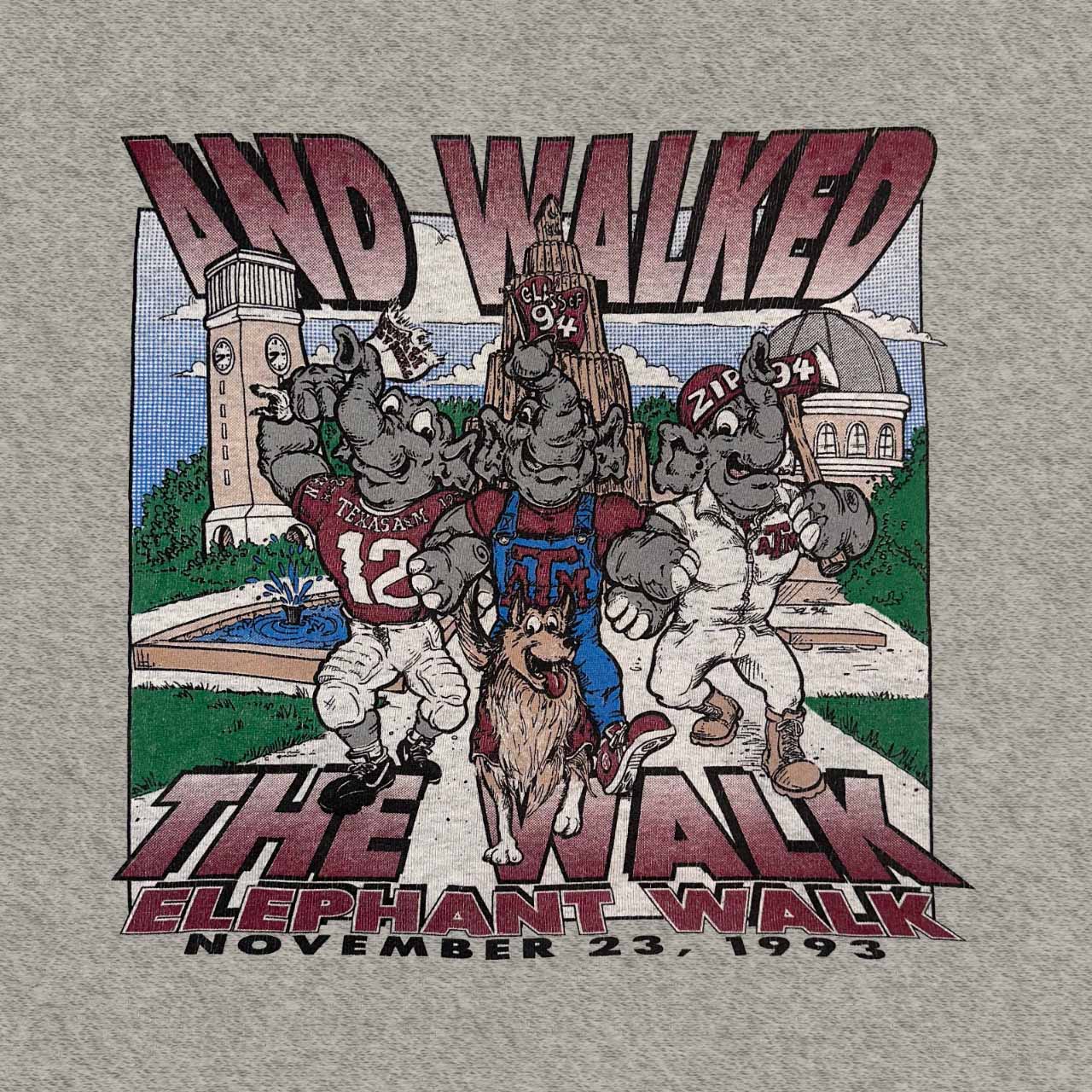
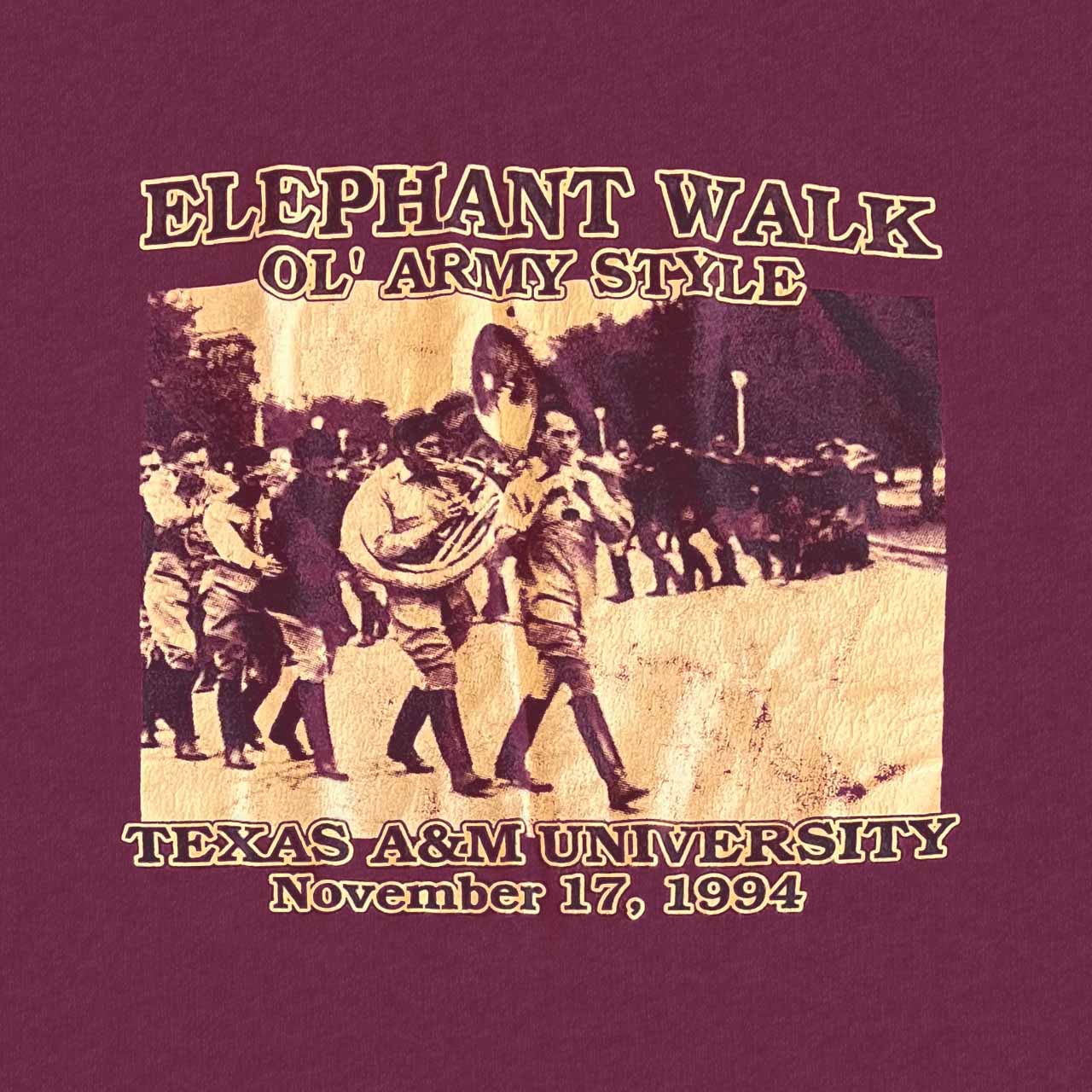
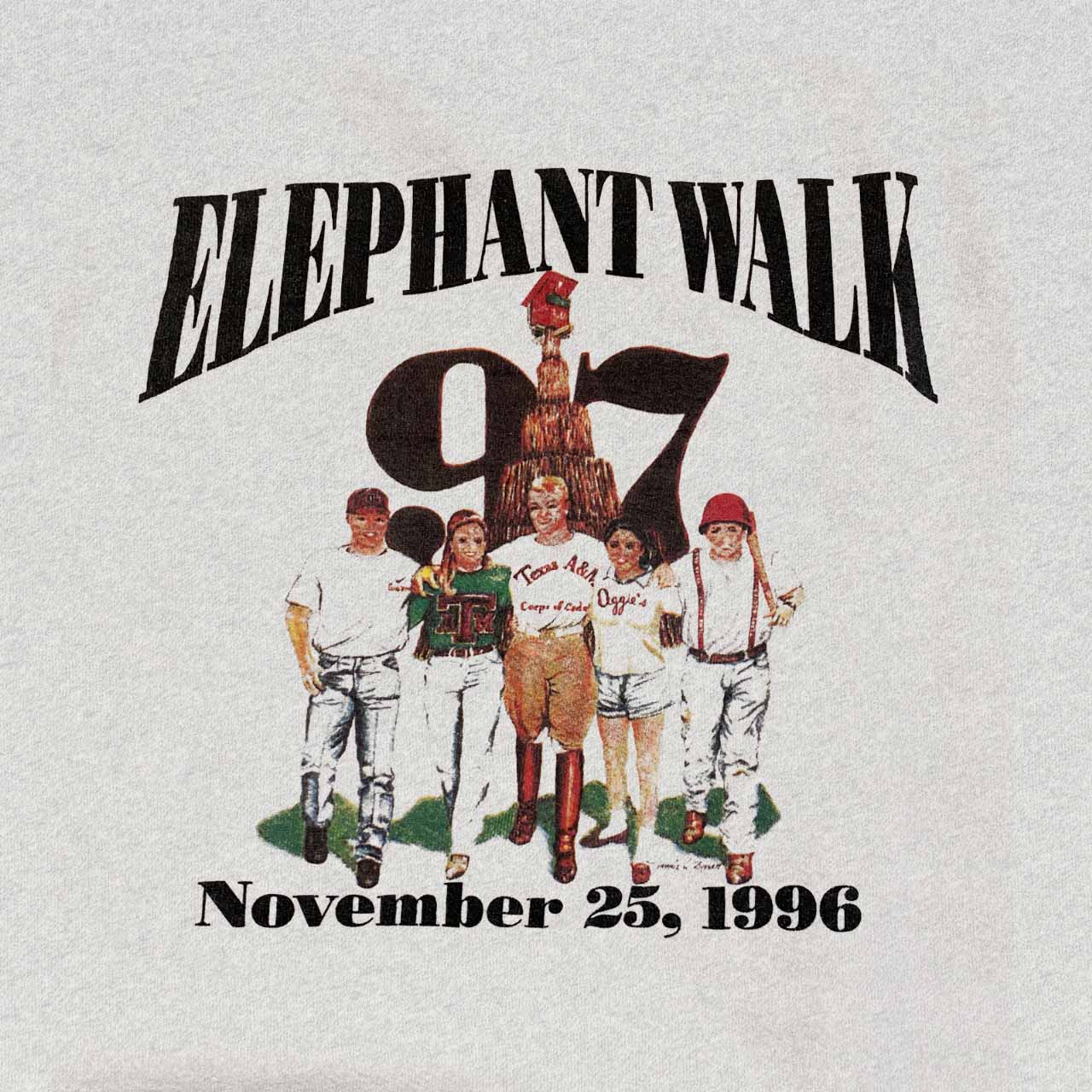
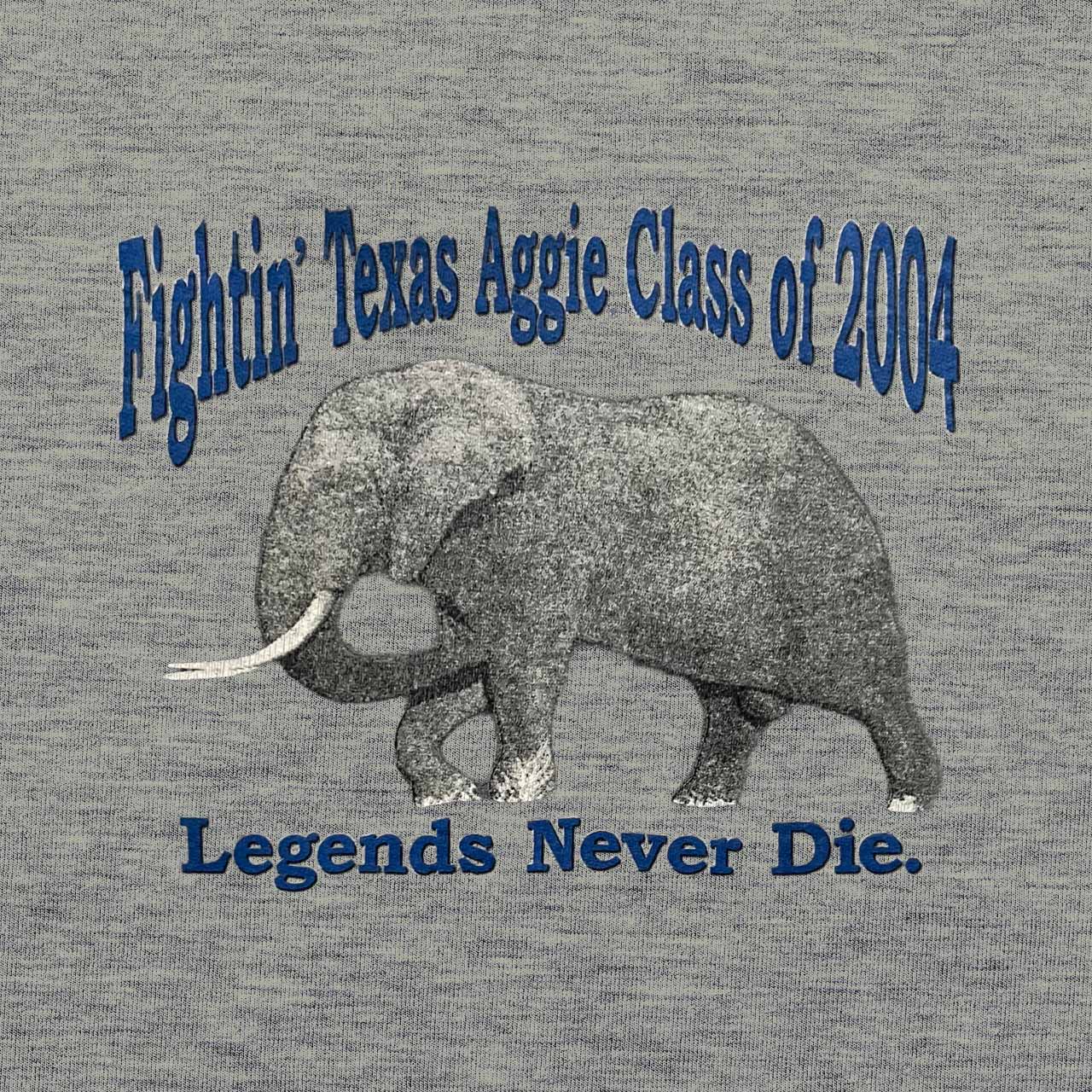
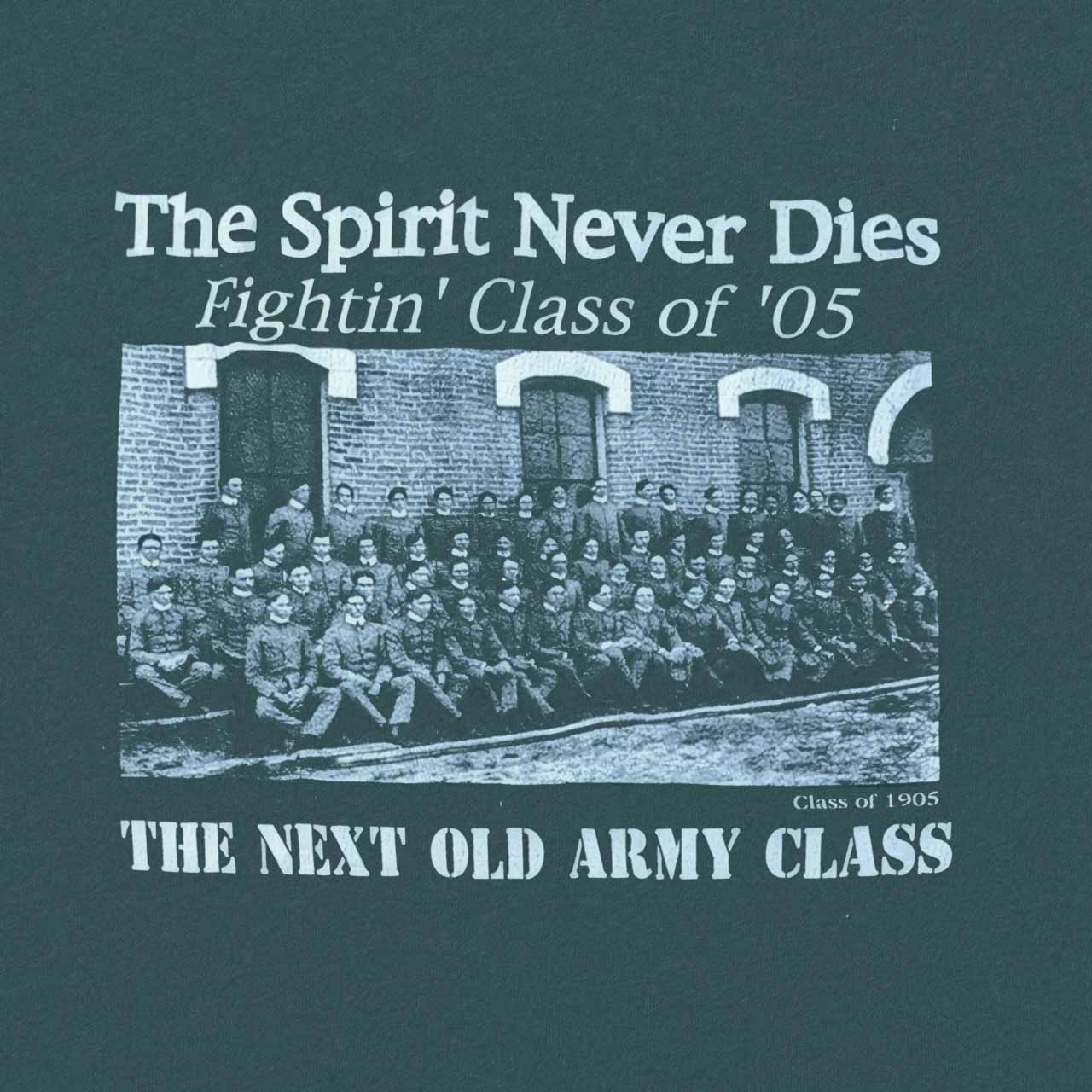
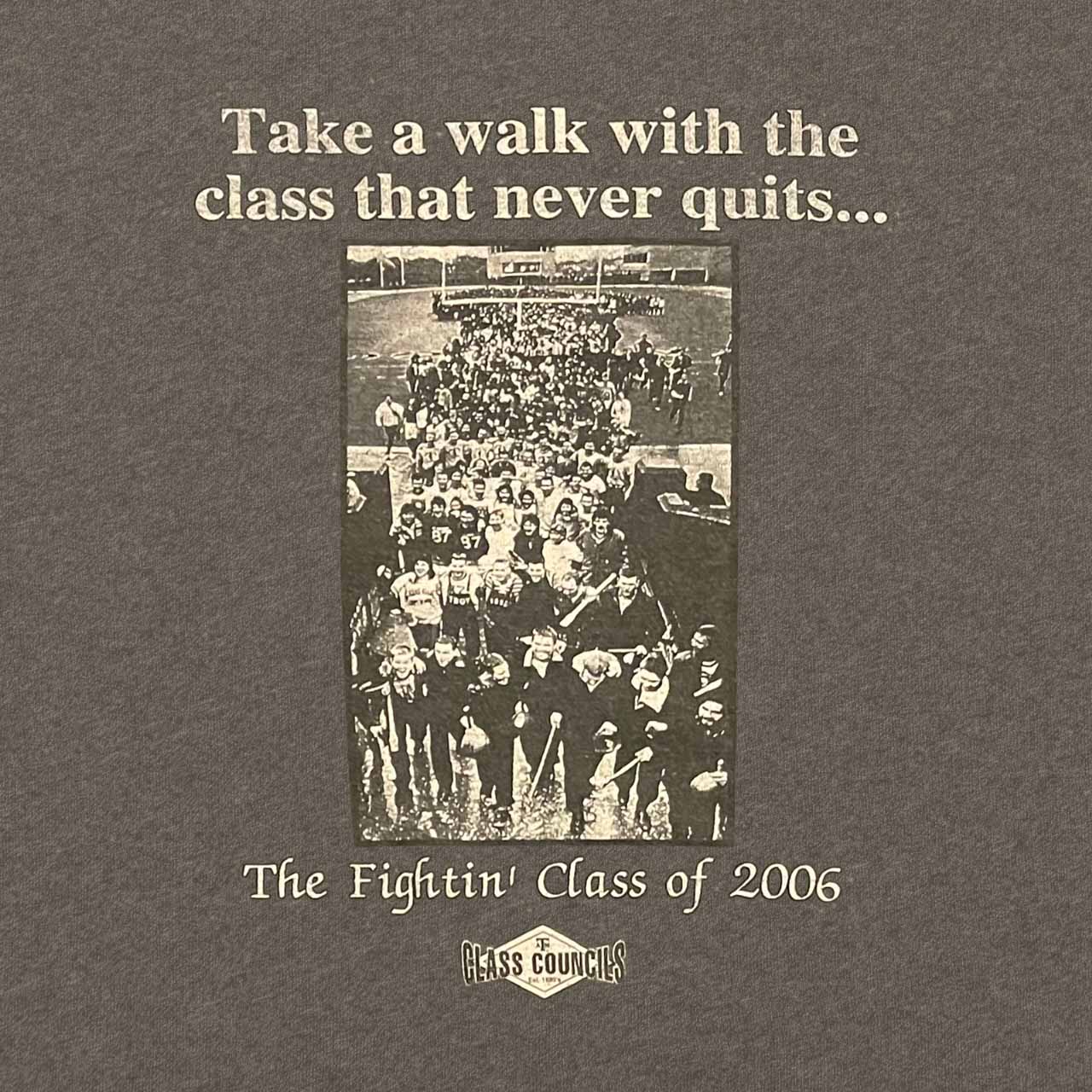
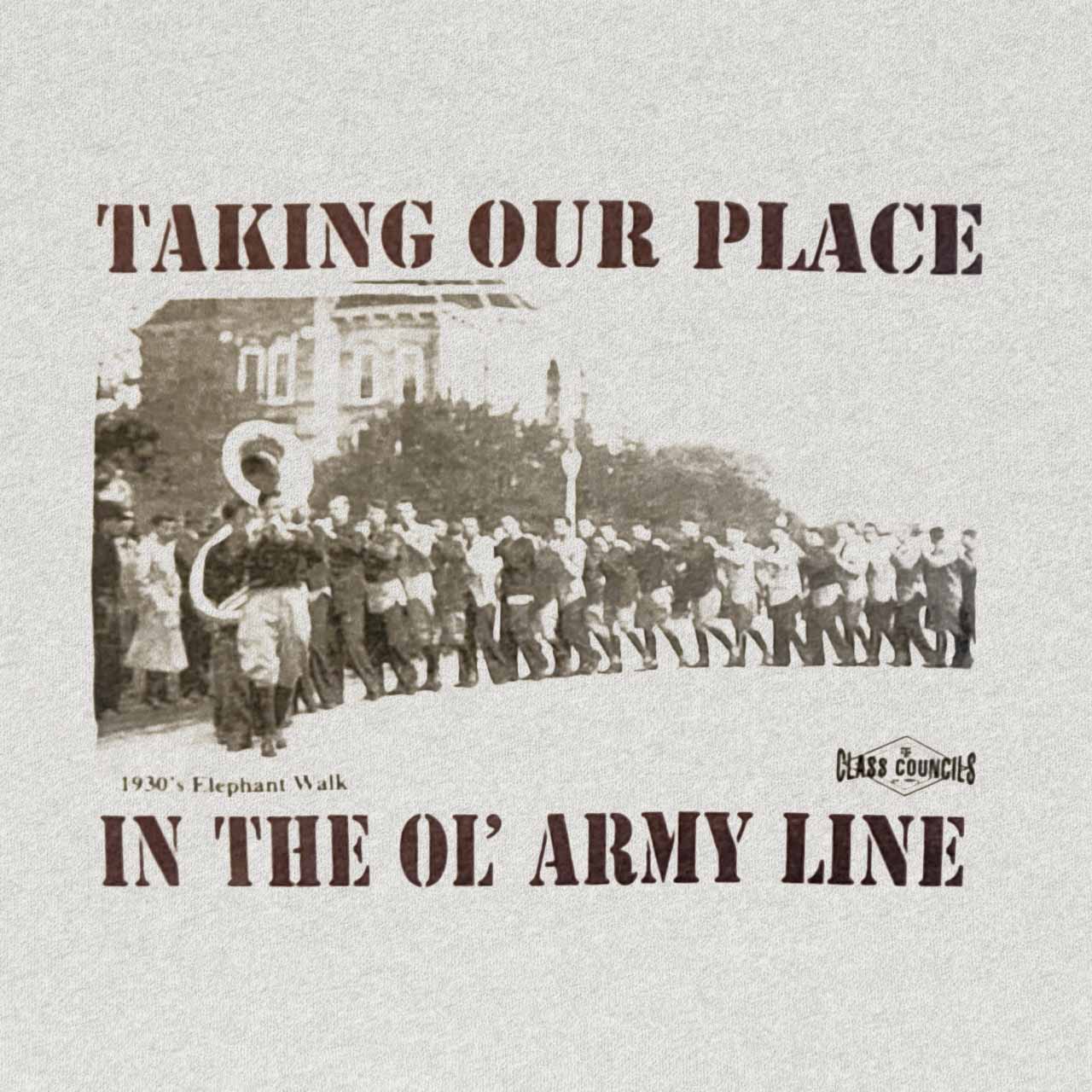
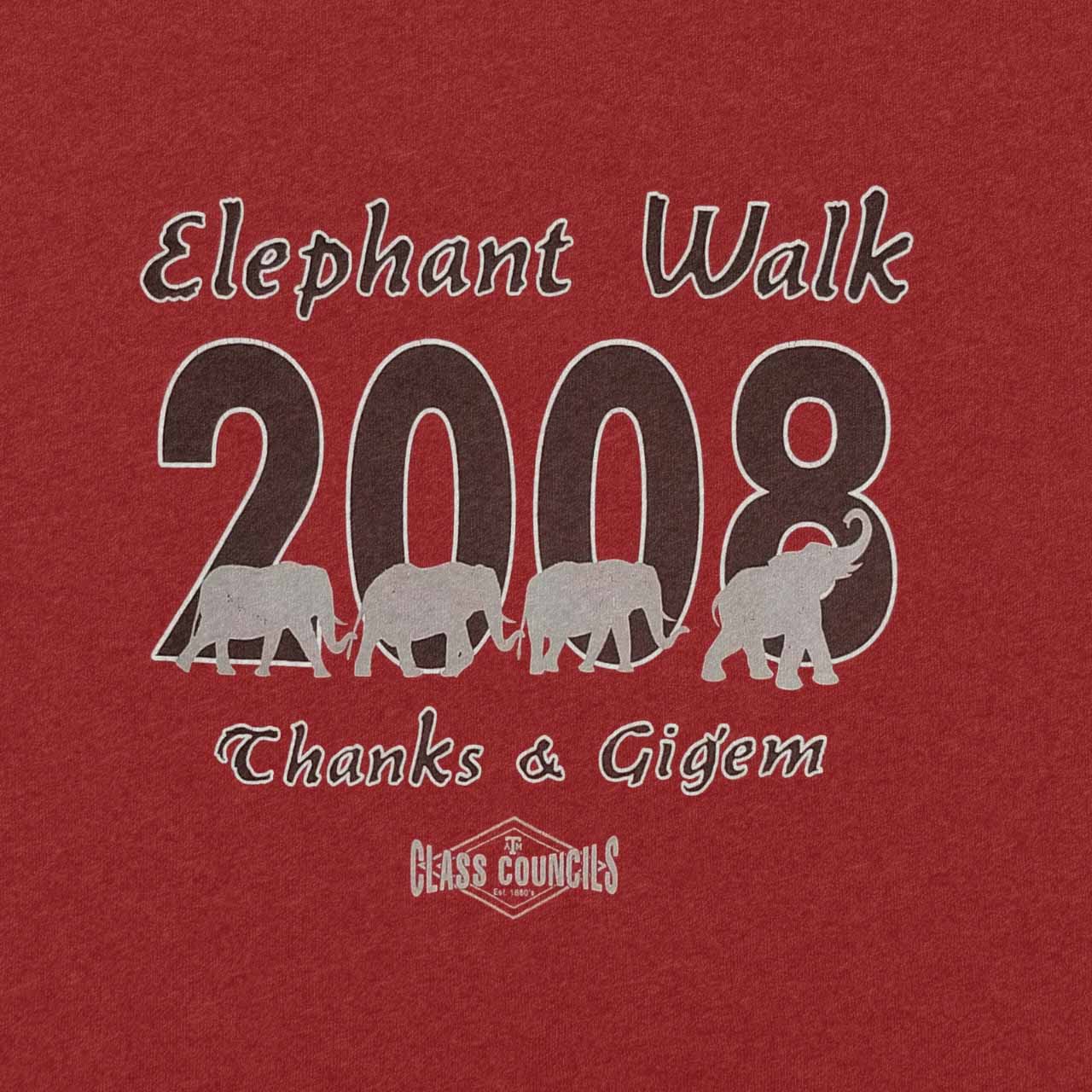
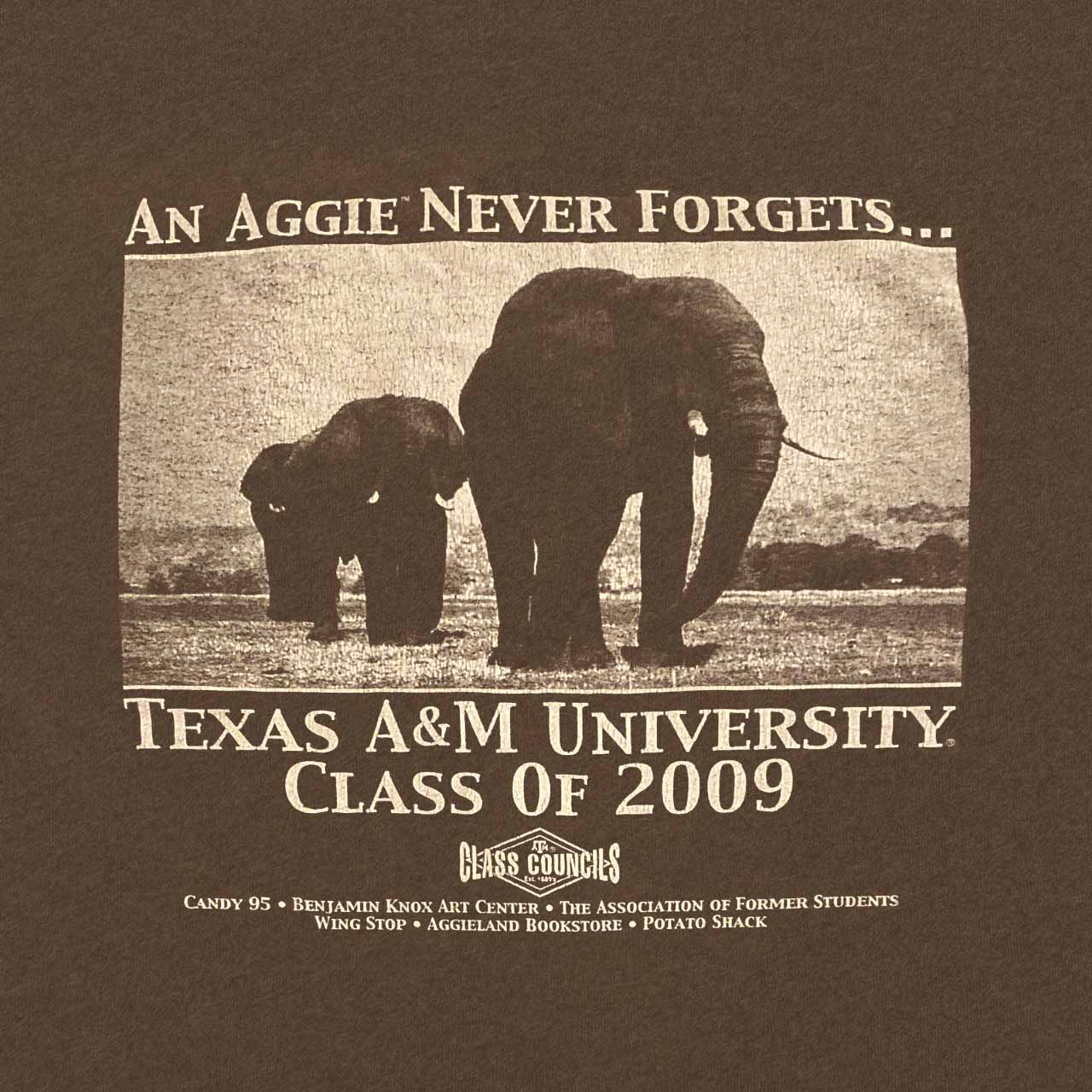
The Class of 1980 printed the first known Elephant Walk shirts, which became an annual tradition.

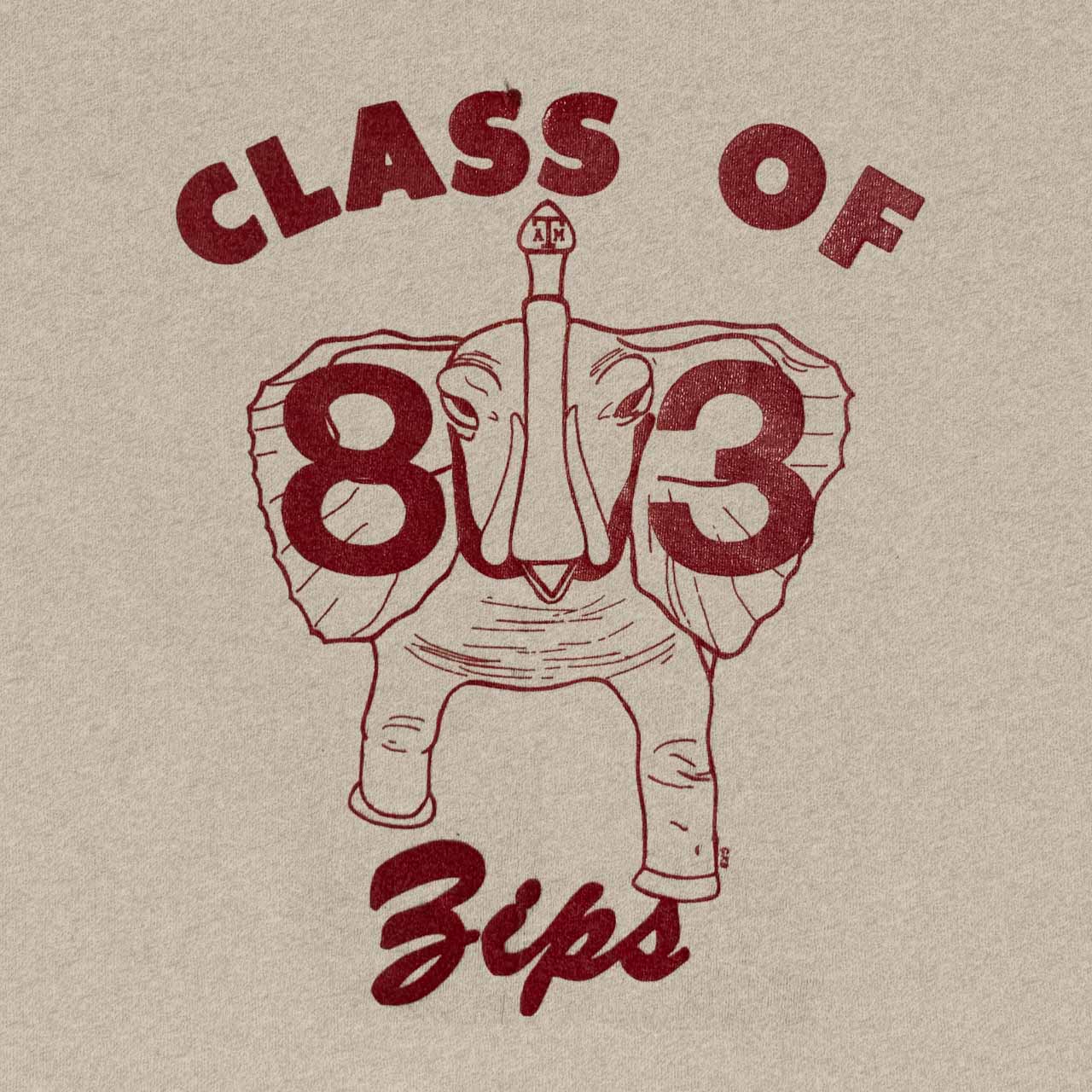
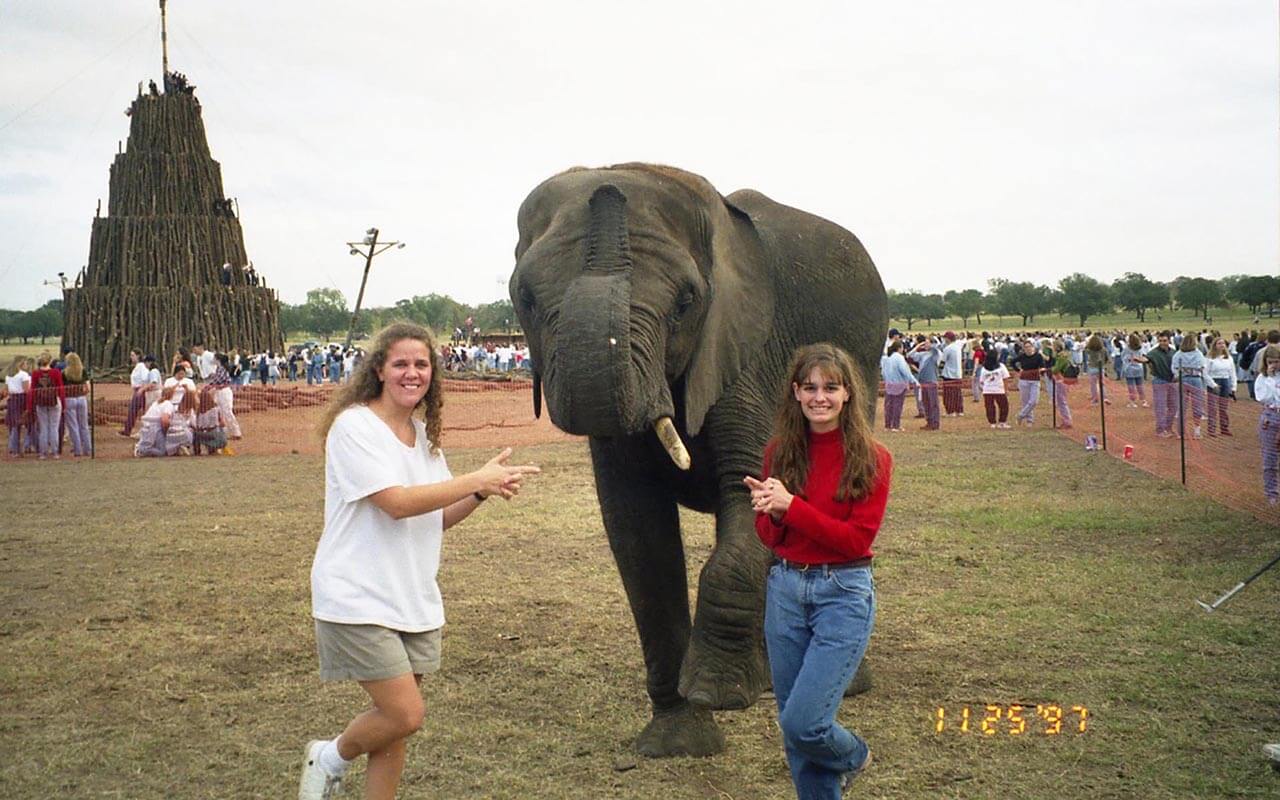
In 1982, the Class of ’83 rented elephants for seniors to take their pictures with, a feature that would stay with Elephant Walk through 2014. There were periodic objections to campus grounds being “trashed” or students being injured, and in 1987, the junior class held its own yell practice to distract the hunters.

On into the 1990s, crowds continued to be large and chaotic. The event was taking a toll on campus, and steps would soon be taken to dial it back — at risk of having the tradition canceled.

As our Junior E-Walk took place right after the bonfire collapse in 1999, this Elephant Walk brought our class some closure, as it had been a long year of sorrow and healing for the entire campus.
Carrie (Greene) Conner ’01
Color photo of two Texas A&M students posing with an elephant at the Bonfire site during Elephant Walk.
Elephant Walk in fall 1997 ended like many before it: with a yell practice and elephant photos at the Bonfire site. Photo courtesy of Nancy Bankson ’98.

Taking it back to
‘Old Army,’ again

In the early 1990s, talk continued to shift more seriously toward reducing the chaos.

Class Councils urged their classmates to make the event safer and “preserve the tradition — keep it clean.” Counterprogramming to keep the juniors busy was ramped up by student leaders.

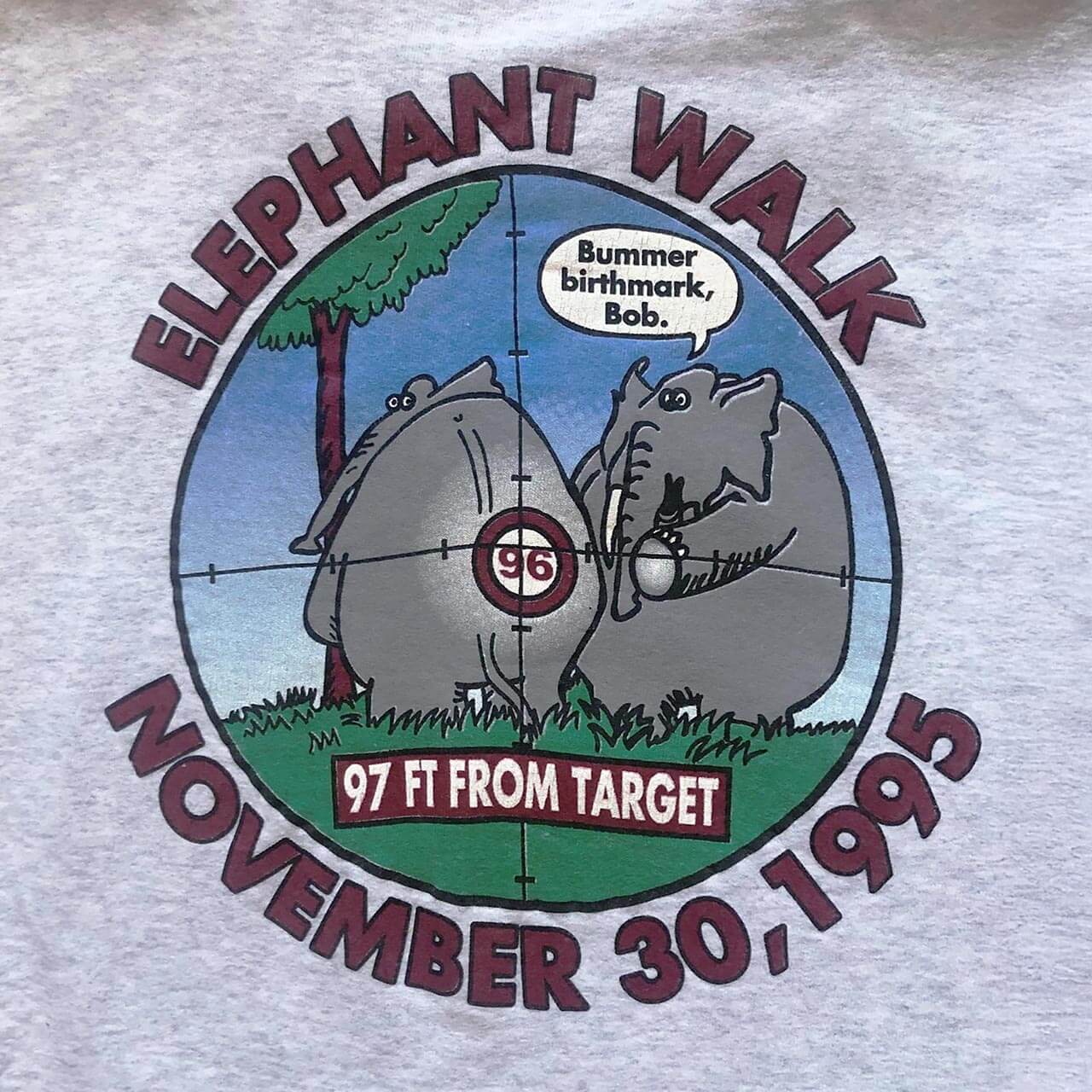
Graphic design from a 1995 Texas A&M Elephant Walk T-shirt featuring cartoon elephants and text.
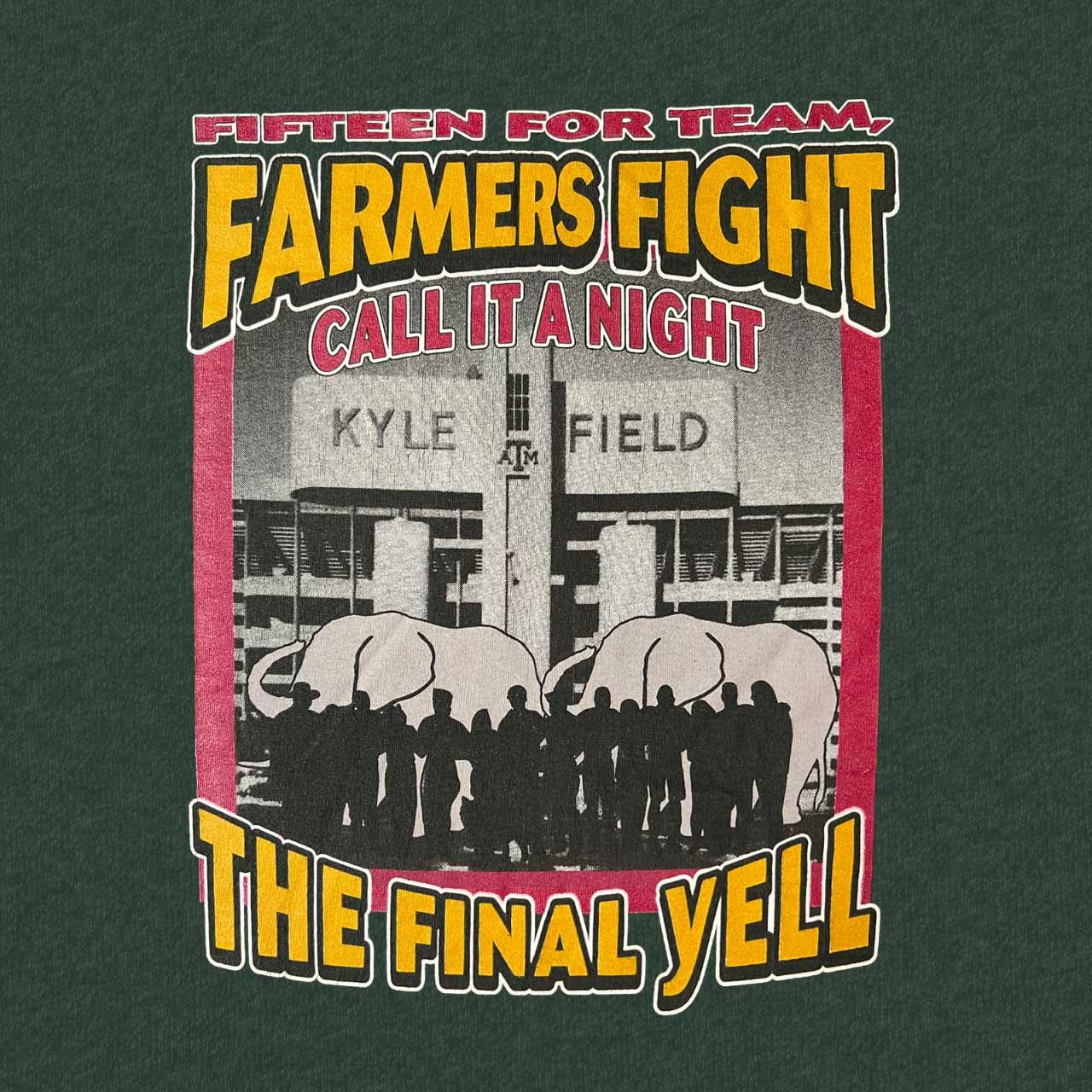
Out of many Junior E-Walk shirts over the years, the Class of ’97 may have created the most successful one, judging by the number of Aggies who sent us photos of it! The design parodies a popular Far Side cartoon, proof that memes were possible even before social media. Photo courtesy of Dave Quinn ’97.

In 1990, not only was a separate yell practice held for the juniors, but a baby elephant was brought to campus for them to take their own photos with. For 1992, the Class of ’94 juniors organized a class photo on Kyle Field following the yell practice and elephant photos at the Bonfire stack site — effectively moving the juniors in the opposite direction from the seniors.

This was continued, and by 1997 it was being called “Junior E-Walk” — “shortened and hyphenated,” The Battalion reported, “because it is a senior privilege at A&M to say the word ‘elephant.’” (The Class of ’94 junior event had referred to photo opportunities with a “large gray field mouse from Africa.”)

“E-Walk” had been used in the past as an abbreviation for the senior walk, but became the official name of the junior event in 1997.

Meanwhile, Aggie students at Texas A&M University at Galveston held their first known Elephant Walk in 1995, according to Shelly Fordyce ’99, director of student activities for the campus. By 1997, it was a full-scale tradition, and today’s Galveston seniors revisit meaningful campus locations such as Shell Beach and Senior Knoll, while juniors are led on an E-Walk along the same route but in the opposite direction.

In College Station, the push to return to “Old Army style” was met with a fair amount of success as the 1990s progressed. Even though things were getting cleaned up, turnout remained high, with 5,000-6,000 seniors taking part in 1998 — around two-thirds of the Class of ’99.

I helped to lead our Elephant Walk; I was the only piccolo available for the entire evening. It signified being connected to a community well beyond the people I met while I was there. It was an honor to uphold the old tradition of being led by a piccolo and bass.
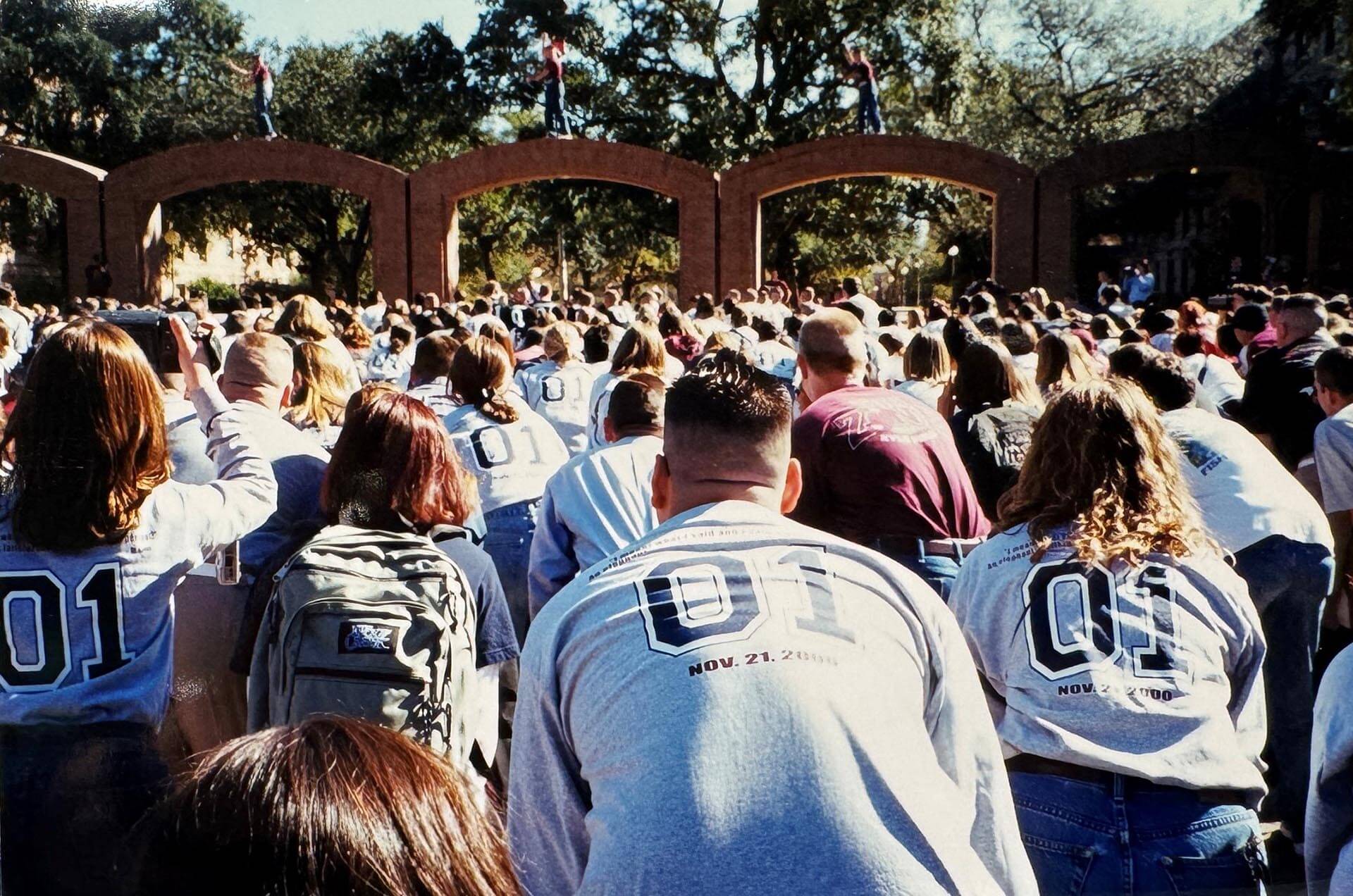
Anna Stodola ’17
Color photo of Texas A&M students in Class of ’01 shirts gathered at the Quad arches during Elephant Walk.
The Class of ’01 pauses at the Quad arches for a yell practice. Their Elephant Walk began at Kyle Field and concluded at Fish Pond. Photo courtesy of Carrie (Greene) Conner ’01.

Then, truly somber times came to Aggieland.

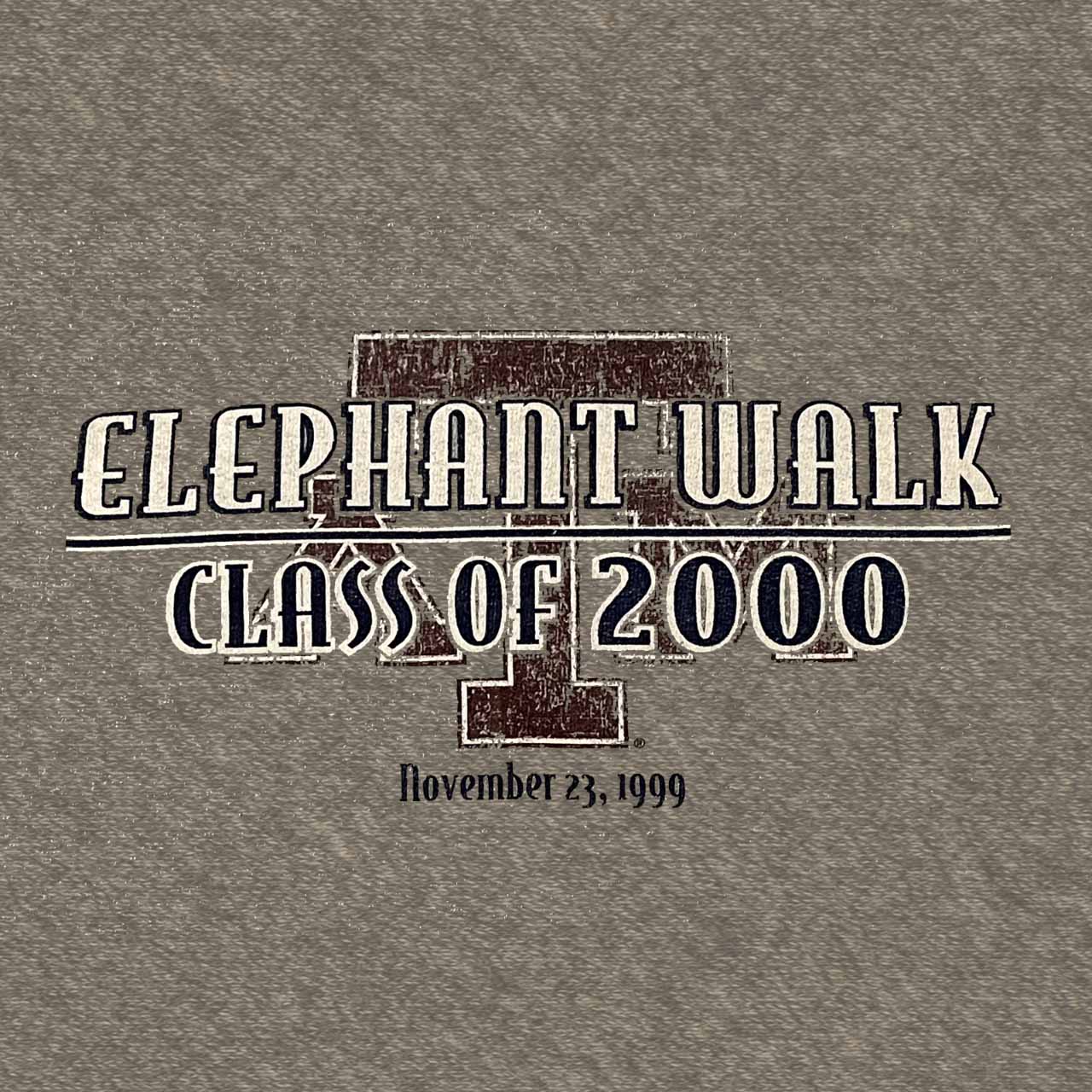
In 1999, Elephant Walk and Junior E-Walk were rescheduled three times after the deadly Bonfire collapse, but still an estimated crowd of 3,500 seniors — about 40% of the Class of 2000 — came out to walk together in what was called a “positive” event with “lots of smiles and hugs.”

But attendance declined through the 2000s, even as class sizes continued to increase. Entertainment was added, including fajita lunches and live music, in efforts to bring more seniors out.

As we walked around campus in the dark, it felt different. Reminiscing and many meals with my freshman roomies as we walked by Sbisa. Silver Taps and many pennies put on Sully before stressful exams as we walked down Military Walk.
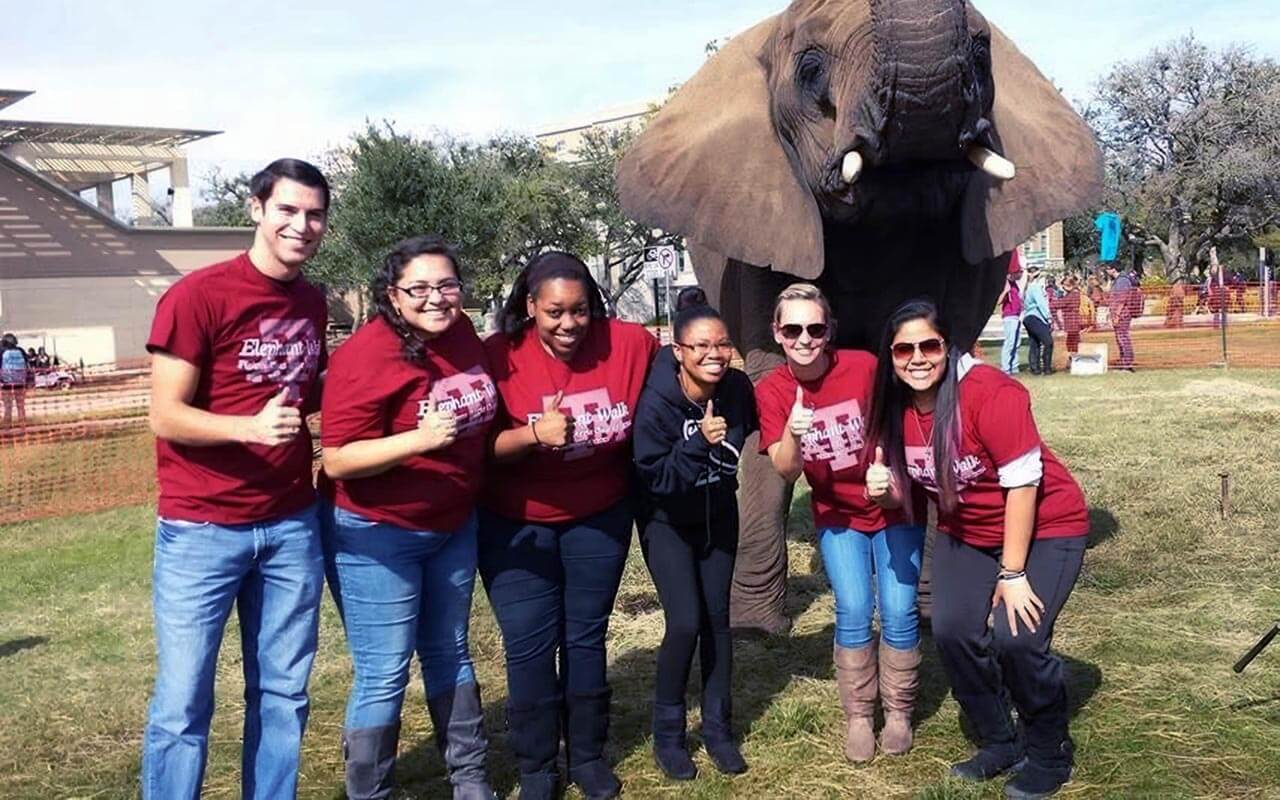
Kristin Eiland ’19
Color photo of Texas A&M students posing with an elephant during Elephant Walk.
“Elephant Walk was one of the most unforgettable parts of my senior year,” said Christal-Joy J. Turner ’14, pictured third from left. “That was a once-in-a-lifetime moment, and I’m glad I have the photos to prove it. I am so glad to see this tradition still going strong.” 2013 photo courtesy of Christal-Joy J. Turner ’14.

A shift to nights brings growth

The start time for Elephant Walk had been shifting later in the day for decades, from circa 9 a.m. in the 1930s and 1940s, to late morning in the 1950s, then noon or later from the mid-’60s to 2000s.

Finally, in 2013, Class Councils moved Elephant Walk to the evening — thus not conflicting with most students’ class hours. Numbers rebounded. The 2015 Elephant Walk was the largest in years, with more than 1,300 seniors.

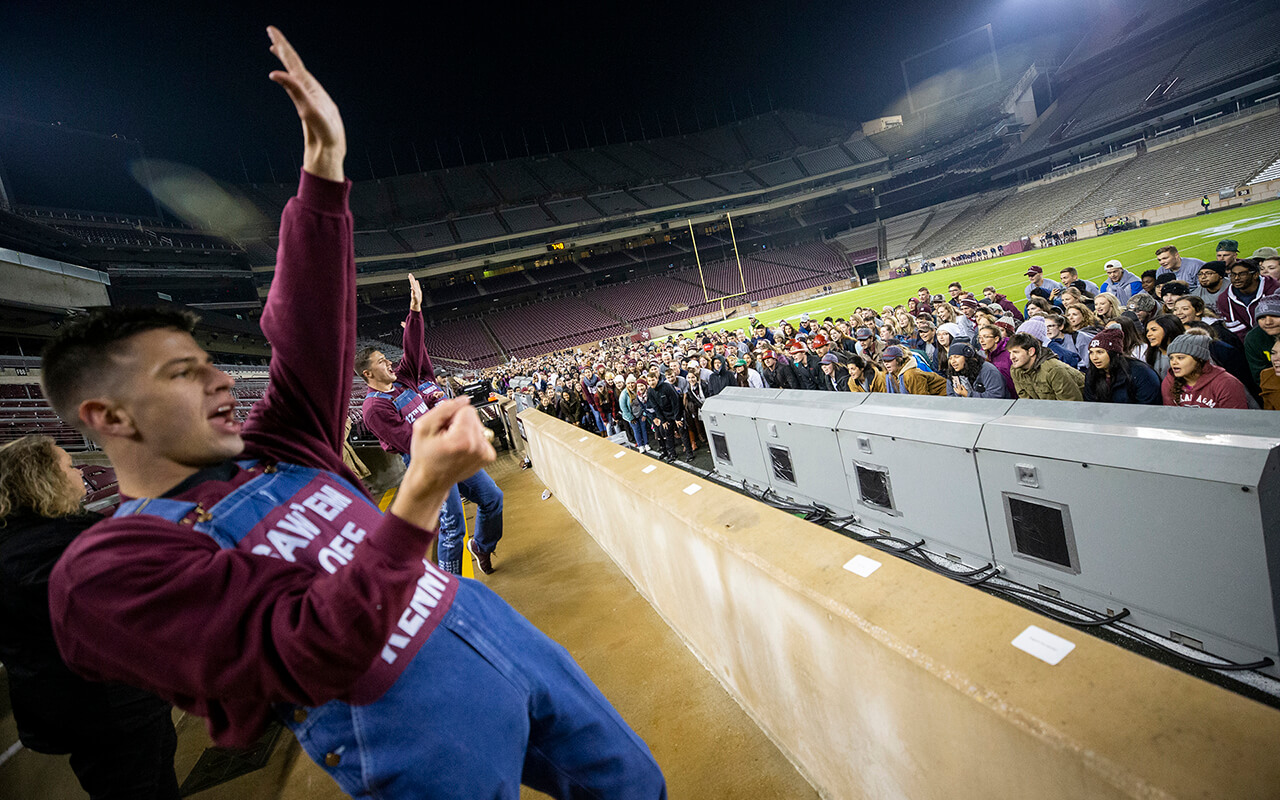
The push to “keep it clean” was so successful that soon, there was no need for an event to distract the juniors. 2018 was the last year Junior E-Walk was held. By fall 2021, Elephant Walk was ending with a senior yell practice inside Kyle Field, which proved to be a popular choice, and growth continued.

Color photo of Texas A&M yell leaders and seniors gathered in Kyle Field during Elephant Walk.
In recent years, Elephant Walk has typically begun in early evening on a Monday or Tuesday before the last home football game and concluded with a yell practice for the seniors in Kyle Field. 2019 photo by Sam Craft/Texas A&M University Division of Marketing and Communications.
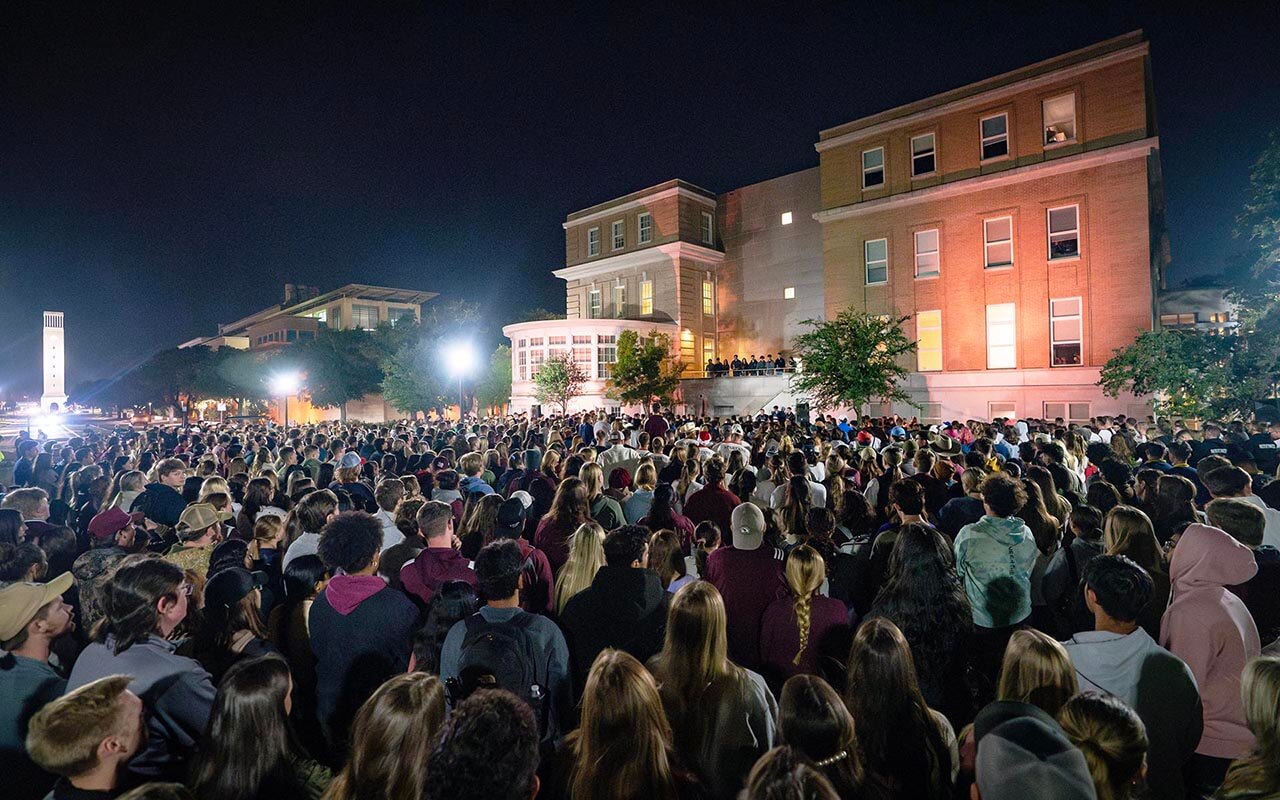
Color photo of a large crowd of Texas A&M students gathered at night during Elephant Walk.
Elephant Walk attendance has been trending upward in the 2020s. Around 2,500 members of the Class of 2025 came out for Elephant Walk in fall 2024. 2024 photo by Laura McKenzie/Texas A&M University Division of Marketing and Communications.

“I believe in 2022, we were right around 1,800 [attendees],” said Kayla Young, Texas A&M’s program manager for campus engagement and traditions.

“In terms of the health of the tradition, we have seen it really grow in the last three years,” Young said. The fall 2023 Elephant Walk brought out 2,100 seniors. Fall 2024 saw 2,500 members of the Class of ’25 walking together.

“We are seeing a much higher social media presence with it, and more high-profile speakers from around campus,” Young said. “We are seeing more students post photos and engage with the Elephant Walk Instagram account. The students have been able to grow the following for that throughout the last two years.”

It signified how far I had come and how the unfamiliar had become home, and how quickly time had passed. It was a meaningful way to say goodbye not just to a place, but to a chapter of life that shaped who I am.
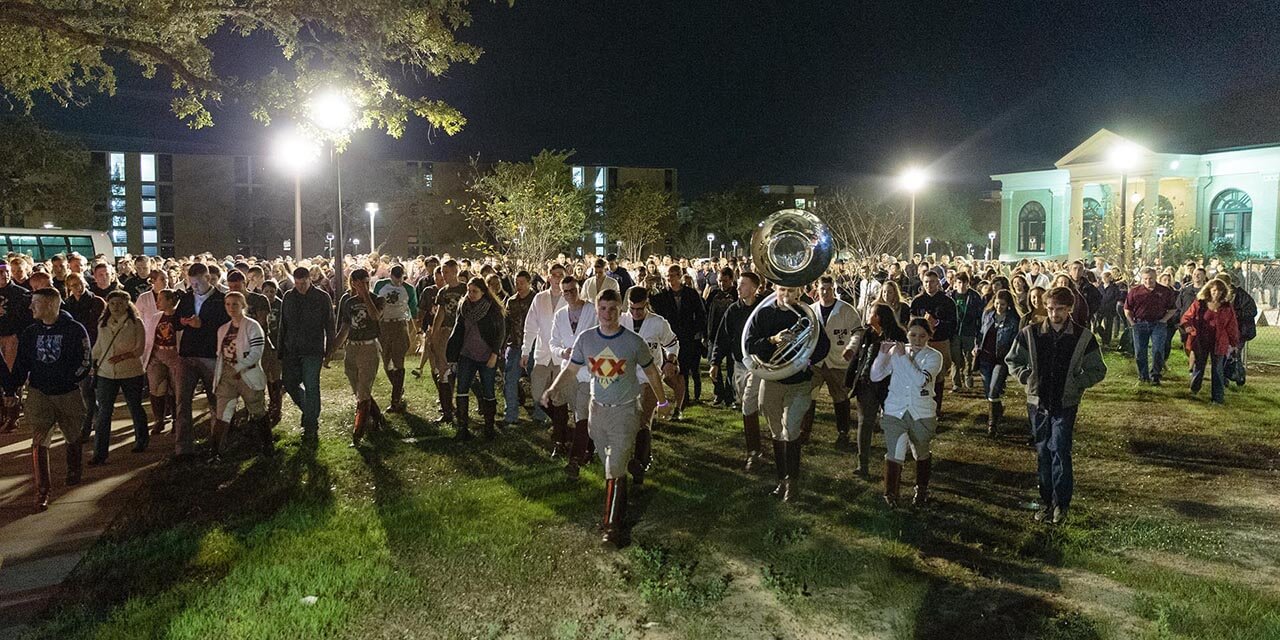
Mahirah Khan ’25
Color photo of Texas A&M students marching at night during Elephant Walk, led by a sousaphone and piccolo.
Fall 2015 saw attendance rebounding for Elephant Walk. The event had moved to nighttime in 2013 to avoid conflict with most class hours. Students also re-emphasized the tradition of leading with a bass and piccolo. Photo by Gabe Chmielewski ’06/Texas A&M University Division of Marketing and Communications.

With this tradition marching into its second century, it can truly be said:
At Texas A&M, elephants never forget.

Spirited Shirts

Class of 1980 to Class of 2026

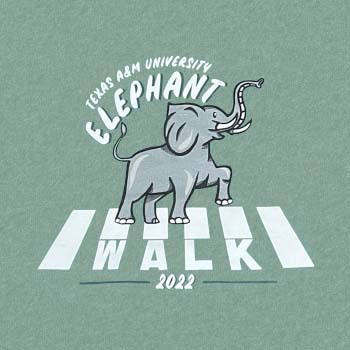
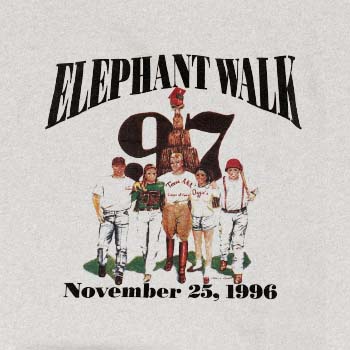
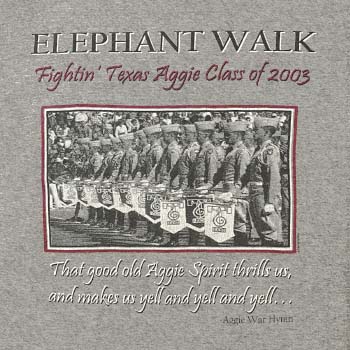
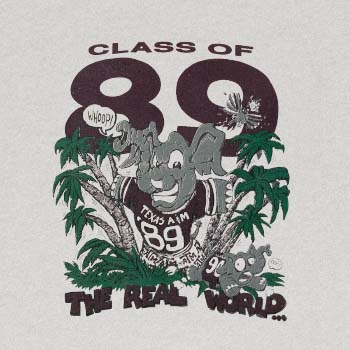
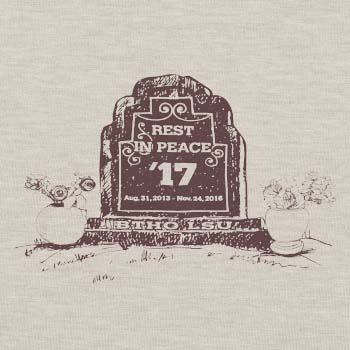
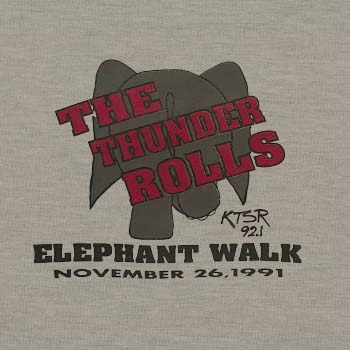
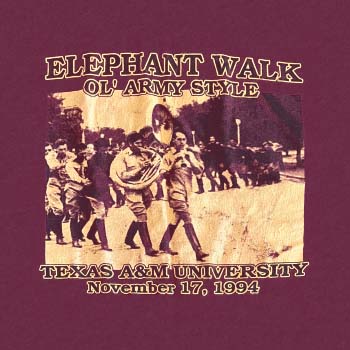
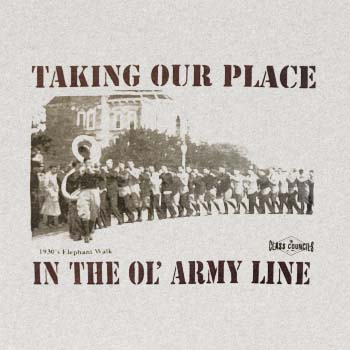
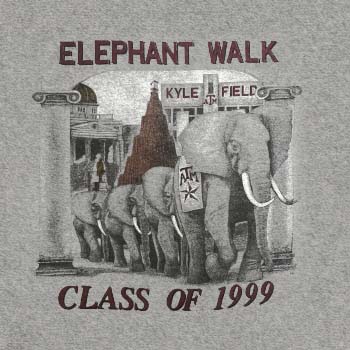
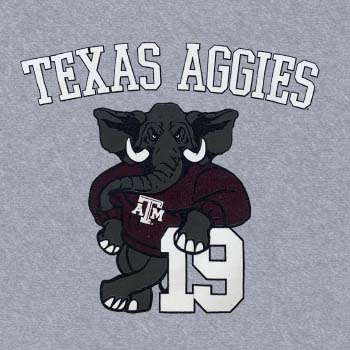
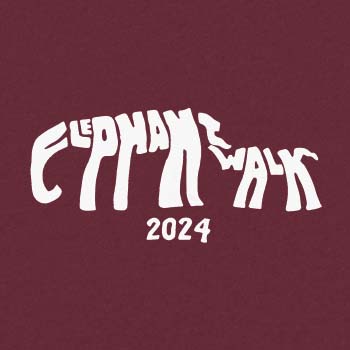
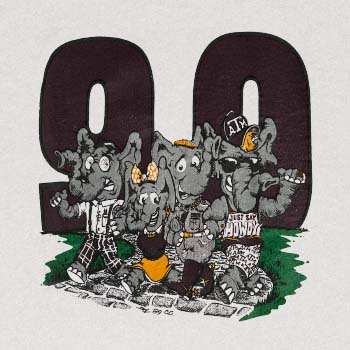
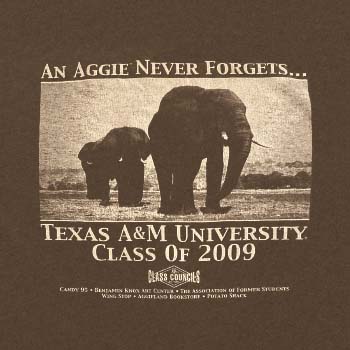
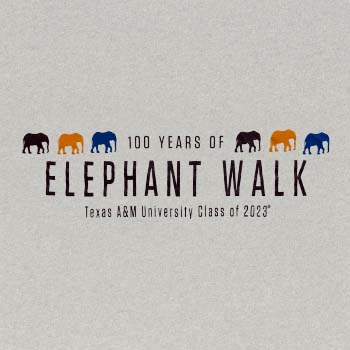
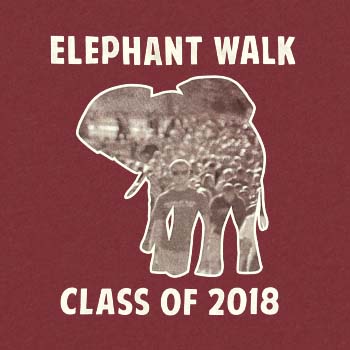
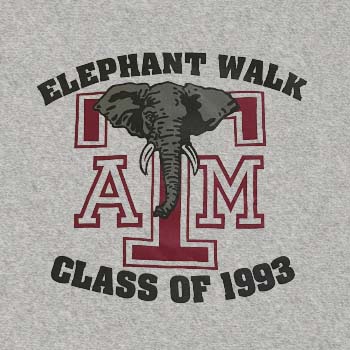
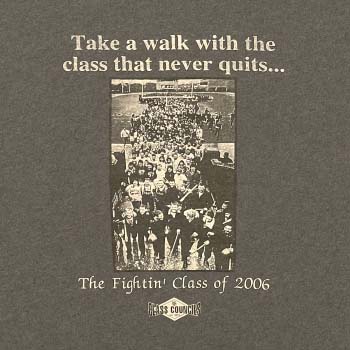
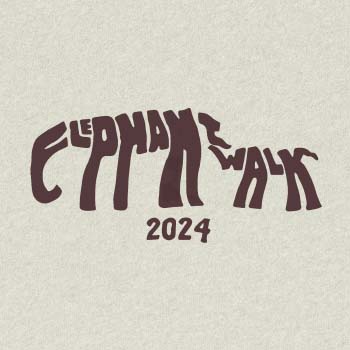
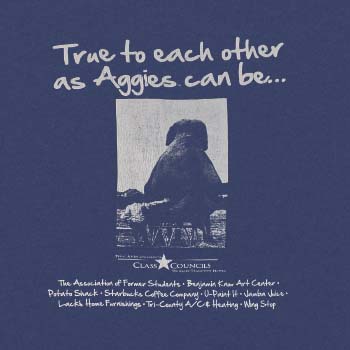
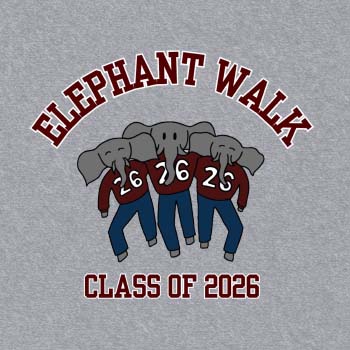
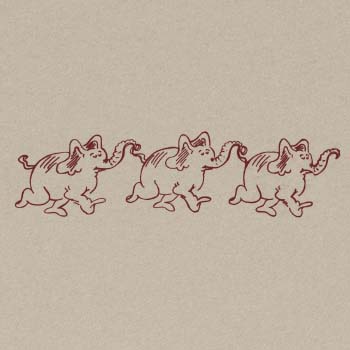
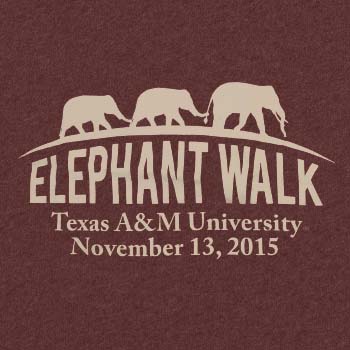
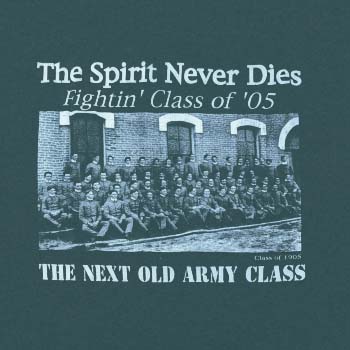
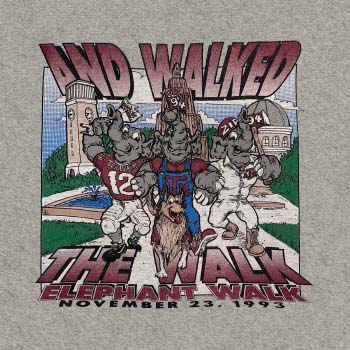
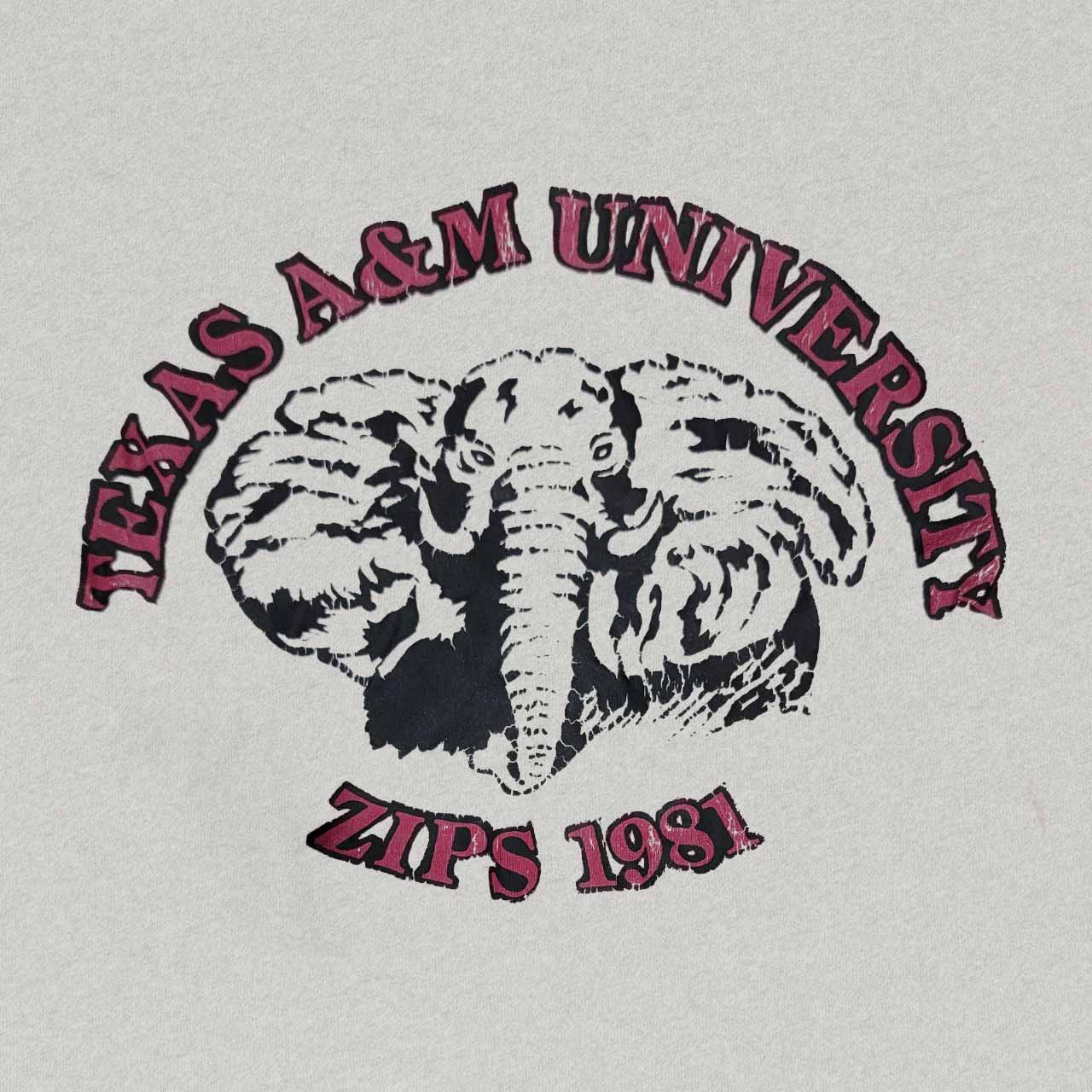
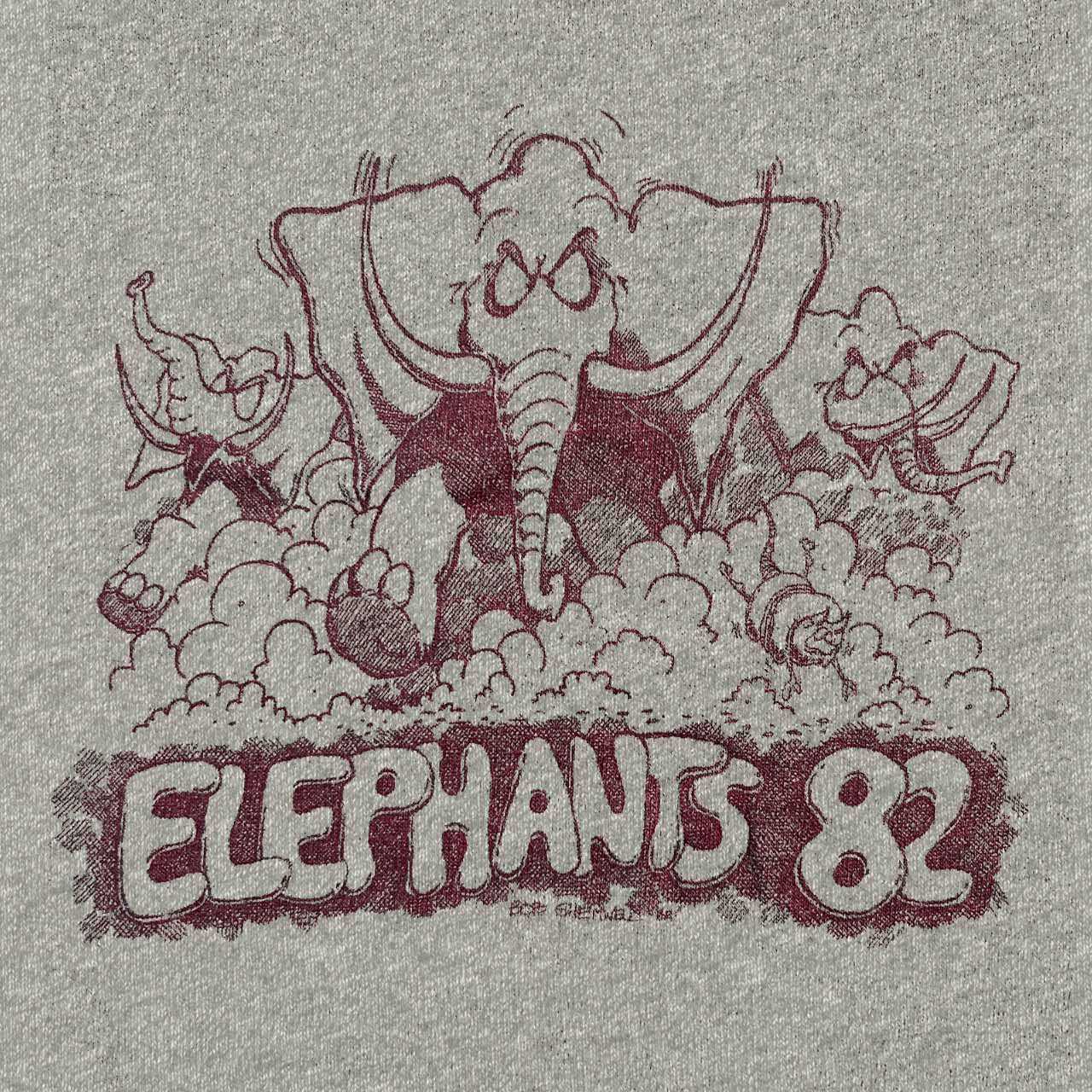
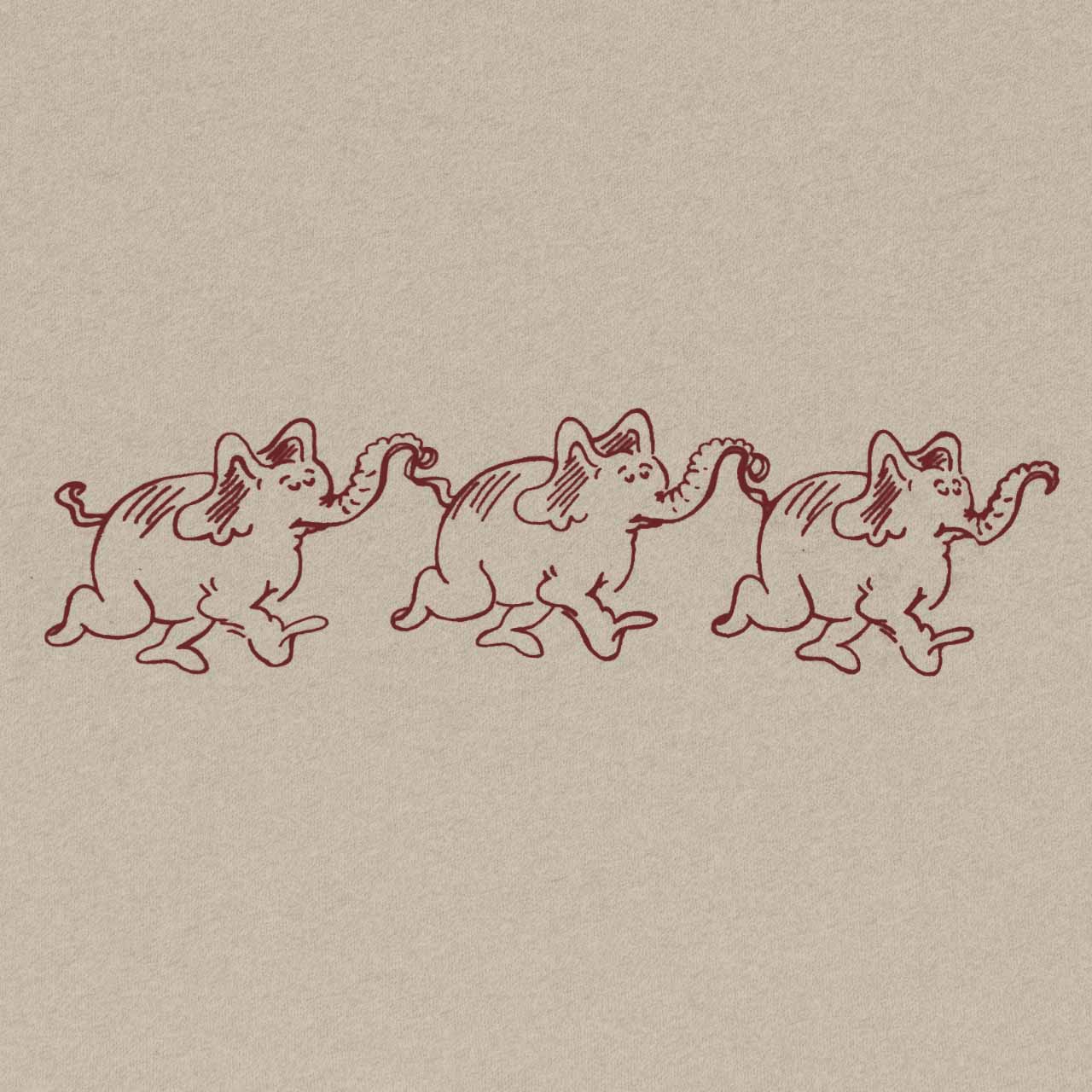
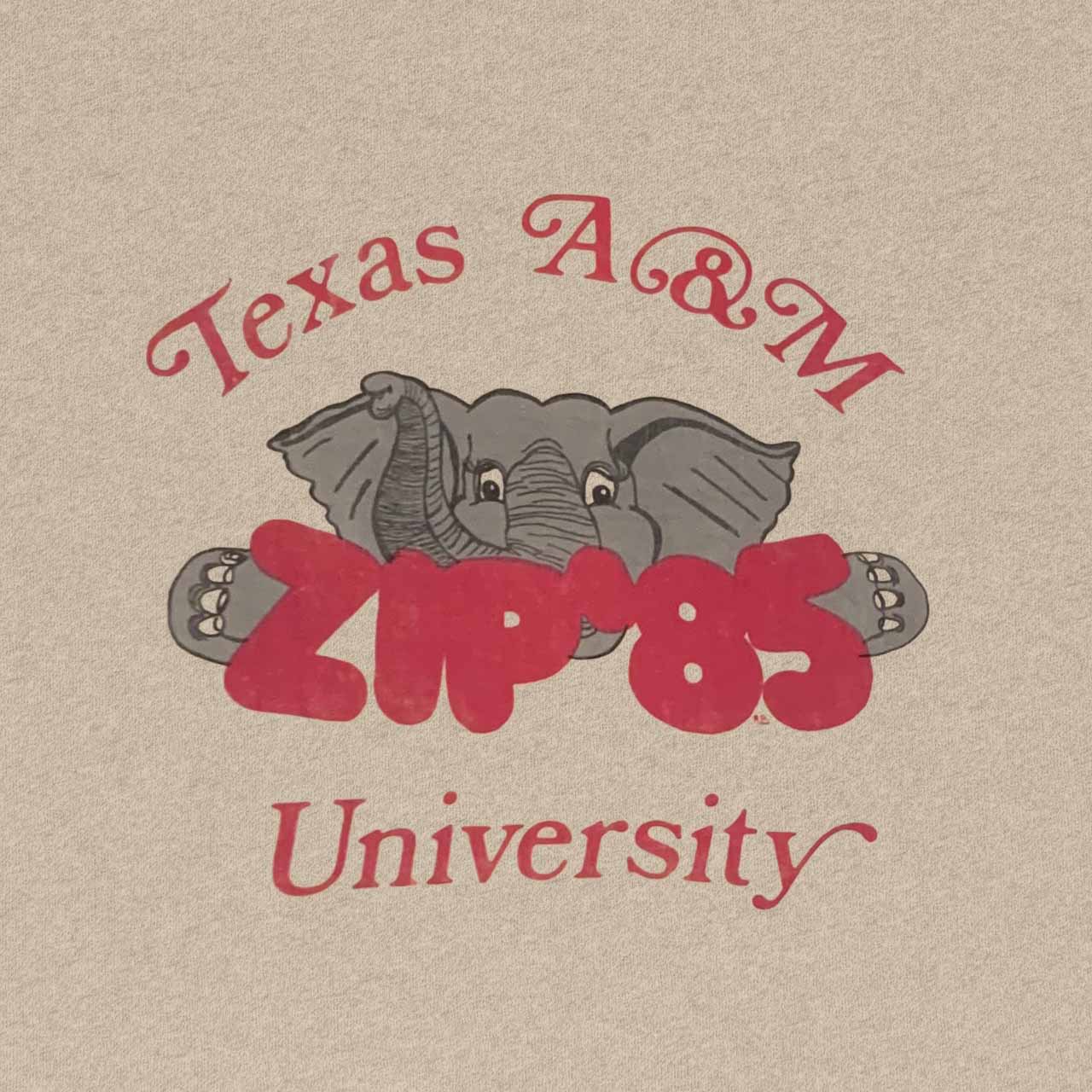
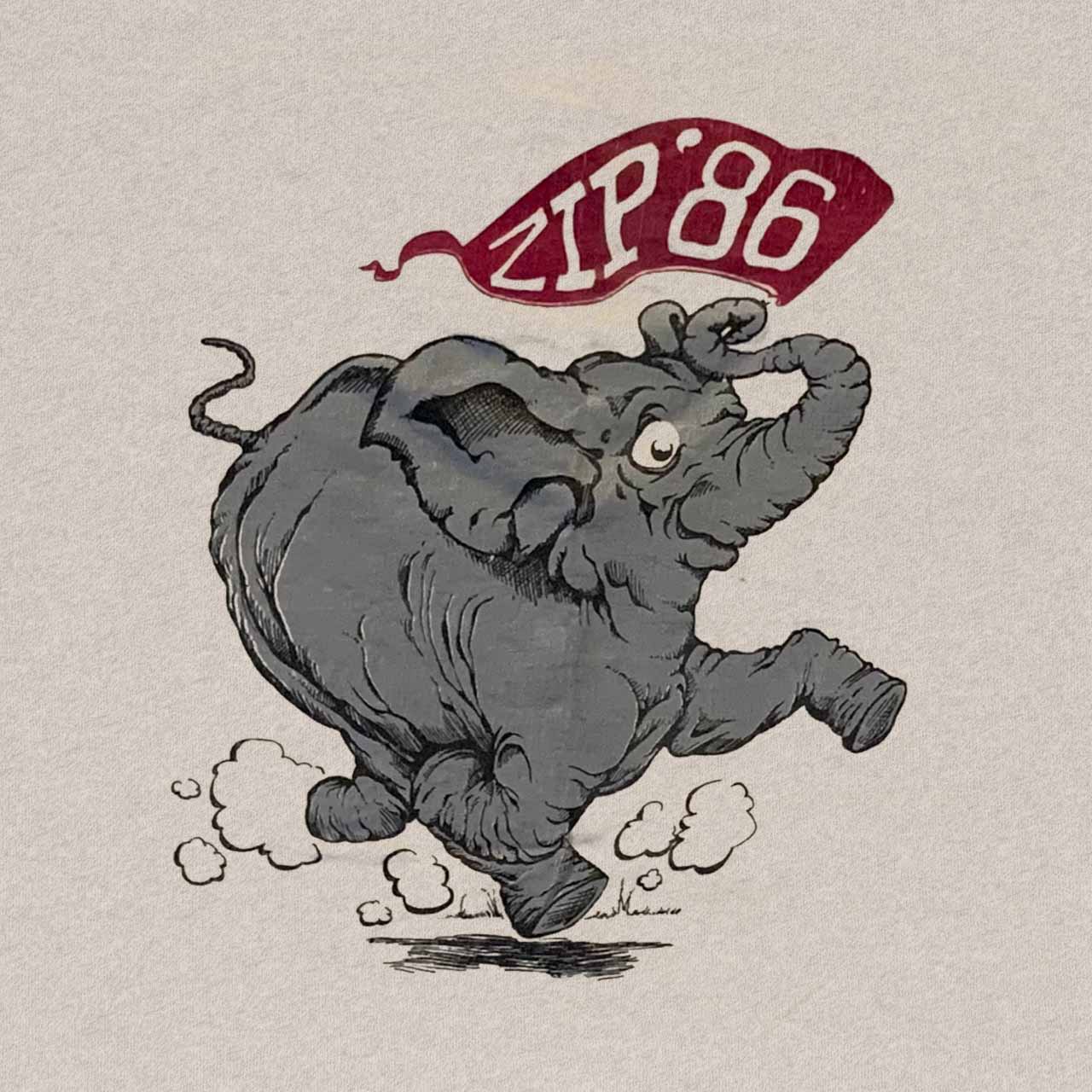
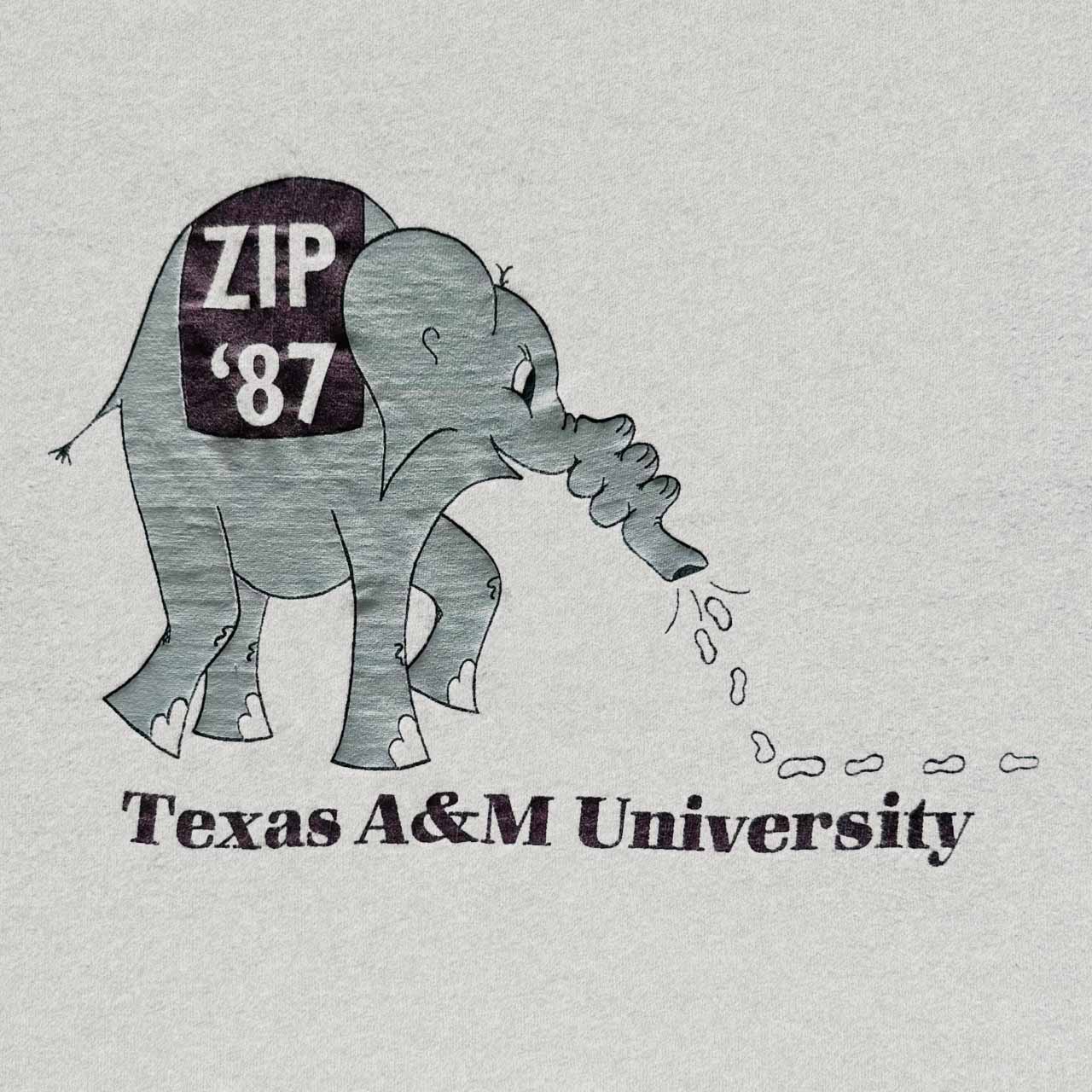
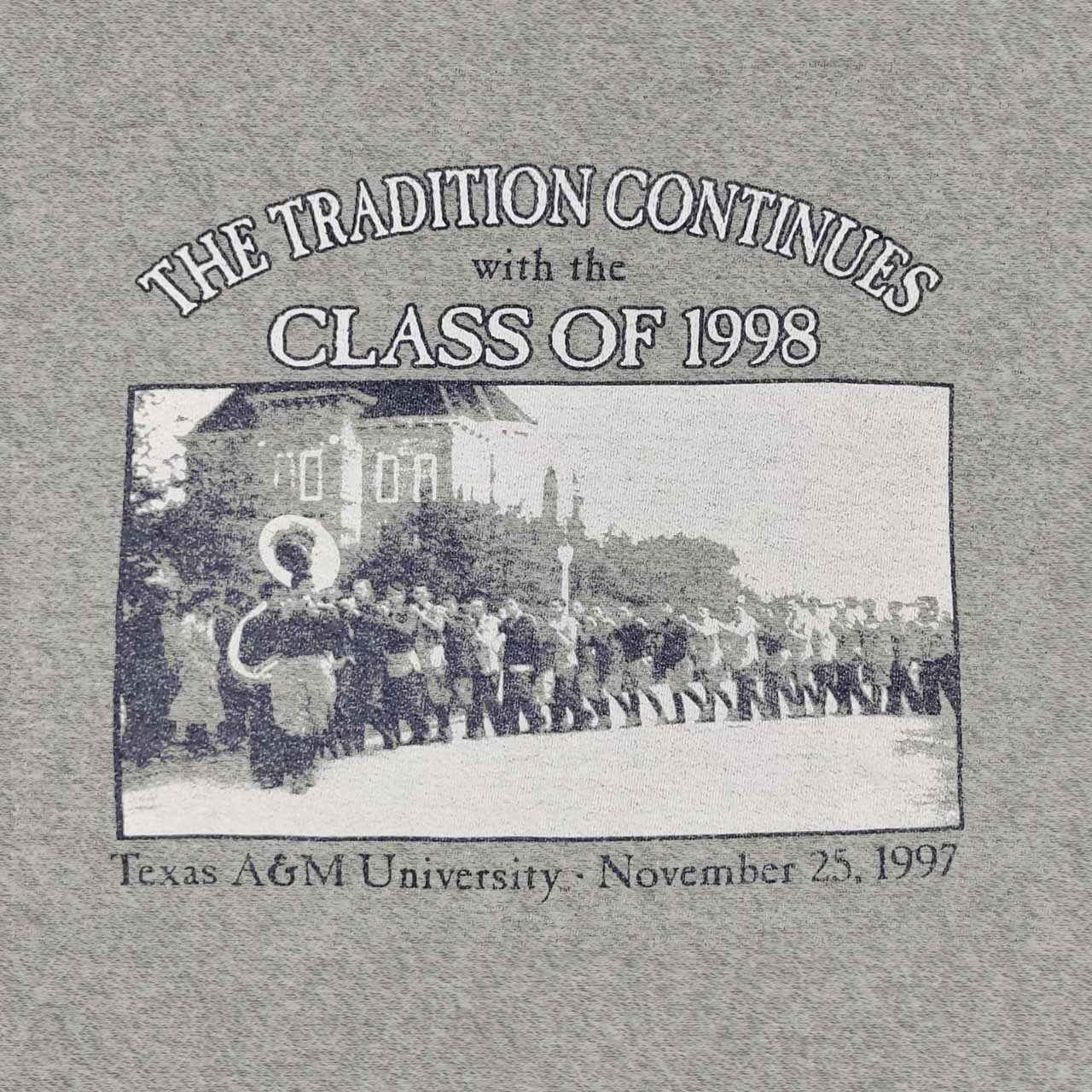
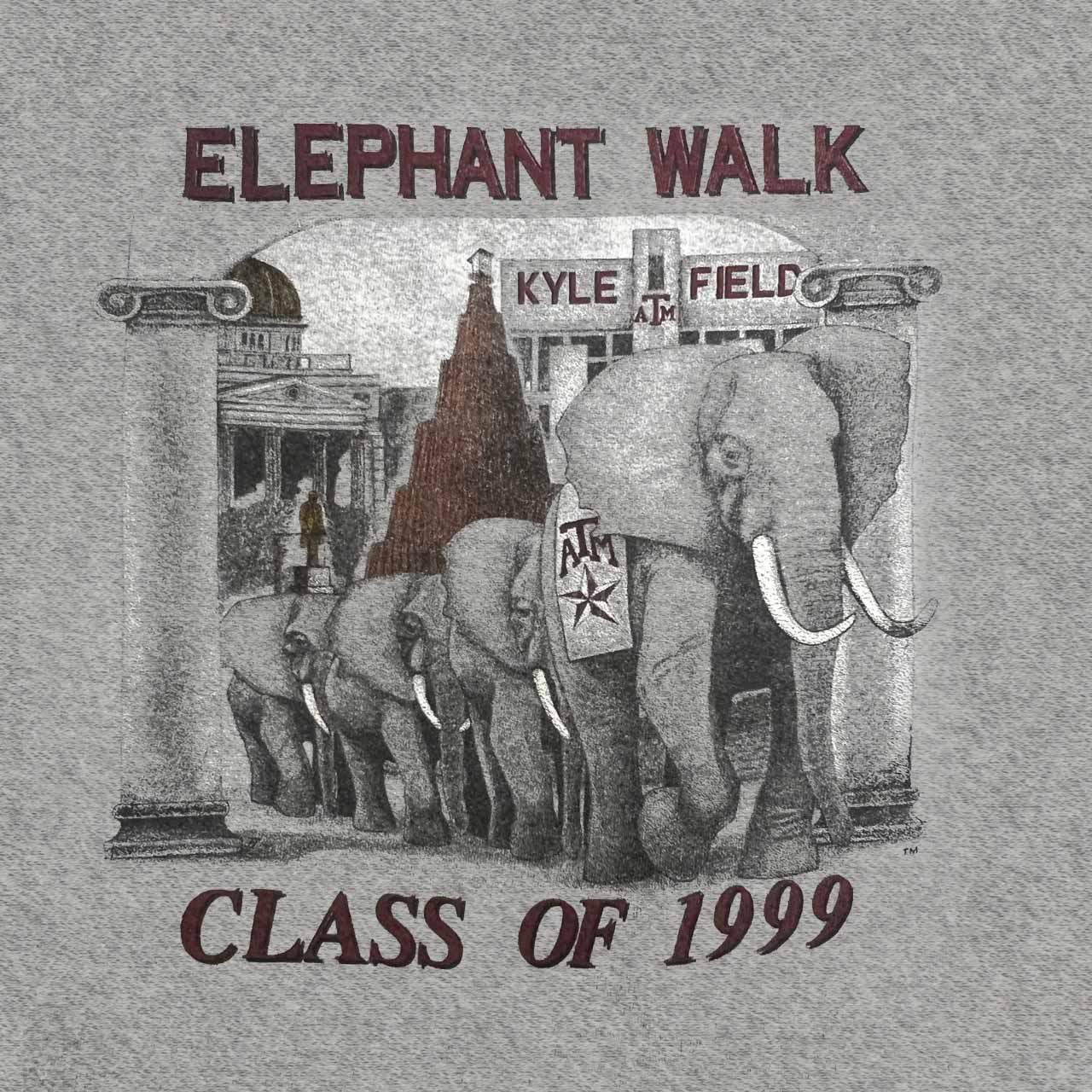
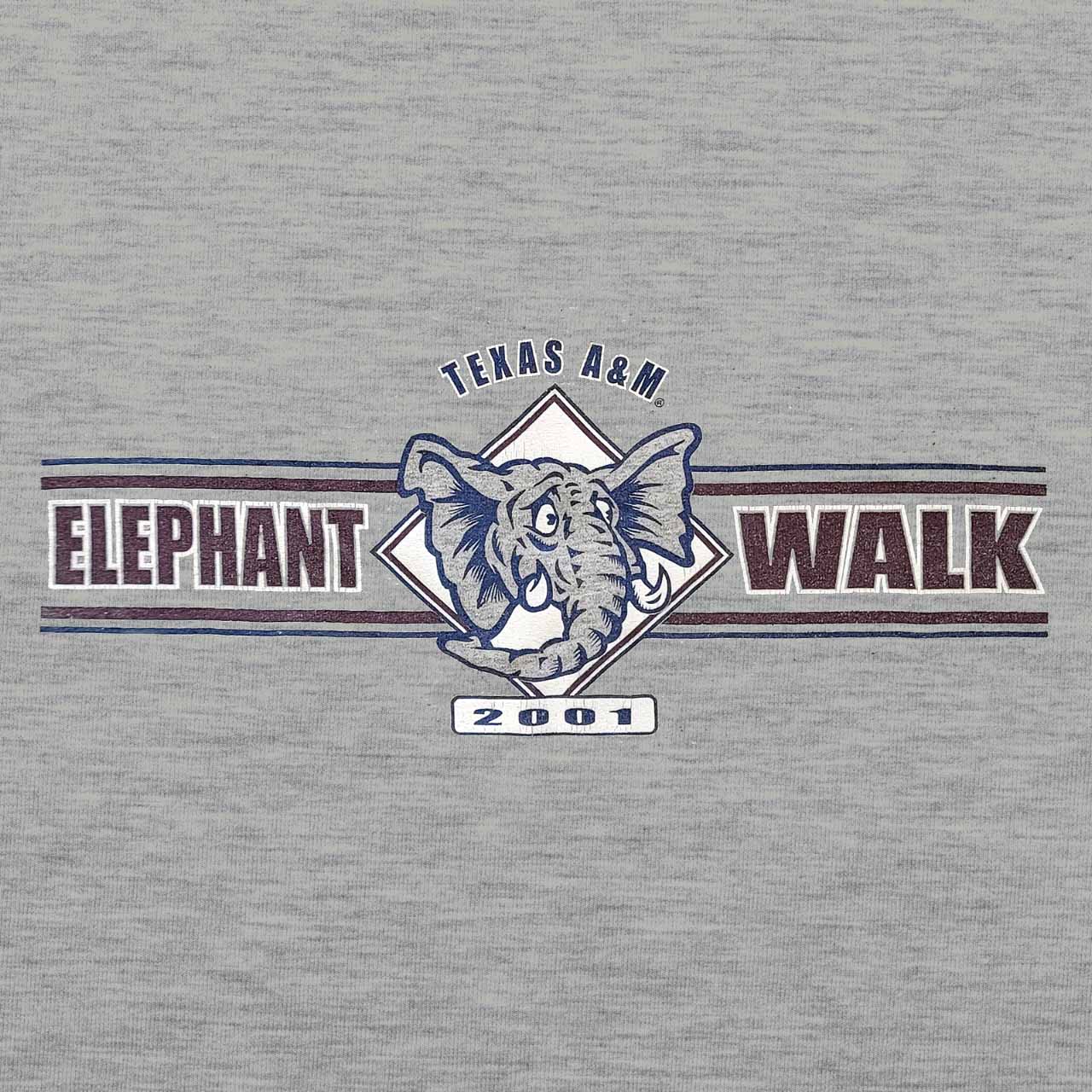
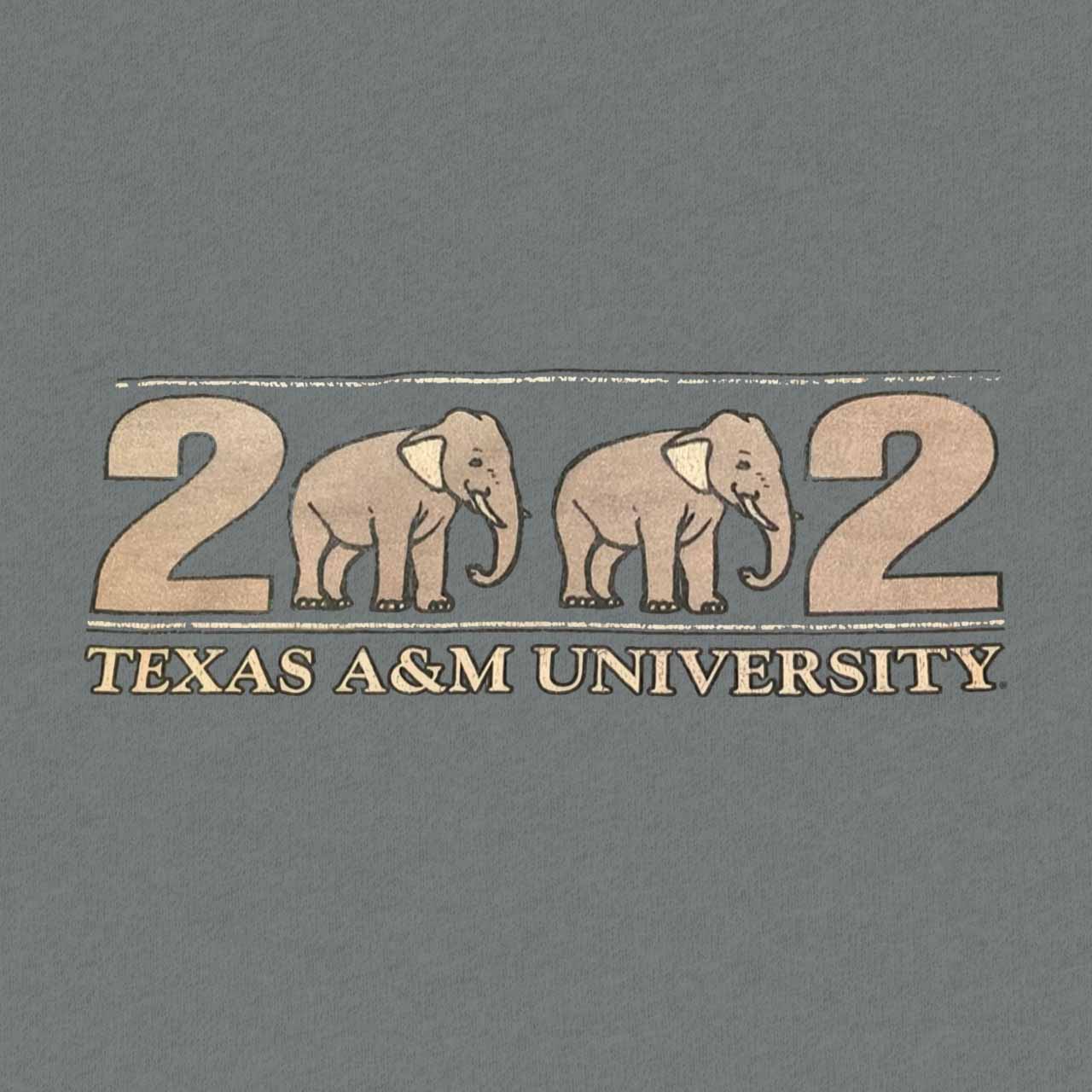
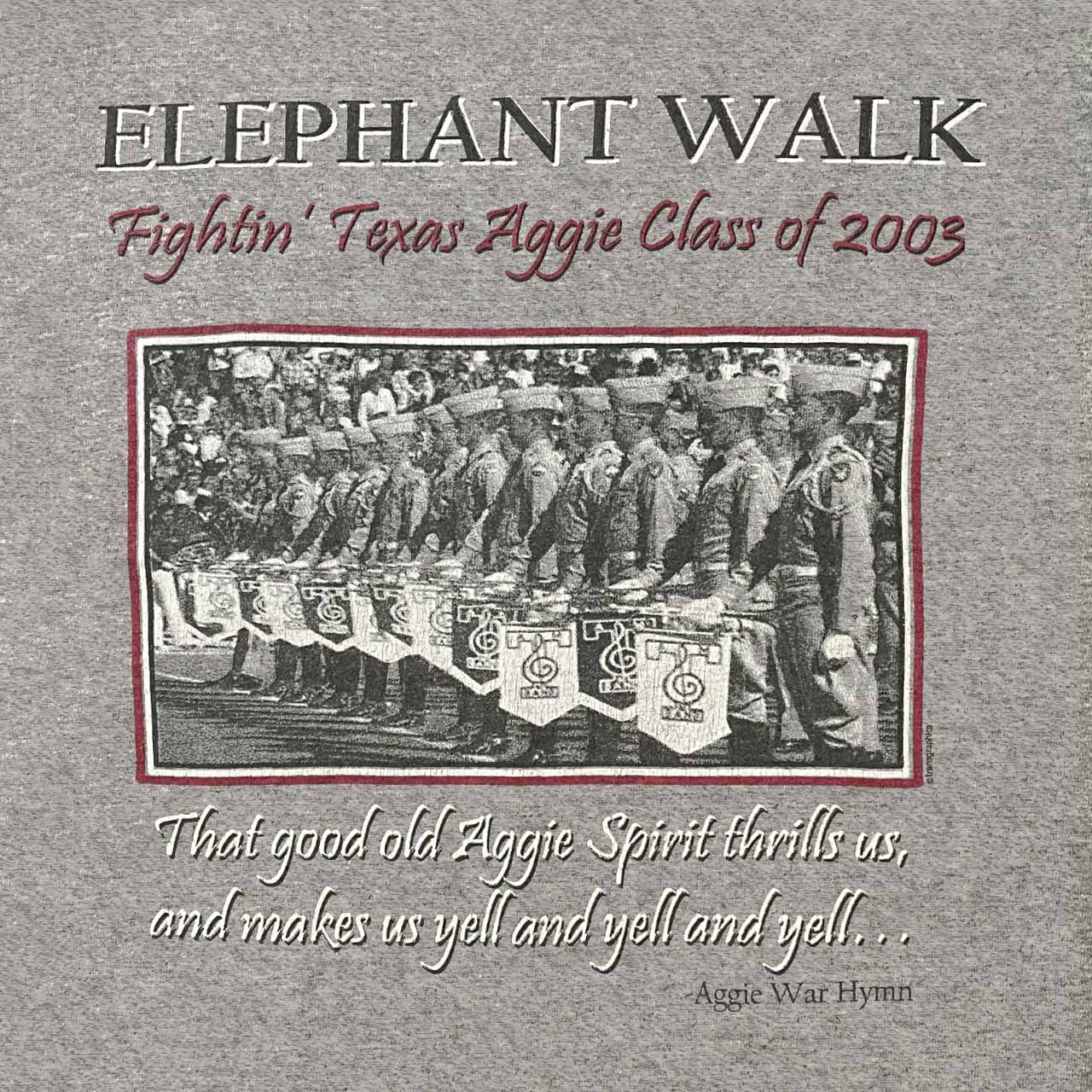
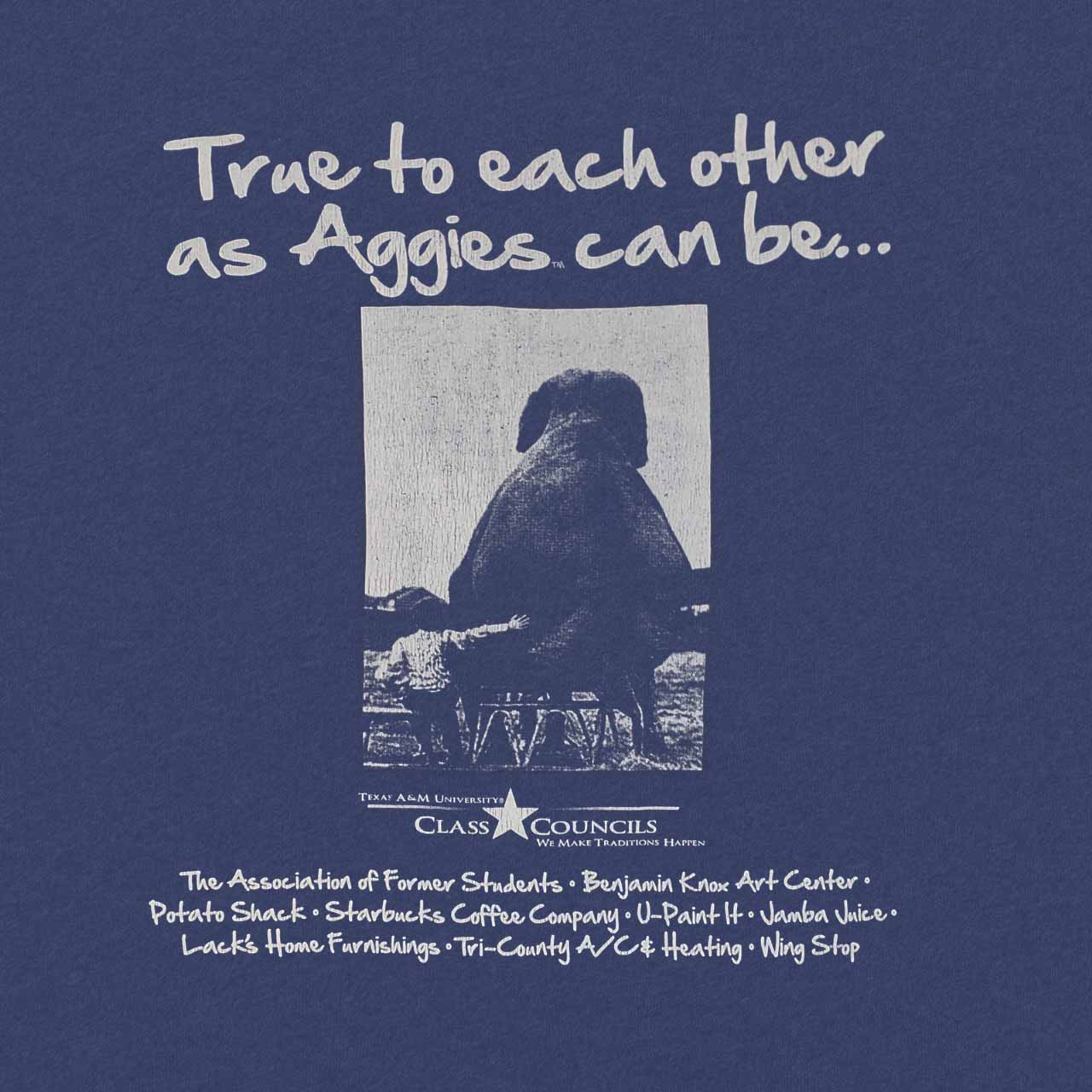
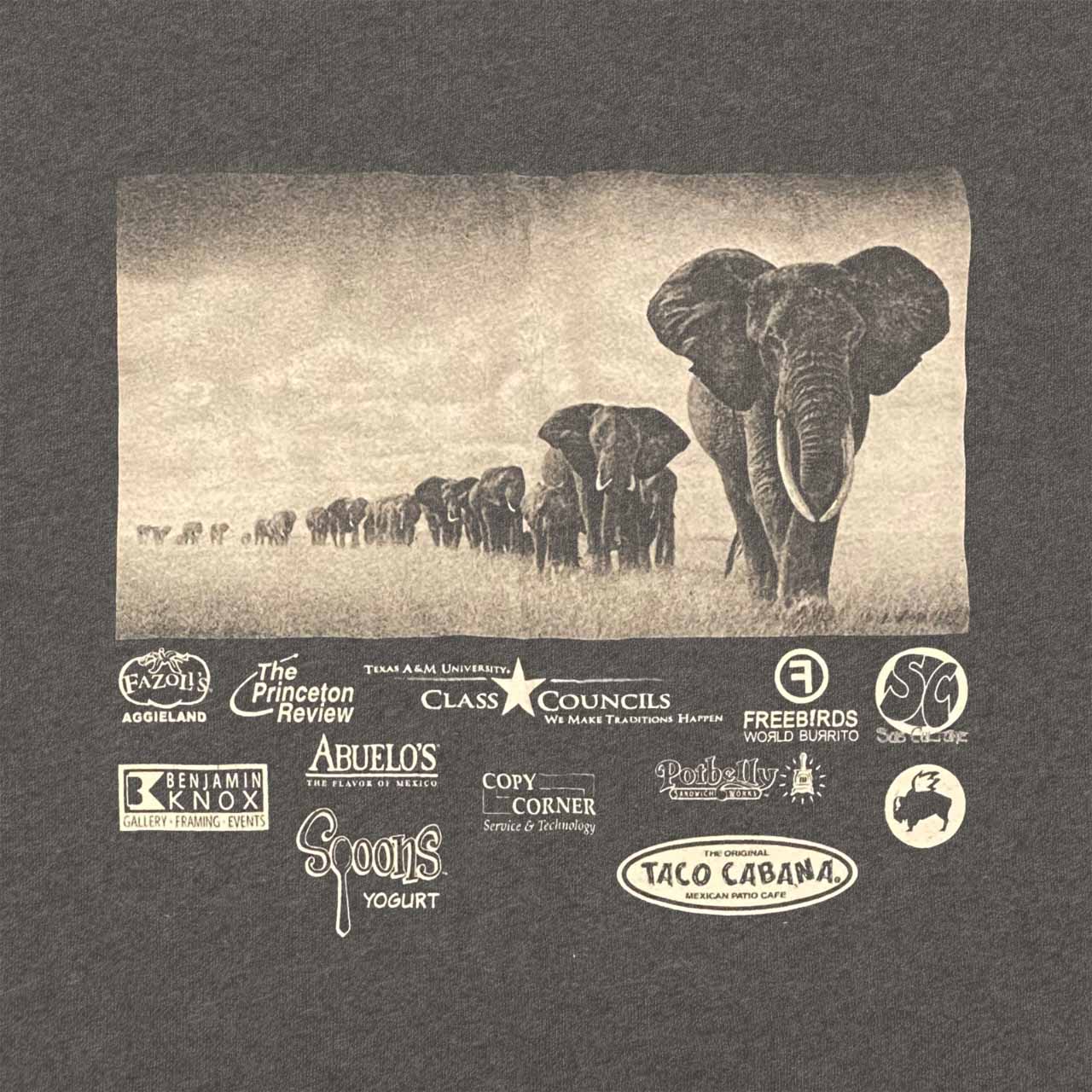
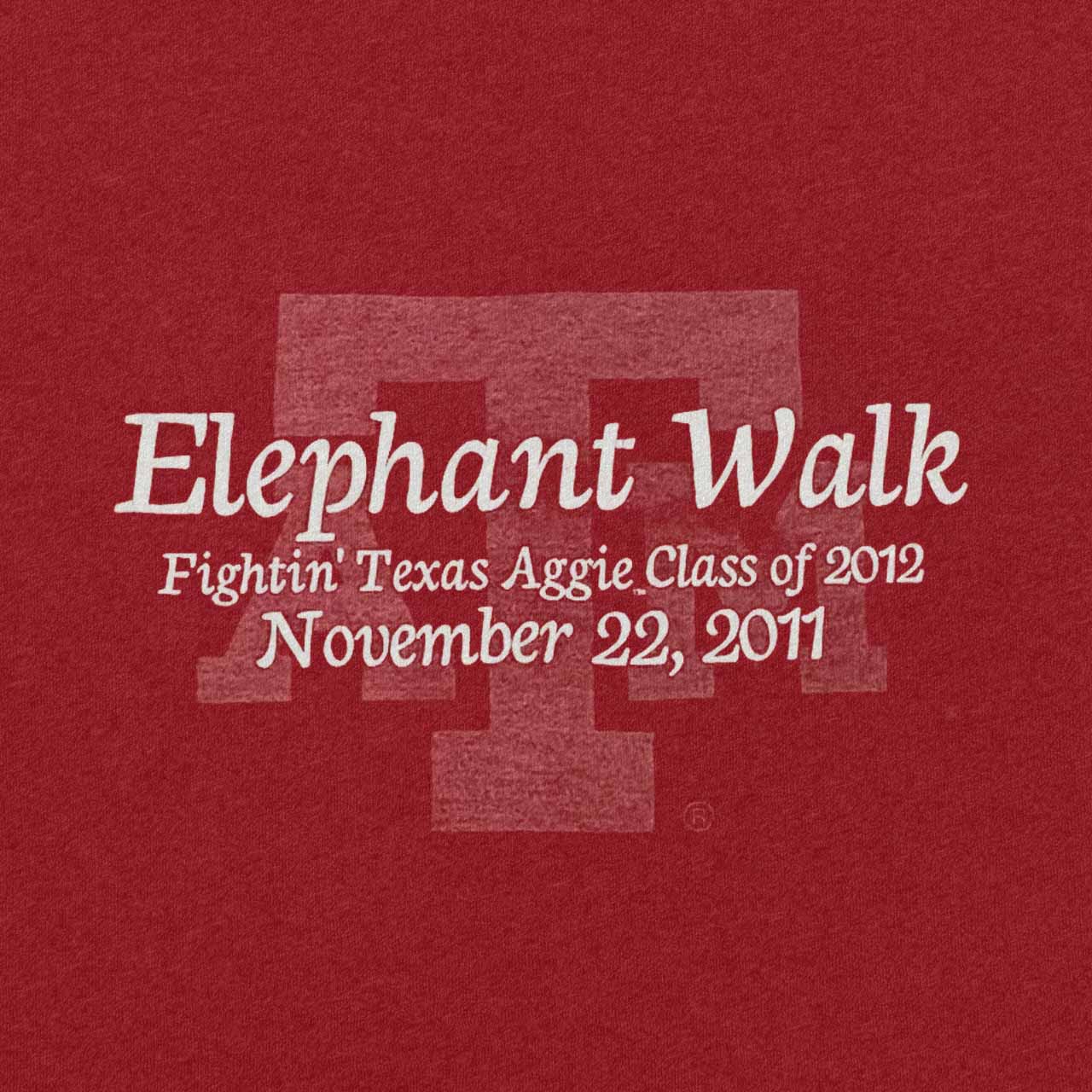
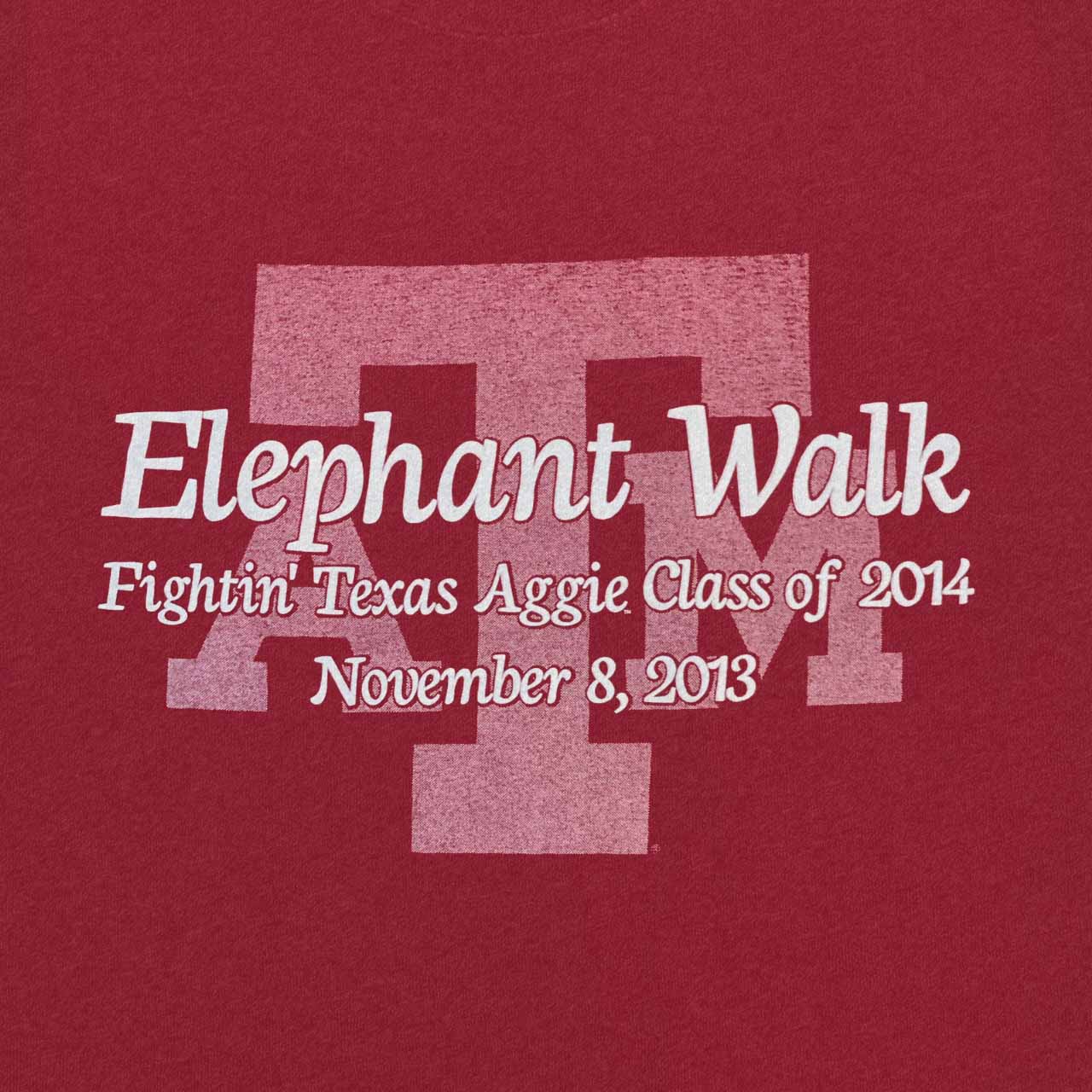
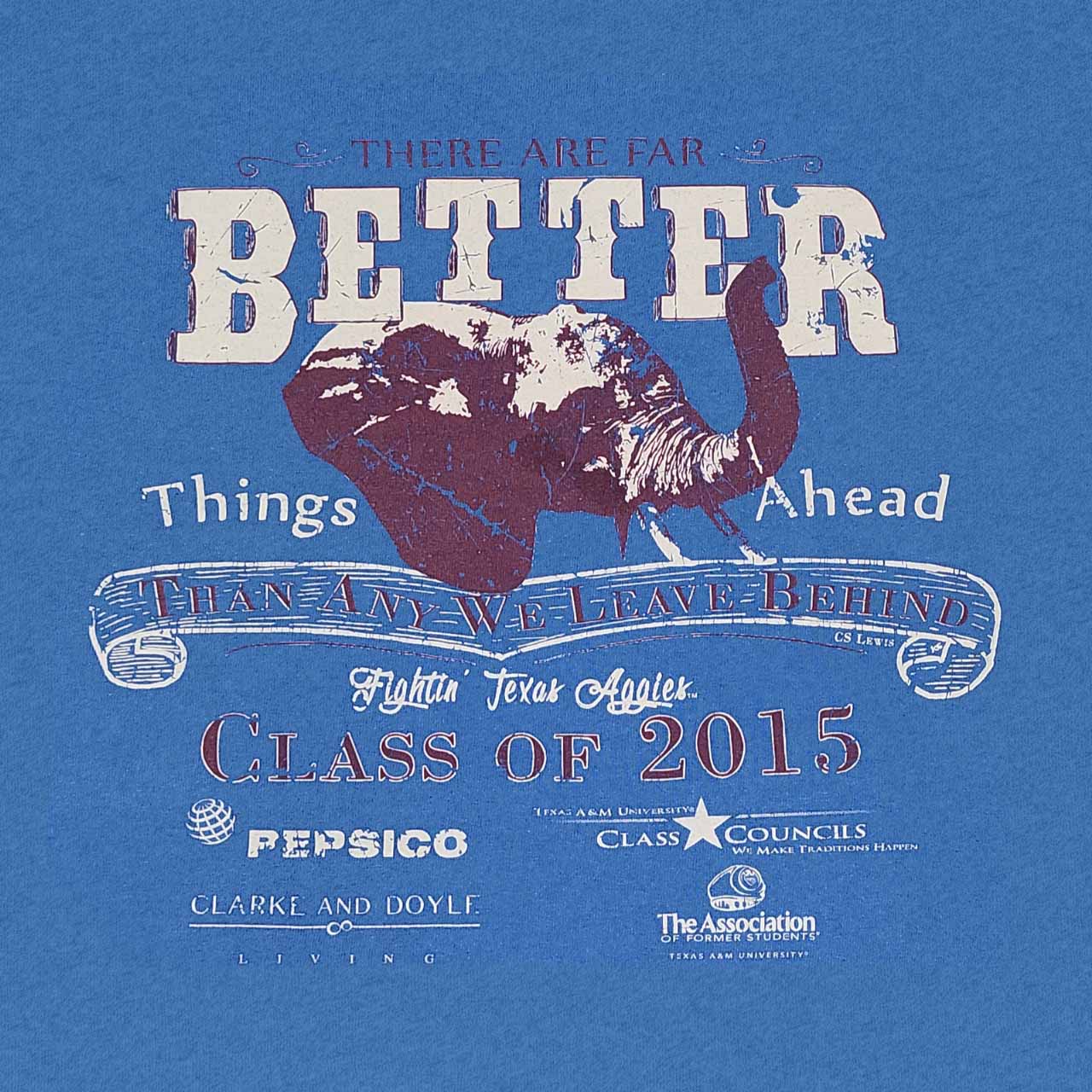
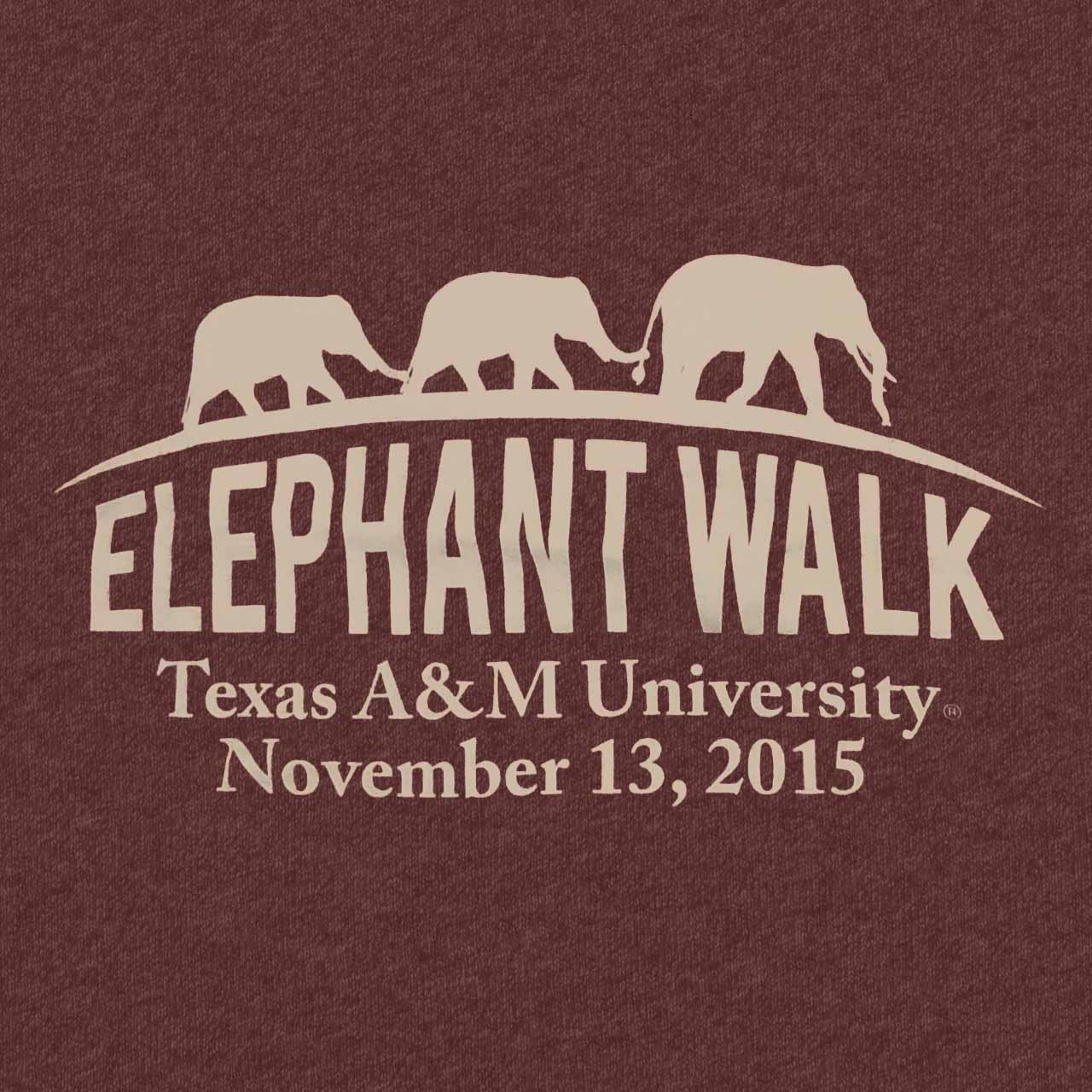
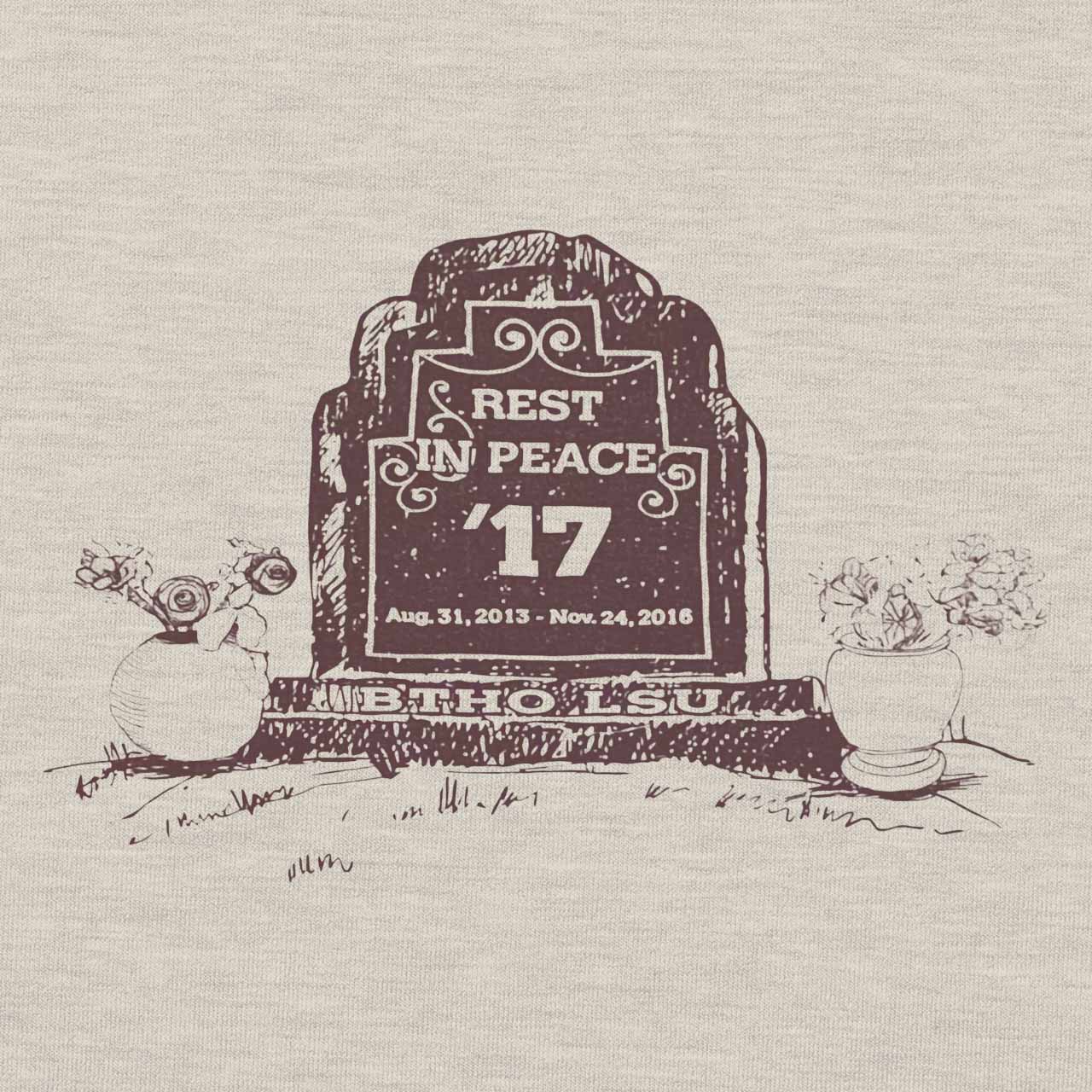
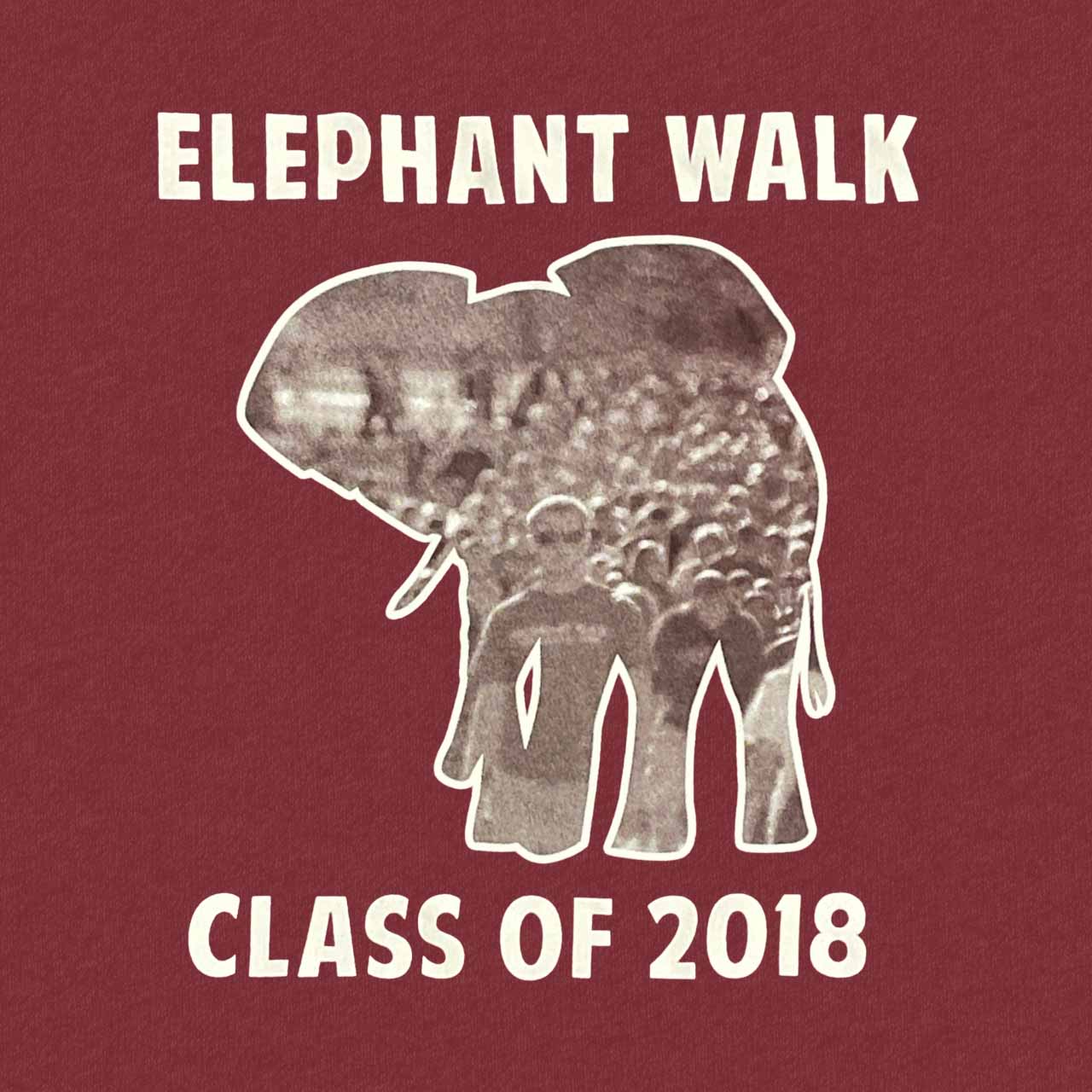
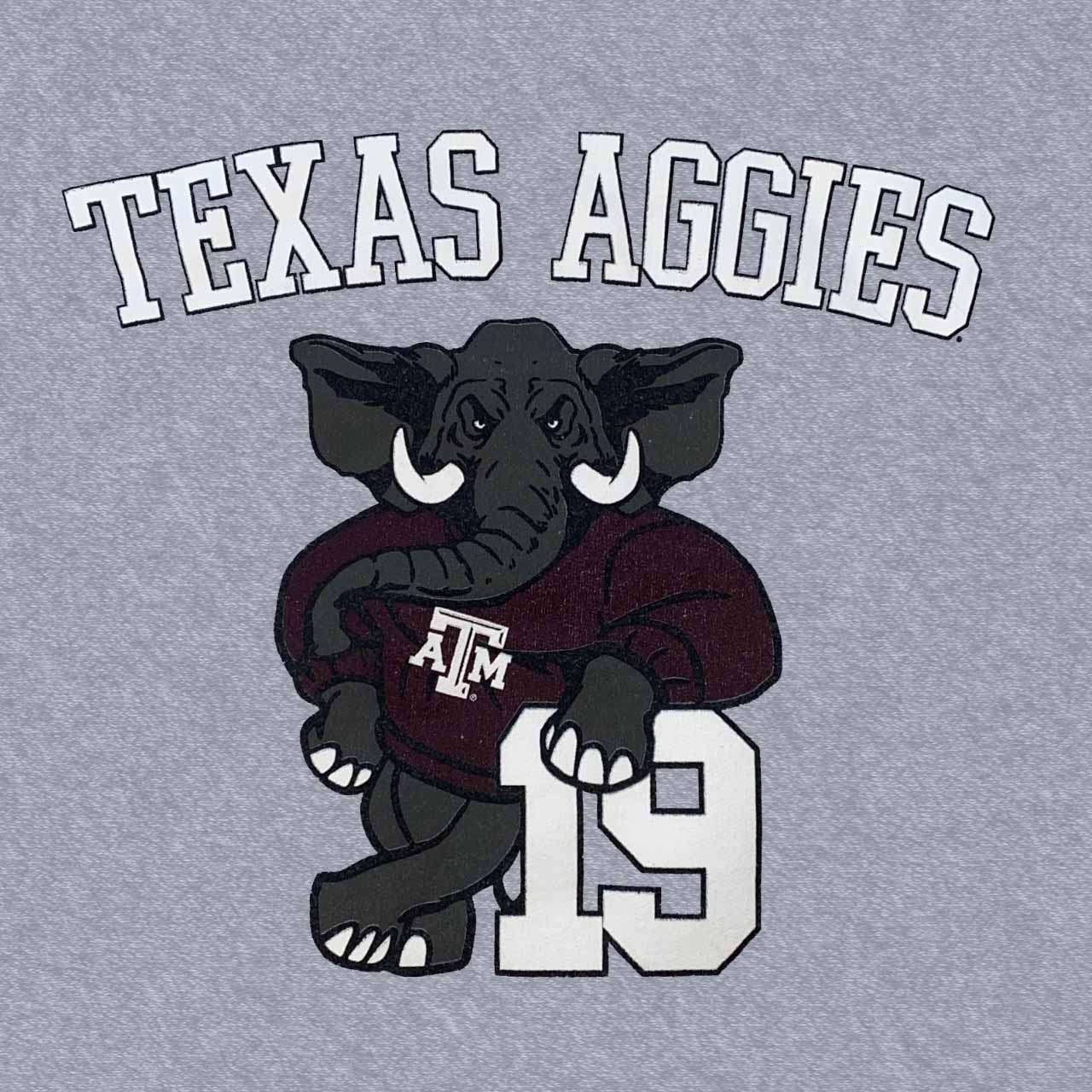
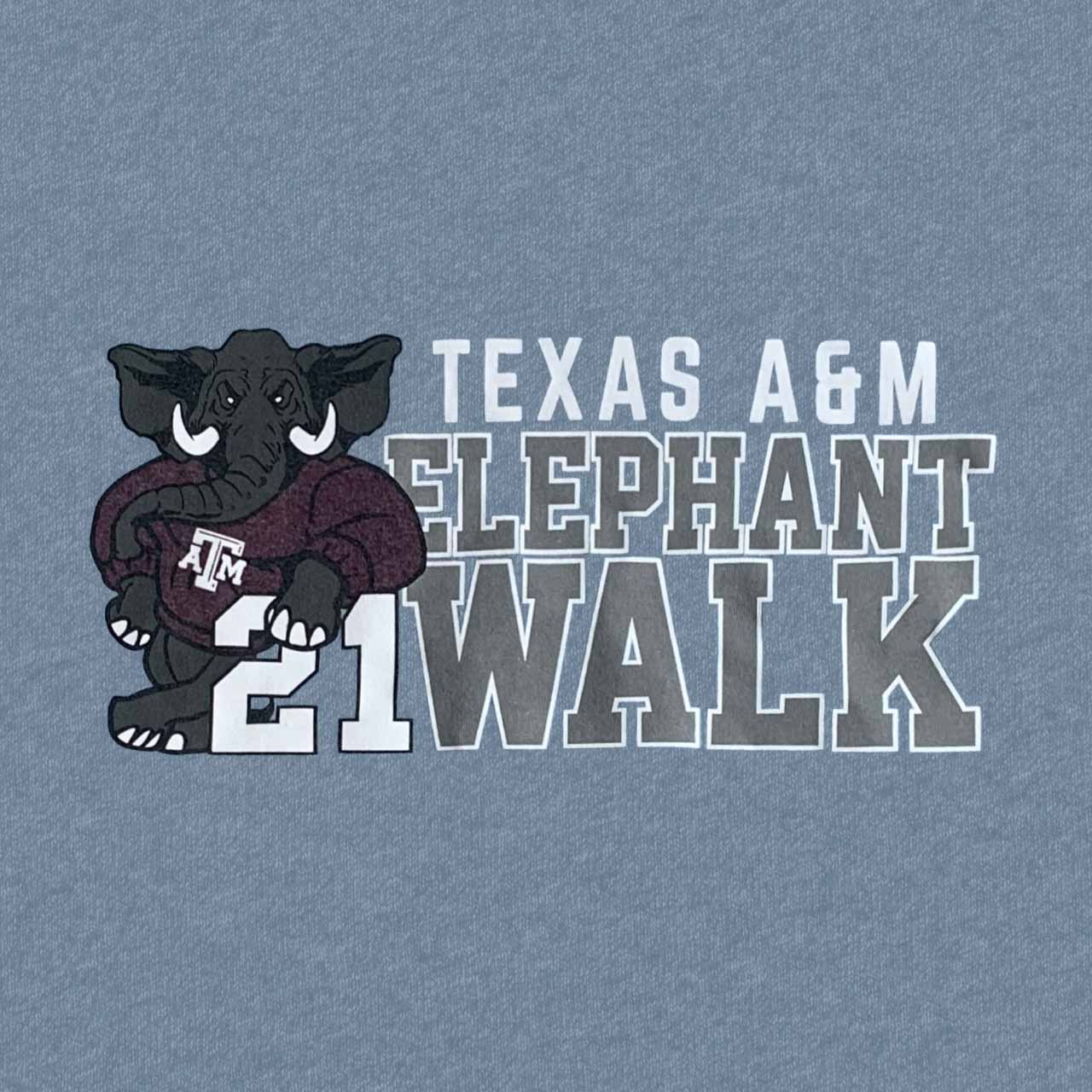
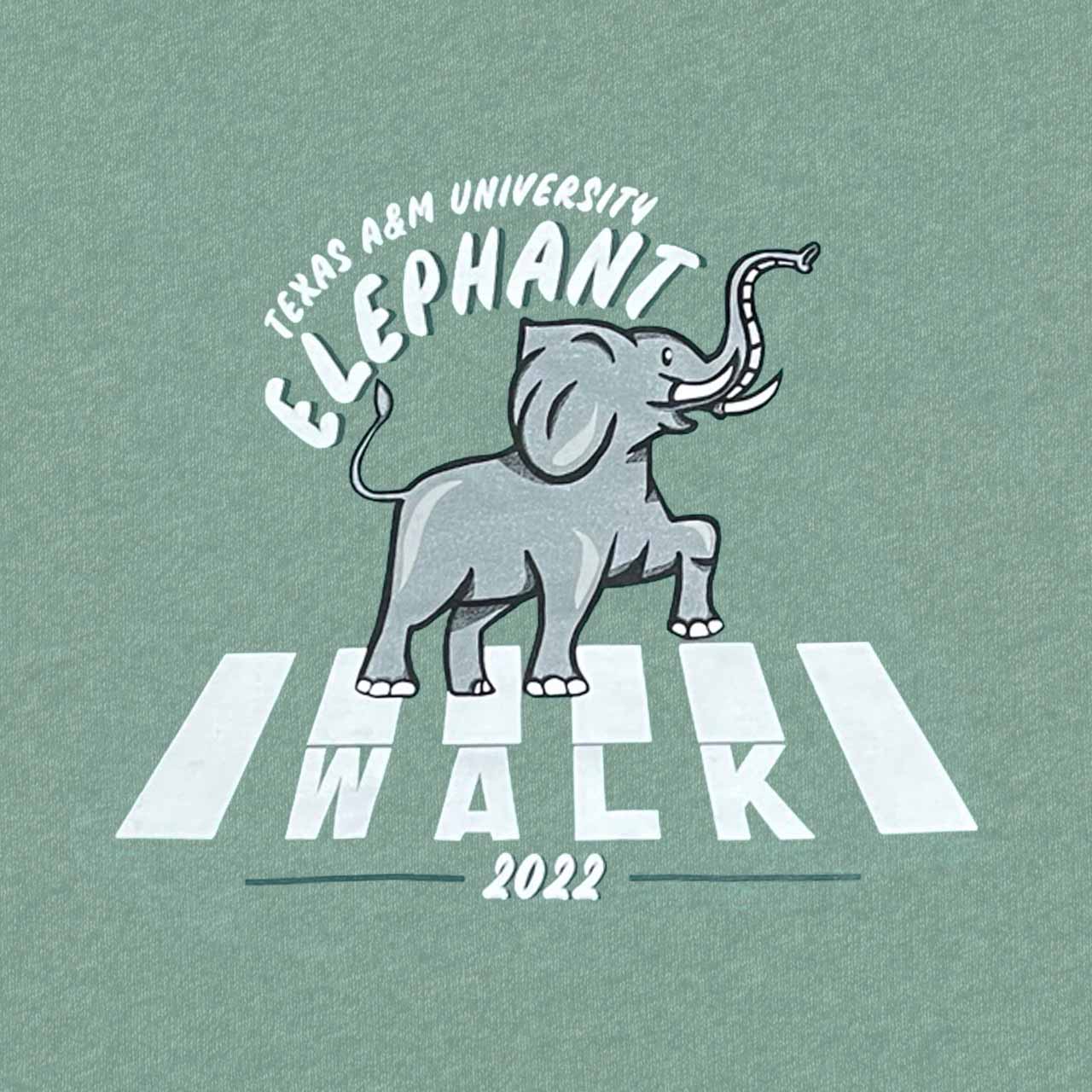
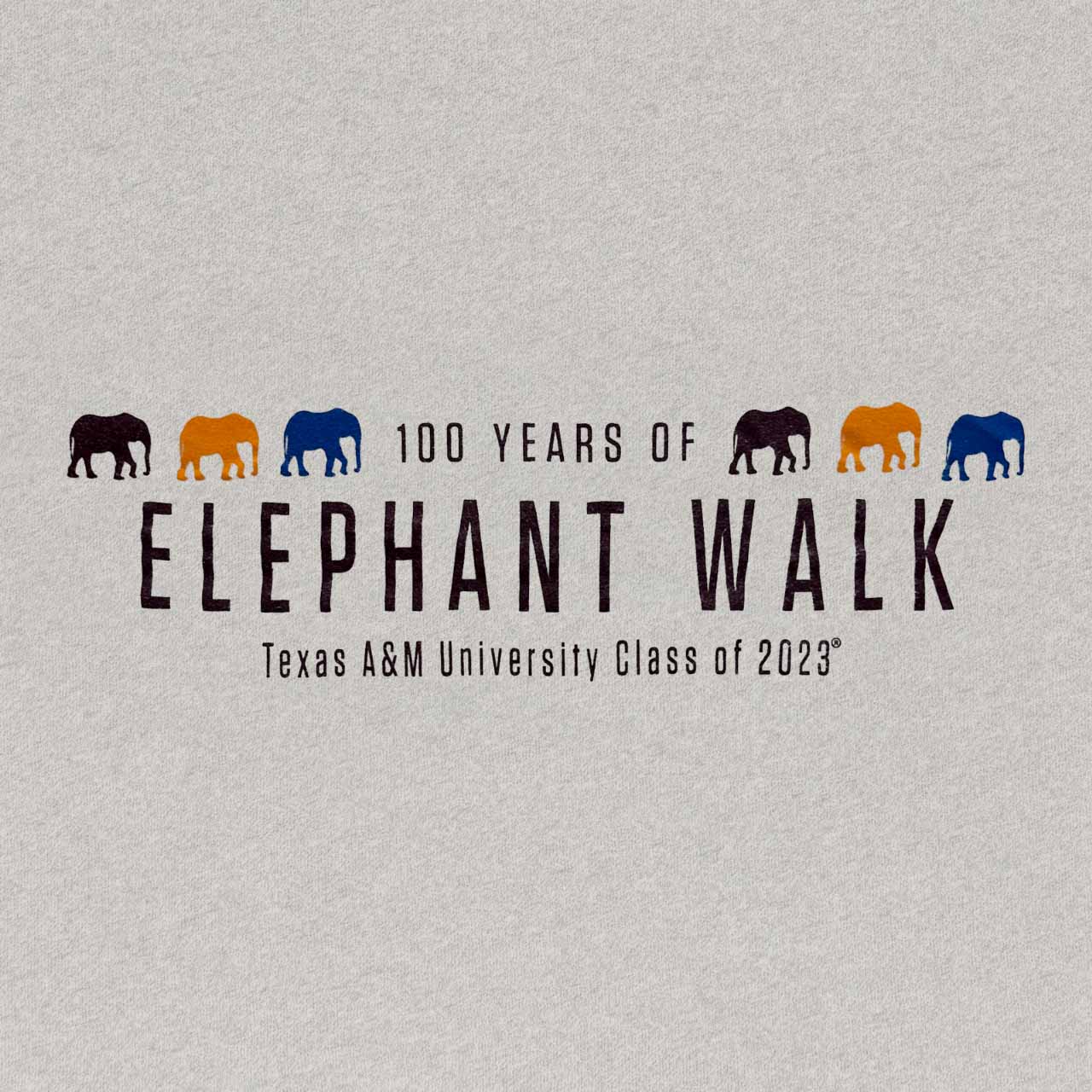
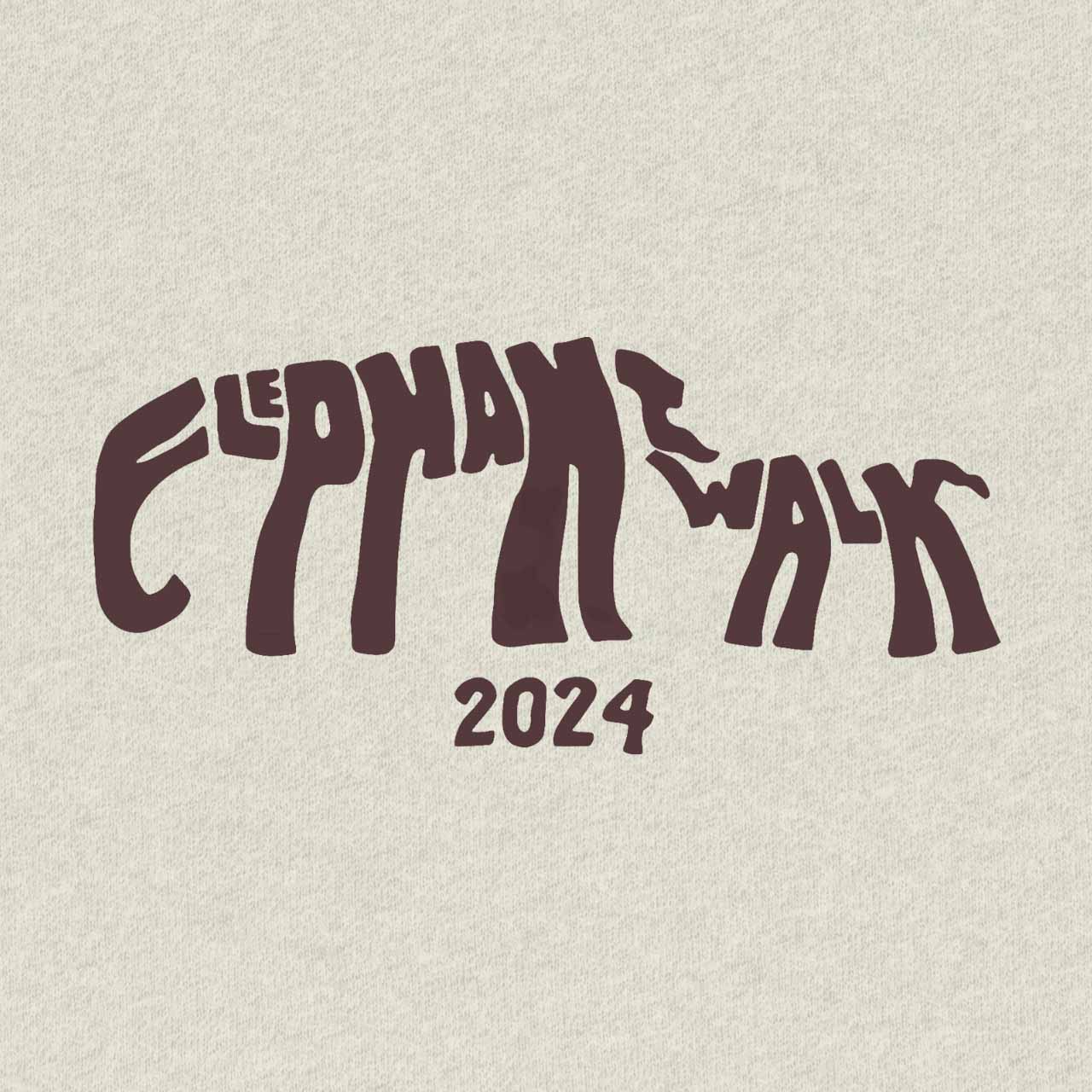
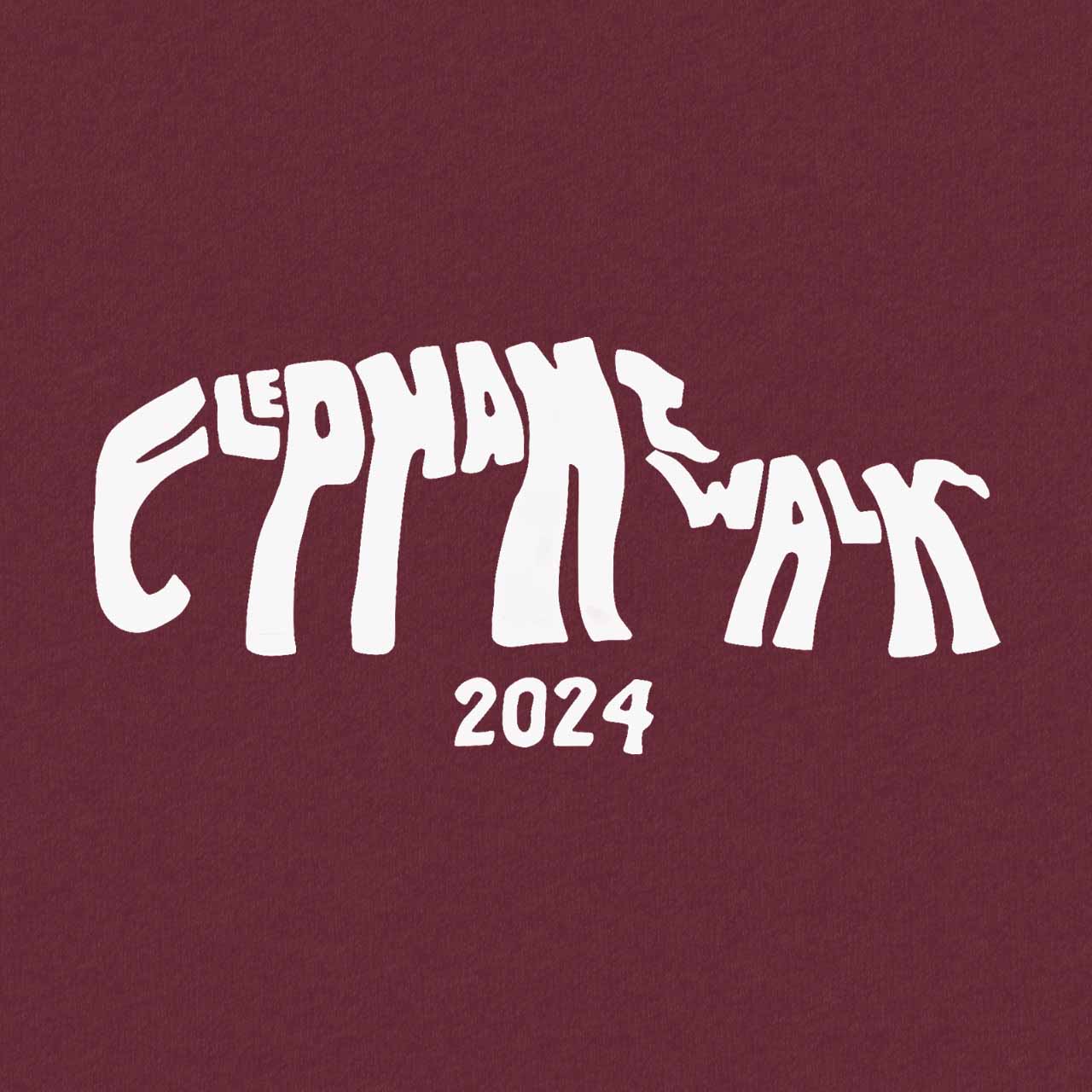
Elephant Walk T-shirts have been a tradition of their own since at least fall 1979. Thanks to dozens of former students (see list at tx.ag/EWalkThanks) who dug into their closets and sent us photos, The Association has been able to collect all known Elephant Walk shirt designs from the Class of 1980 to the Class of 2026, marking 100 years since the first senior Elephant Walk.

Address

505 George Bush Drive
College Station, TX 77840

Phone Number

(979) 845-7514

© 2025 The Association of Former Students of Texas A&M University, All Rights Reserved